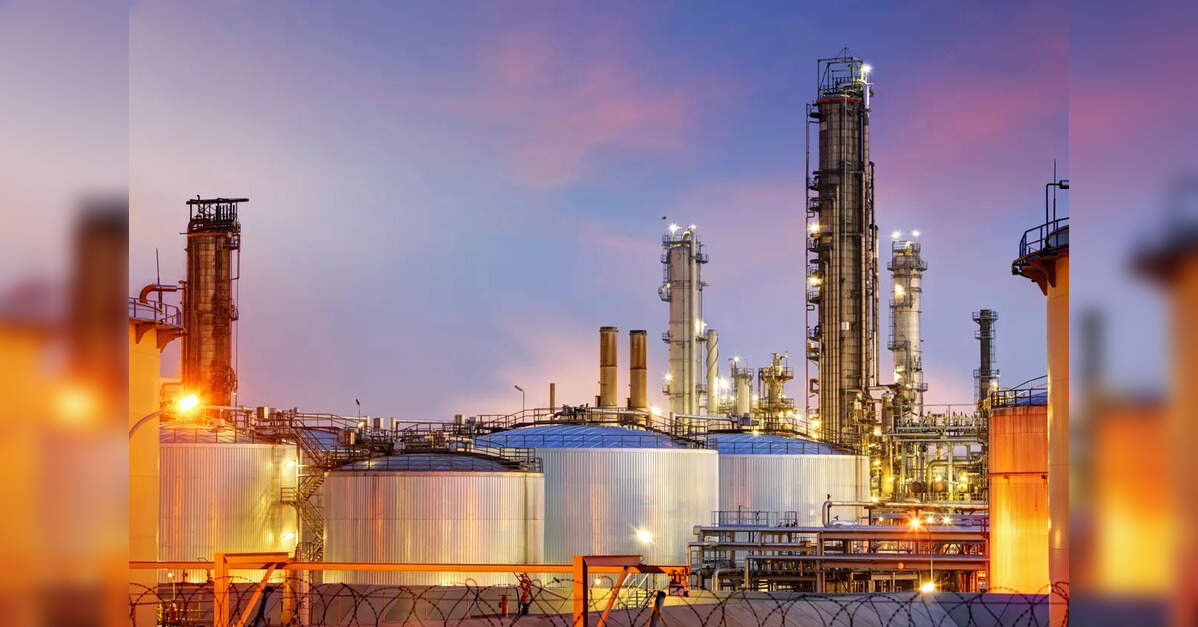
The recent bilateral meeting between India and Saudi Arabia, focused on bolstering collaboration in the chemicals and petrochemicals sector, signals a significant strategic pivot for both nations. This isn’t merely another trade discussion; it represents a deepening of economic ties that extends beyond crude oil, aiming to build a resilient and integrated petrochemical value chain. With bilateral trade reaching $41.88 billion in 2024-25, and chemicals and petrochemicals already accounting for a substantial 10% ($4.5 billion) of that figure, the groundwork for enhanced cooperation is firmly established. Investors should pay close attention to this evolving partnership, as it promises to unlock new growth avenues and stabilize supply dynamics in a sector prone to commodity price volatility.
Strategic Alignment and Value Chain Integration
This renewed focus on petrochemicals is a natural progression, leveraging the inherent strengths of both economies. Saudi Arabia, a global leader in hydrocarbon production, possesses a significant advantage in feedstock availability for base petrochemicals. India, on the other hand, is rapidly expanding its industrial base, particularly in specialty chemicals, and represents one of the world’s largest and fastest-growing consumer markets. The recognition of these complementarities is key, as is the shared commitment to collaborate across the entire value chain. This includes potential Saudi investments in India’s Petroleum, Chemical and Petrochemical Investment Regions (PCPIRs), fostering a direct link between feedstock supply and downstream processing. Such integration reduces logistical complexities and enhances supply chain resilience, a critical factor for long-term industrial planning. Furthermore, the agreement to strengthen cooperation in research and development, alongside skill development, lays the foundation for innovation and technological advancement within the sector, pushing both nations up the value chain.
Navigating Crude Volatility for Petchem Stability
The timing of this deepened petrochemical partnership is particularly pertinent given the current landscape in energy markets. As of today, Brent crude trades at $96.3 per barrel, reflecting a 3.11% decline from its opening. This recent dip is part of a broader trend; over the last 14 days, Brent has fallen by $14, or 12.4%, from $112.57 on March 27th to $98.57 on April 16th. Such significant swings in crude prices directly impact the cost of feedstock for petrochemical producers globally. While lower crude prices can reduce input costs, extreme volatility creates planning challenges and margin pressure. For India, a strengthened, direct supply arrangement with Saudi Arabia for petrochemical feedstock offers a strategic advantage. It provides a more predictable and potentially more stable source of inputs, insulating Indian manufacturers from the full brunt of spot market fluctuations. This partnership allows Saudi Arabia, India’s fourth-largest trade partner, to secure a long-term demand base for its diversified hydrocarbon products, while India, Saudi Arabia’s second-largest trade partner, enhances its energy security and industrial competitiveness.
Upcoming Catalysts and Forward-Looking Implications
The long-term success of this petchem alliance will, of course, be influenced by broader energy market dynamics. Investors should closely monitor the upcoming OPEC+ Joint Ministerial Monitoring Committee (JMMC) meeting on April 17th, followed swiftly by the Full Ministerial meeting on April 18th. Decisions emanating from these gatherings regarding production quotas will directly impact global crude supply and, consequently, the underlying economics of petrochemical production. Our proprietary intent data indicates that understanding current OPEC+ production quotas is a top priority for investors this week. Any shifts in these quotas could either reinforce or challenge the stable feedstock environment this India-Saudi deal aims to create. Beyond OPEC+, weekly reports such as the API Crude Inventory on April 21st and the EIA Weekly Petroleum Status Report on April 22nd will provide crucial insights into demand trends and inventory levels. For this petchem deal, a stable and predictable crude market, ideally facilitated by prudent OPEC+ management, will be paramount in fostering confidence for sustained investment and growth across the integrated value chain.
Investor Focus: Opportunities Amidst Evolving Market Dynamics
Our first-party reader intent data reveals a keen interest among investors in the reliability of market data and the fundamental drivers behind price movements, with many asking about the models powering real-time crude prices and the rationale for utilizing advanced analytics tools. This focus underscores a desire for greater certainty in investment decisions. The India-Saudi petchem deal directly addresses some of these underlying concerns by establishing a more predictable, bilateral framework for a critical industrial sector. For investors, this partnership presents compelling opportunities. We foresee increased capital allocation towards Indian specialty chemical companies poised to leverage stable feedstock supplies, as well as joint ventures focused on advanced materials and sustainable chemical processes. Furthermore, the commitment to research and development collaboration suggests a fertile ground for innovation-driven investments. This alliance is not just about trade; it’s about de-risking supply chains and fostering sustained growth, offering a more stable investment thesis in a segment often exposed to the vagaries of global commodity markets. It’s a strategic move by both nations to diversify their economic engines and secure future industrial prosperity.


