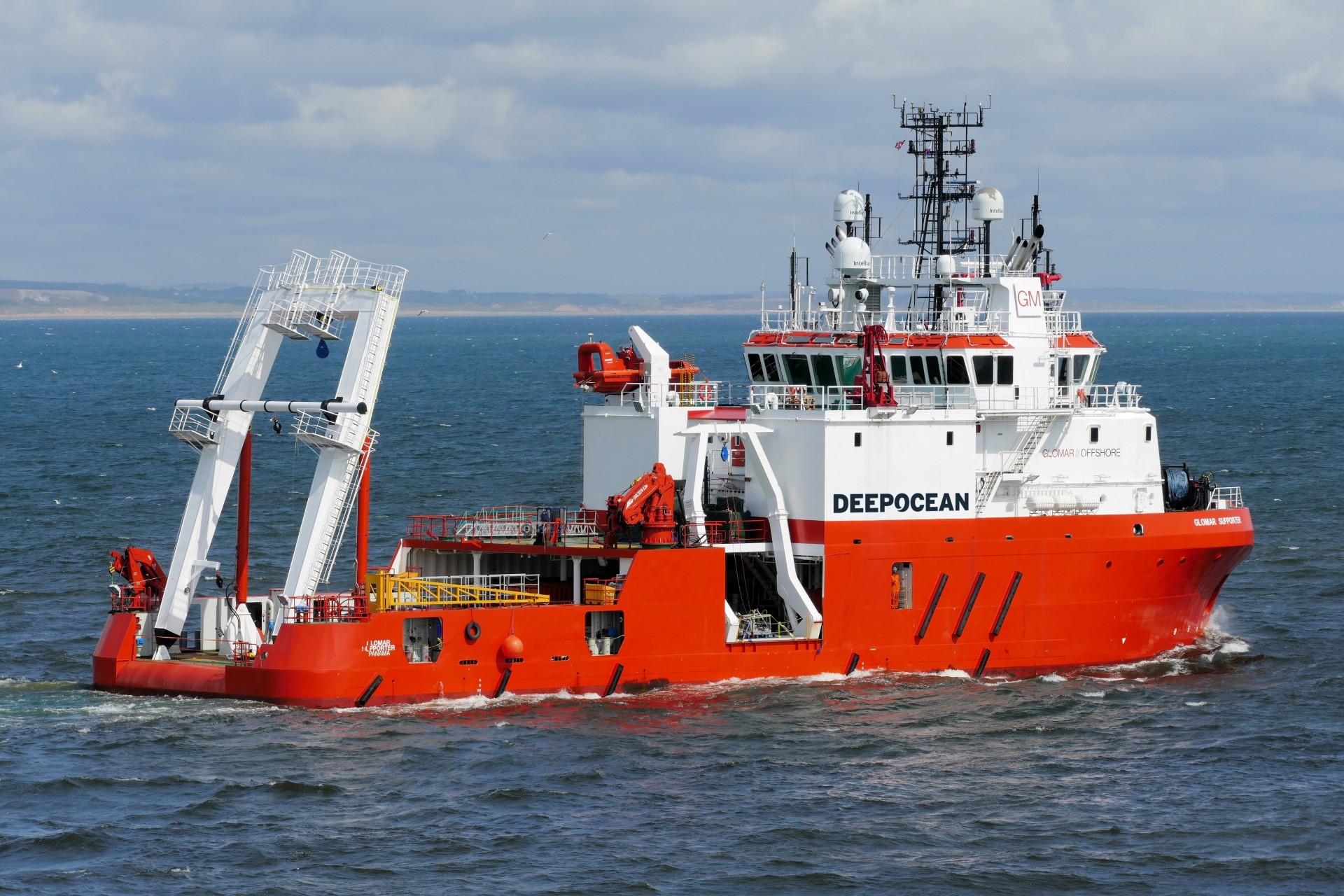
DeepOcean, a prominent offshore services provider, is making a calculated move to bolster its operational footprint in European waters through a new time charter for the multipurpose support vessel (MPSV) Glomar Supporter. This strategic expansion, set to commence in January 2026, underscores a broader industry trend where operators are keenly balancing the enduring needs of traditional oil and gas infrastructure with the burgeoning demands of the offshore renewables sector. By securing a smaller, more cost-effective vessel tailored for survey, inspection, and light inspection, maintenance, and repair (IMR) activities, DeepOcean is positioning itself to capitalize on growing market segments while navigating the inherent volatility of global energy markets. This move is a clear signal of strategic foresight, aiming to deliver high-precision solutions across both conventional and low-carbon energy frontiers, a crucial consideration for investors assessing long-term value in the offshore services space.
Strategic Fleet Enhancement for Dual Market Dominance
DeepOcean’s decision to charter the Glomar Supporter is rooted in a clear strategy to enhance its capabilities in the critical survey, inspection, and light IMR markets. The 60-meter DP2 vessel, extensively refurbished in 2021, brings a proven track record and versatile features to DeepOcean’s fleet. With a carrying capacity of approximately 1,395 tonnes DWT and 497 square meters of deck space, it is ideally suited for deploying advanced sensor types, including seismic and geophysical survey systems, alongside multi-beam echo sounders and geotechnical launch areas. Crucially, the vessel is configured for work-class ROV operations, with DeepOcean planning to mobilize one of its advanced WROVs, and potentially an observation-class ROV, upon delivery. This investment targets the sweet spot of operational efficiency and technological capability, allowing DeepOcean to meet escalating client demand across both established offshore oil and gas assets and the rapidly expanding offshore wind farms. The emphasis on “smaller, more cost-effective” vessels highlights a disciplined capital allocation strategy, aiming for higher utilization rates and optimized operational expenditures in a competitive market.
Navigating a Volatile Price Landscape
The timing of DeepOcean’s strategic fleet expansion comes amidst significant shifts in global commodity markets, a factor deeply scrutinized by investors in the energy sector. As of today, Brent Crude trades at $90.38, reflecting a notable decline of 9.07% within the day, having ranged between $86.08 and $98.97. Similarly, WTI Crude stands at $82.59, down 9.41%. This daily volatility is exacerbated by a broader trend; Brent Crude has plummeted from $112.78 on March 30th to its current $90.38 on April 17th, representing a substantial $22.4, or 19.9%, drop in just two weeks. This sharp correction underscores the unpredictable nature of oil prices and its potential impact on exploration and production (E&P) budgets, which in turn influence the demand for offshore services. However, DeepOcean’s focus on IMR and survey work provides a degree of insulation. Unlike new drilling campaigns, maintenance and inspection are often non-discretionary for existing infrastructure, crucial for safety, regulatory compliance, and sustained production. The strategic diversification into offshore renewables further mitigates exposure to the direct swings of crude prices, positioning the company for more stable revenue streams derived from long-term renewable energy projects.
Investor Focus: Long-Term Value Amidst Uncertainty
Our proprietary reader intent data reveals a prevalent investor concern about the trajectory of crude prices, with a recurring question being, “what do you predict the price of oil per barrel will be by end of 2026?” This sentiment highlights the market’s quest for clarity in a complex environment. DeepOcean’s move to secure the Glomar Supporter, with operations slated for early 2026, directly addresses this long-term outlook. By committing to a vessel that serves both traditional oil and gas and the burgeoning renewables sector, DeepOcean signals a strategy that aims to create value irrespective of short-term price fluctuations or even a prolonged period of suppressed oil prices. Maintenance, inspection, and survey services are fundamental for ensuring the integrity and efficiency of offshore assets, whether they are oil platforms or wind turbines. This inherent demand provides a more resilient revenue foundation compared to highly cyclical drilling or construction services. Investors are increasingly seeking companies that demonstrate adaptability and diversification, capable of thriving through the energy transition. DeepOcean’s expansion into cost-effective solutions for offshore renewables, while maintaining its footprint in oil and gas IMR, positions it as a resilient player in a market grappling with energy security concerns and decarbonization imperatives.
Upcoming Market Catalysts and Future Outlook
The coming weeks are packed with critical energy events that could significantly influence the broader market sentiment for offshore services. Investors will be closely monitoring the OPEC+ Joint Ministerial Monitoring Committee (JMMC) Meeting on April 19th, followed by the full OPEC+ Ministerial Meeting on April 20th. Given the recent steep decline in crude prices, any decisions regarding production quotas will have a profound impact on supply dynamics and price stability, which in turn affects E&P spending. Further insights into demand and activity will come from the API Weekly Crude Inventory reports on April 21st and 28th, alongside the EIA Weekly Petroleum Status Reports on April 22nd and 29th. These provide granular data on U.S. crude stocks, refinery inputs, and product supplied, serving as proxies for global demand trends. Finally, the Baker Hughes Rig Count on April 24th and May 1st will offer a direct measure of upstream activity. While these events primarily influence the oil and gas segment, a more stable or upward-trending price environment could translate into increased capital allocation for offshore projects, including maintenance and new developments. DeepOcean’s strategic investment positions it to capture opportunities in both a potentially reinvigorated oil and gas market and the rapidly expanding offshore renewables sector, offering a balanced exposure to future market catalysts.