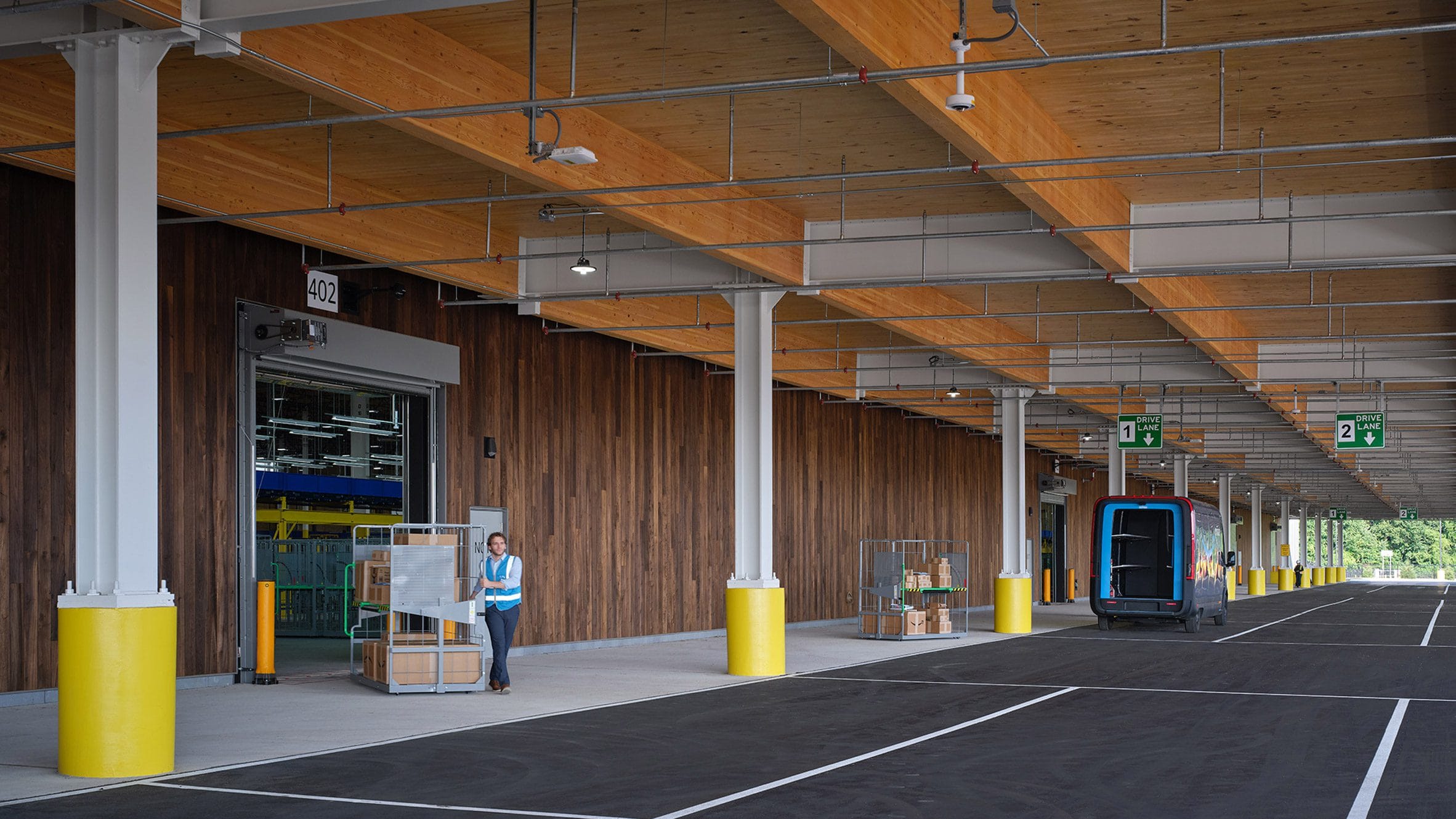
The energy transition is no longer a distant concept; it is actively shaping investment landscapes, and the latest initiatives from global giants like Amazon provide crucial signals for oil and gas investors. Amazon’s Elkhart, Indiana facility, internally dubbed DII5, stands as a tangible demonstration of this shift. By integrating over 40 decarbonization and efficiency systems into a single logistics hub, Amazon is not merely experimenting; it is rigorously testing scalable models for a low-carbon future across its vast global network. For the oil and gas sector, this signals a deepening commitment from major energy consumers to reduce their reliance on traditional fossil fuels, warranting a closer look at the long-term implications for demand and investment strategy.
The Shifting Energy Landscape: Decarbonization’s Impact on Demand
Amazon’s DII5 facility in Elkhart is more than just a sustainable building; it’s a living laboratory designed to quantify and optimize the reduction of carbon emissions and energy consumption in real-world logistics operations. The strategic focus on integrating market-ready technologies, from advanced heat pumps replacing fossil fuel-based heating to extensive LED lighting and a substantial network of electric vehicle charging stations, directly targets significant sources of energy demand. Globally, buildings and construction contribute approximately 40% of greenhouse gas emissions, a figure Amazon explicitly acknowledges in its commitment to reaching net-zero carbon by 2040. This extensive experimentation across its real estate portfolio, as emphasized by Daniel Mallory, Amazon’s Vice President of Global Realty, will guide the company towards its climate goals. For energy investors, this represents a structural shift: as more corporations adopt similar strategies, the demand for natural gas in heating, diesel for logistics, and even grid electricity generated from fossil fuels will face increasing headwinds. The selection of materials like exposed timber, bio-based wood fiber insulation, and ultra-light, low-carbon drywall alternatives further underscores a holistic approach to reducing embodied carbon, extending the decarbonization impact beyond operational energy use.
Market Volatility and the Decarbonization Headwind
Amidst the accelerating corporate push for decarbonization, traditional oil markets continue to exhibit significant volatility. As of today, Brent crude trades at $90.38, reflecting a notable -9.07% drop within the day’s range of $86.08 to $98.97. Similarly, WTI crude is at $82.59, down -9.41% from its daily high. This recent downturn extends a broader trend, with Brent having declined by $22.4, or nearly 20%, from $112.78 just two weeks ago. While geopolitical events and immediate supply-demand imbalances often drive these short-term fluctuations, the persistent drumbeat of decarbonization initiatives like Amazon’s adds a crucial long-term dimension. The ongoing shift towards electrification, energy efficiency, and low-carbon materials, even if its impact isn’t immediately visible in daily price swings, creates a powerful underlying headwind. Gasoline prices, currently at $2.93 and down -5.18% today, also reflect this sentiment, suggesting that while consumers react to immediate economic pressures, the long-term trajectory for fossil fuel demand is increasingly influenced by these widespread corporate and governmental net-zero targets. Investors must recognize that while a barrel of oil might rebound in the short term, the fundamental demand base is gradually being eroded by these systemic changes.
Navigating Upcoming Events Amidst Long-Term Signals
The immediate future for oil markets will be heavily influenced by a series of critical events, but these must now be interpreted through the lens of accelerating energy transition. The upcoming OPEC+ Joint Ministerial Monitoring Committee (JMMC) meeting on April 19th, followed by the full OPEC+ Ministerial Meeting on April 20th, will be paramount. Investors are keenly watching for any adjustments to production quotas, which directly impact global supply. However, OPEC+ faces an increasingly complex challenge: how to manage short-term market stability and price support against the backdrop of long-term demand erosion signaled by initiatives like Amazon’s DII5. Further insights into immediate market fundamentals will come from the API Weekly Crude Inventory reports on April 21st and 28th, and the EIA Weekly Petroleum Status Reports on April 22nd and 29th. These will provide granular data on U.S. crude and product inventories, offering a snapshot of current demand and supply balances. Meanwhile, the Baker Hughes Rig Count on April 24th and May 1st will indicate drilling activity and future production trends. While these events typically drive short-term trading decisions, sophisticated investors will also consider how the collective impact of corporate decarbonization strategies could mute the effectiveness of traditional supply management over time, making sustained high prices more difficult to achieve.
Investor Focus: Addressing Key Questions on a Changing Horizon
Our proprietary reader intent data reveals a clear focus among investors on the future of oil prices, with many asking about predictions for the price of oil per barrel by the end of 2026, and inquiring about OPEC+’s current production quotas. These questions underscore the market’s attempt to grapple with uncertainty. While precise price predictions are inherently speculative, the widespread corporate decarbonization efforts, exemplified by Amazon’s Elkhart facility, provide a crucial directional signal. The long-term trajectory for fossil fuel demand, particularly in sectors targeted by such initiatives, is undeniably downward. Therefore, while OPEC+ production quotas remain vital for managing short-term supply, their ability to dictate prices in a world increasingly committed to net-zero is diminishing. Investors asking about companies like Repsol, for instance, should be scrutinizing their energy transition strategies, evaluating how well they are diversifying into renewables, sustainable fuels, or carbon capture technologies. The critical takeaway is that the energy investment landscape is evolving beyond simple supply-demand models. Successful strategies will increasingly involve identifying companies that are not just surviving, but actively thriving in an economy that prioritizes efficiency and low-carbon solutions, moving beyond traditional upstream and downstream segments to embrace the broader energy transformation.


