CATL’s European Expansion: A Strategic Power Play Amidst Shifting Energy Landscapes
The global energy transition continues its relentless march, and nowhere is this more evident than in the electric vehicle (EV) battery sector. Chinese manufacturing giant CATL is making aggressive strides to solidify its dominance in Europe, a strategic move that carries significant implications for long-term oil demand and investment portfolios. With the doubling of its battery testing and validation capacities in Arnstadt, Germany, by early 2026, CATL is not merely expanding; it is strategically embedding itself into the heart of the European automotive supply chain, positioning itself as a critical enabler for the continent’s EV ambitions and subtly reshaping the future energy mix that oil & gas investors must contend with.
Solidifying European Footprint: CATL’s Multi-Front Expansion
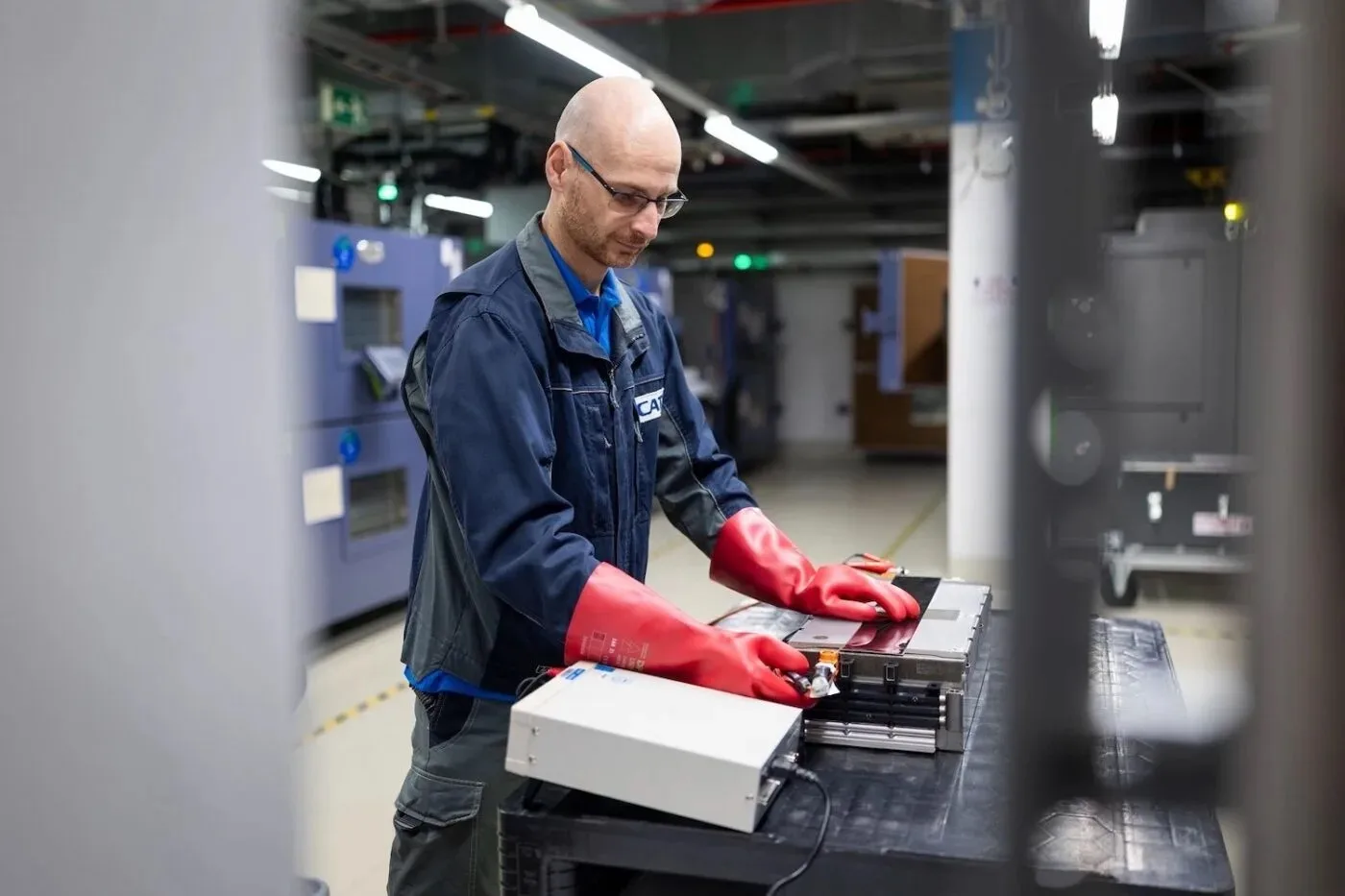
CATL’s operational expansion in Europe is both deep and wide. The Arnstadt facility, which commenced cell production in late 2022 and inaugurated its first European factory in early 2023, is already a cornerstone, supplying cells for high-profile vehicles like the Porsche Macan built in Leipzig and the Audi Q6 e-tron produced in Ingolstadt. This facility, established with an initial investment of €1.8 billion and designed for an annual capacity of 14 GWh, is now set to double its testing capacities. This expansion will create one of Europe’s largest battery cell testing facilities, capable of evaluating diverse battery chemistries and formats, simulating charging conditions, and assessing performance under extreme temperatures down to -30 degrees Celsius. As CATL Germany Managing Director Matt Shen noted, this move directly addresses the growing demand for advanced battery solutions across the continent.
Beyond Germany, CATL’s European strategy includes a planned €4.1 billion cell factory in Zaragoza, Spain, a joint venture with Stellantis, and another significant cell factory under construction in Debrecen, Hungary, expected to commence operations next year to supply major customers like Mercedes-Benz. These multi-country investments underscore a deliberate strategy to localize production, mitigate supply chain risks, and meet the escalating requirements of European automakers. Furthermore, CATL’s commitment to local employment, gradually replacing initial Chinese specialists with 1,700 local personnel and establishing vocational training programs, signals a long-term integration strategy that enhances its resilience and reduces geopolitical sensitivities.
Navigating Volatility: Oil Markets React as EV Momentum Builds
While the long-term structural shift towards electrification gains undeniable momentum, traditional energy markets continue to exhibit their characteristic volatility. As of today, Brent Crude trades at $90.38, reflecting a significant 9.07% drop within the day’s range of $86.08-$98.97. Similarly, WTI Crude stands at $82.59, down 9.41% from its daily high, fluctuating between $78.97 and $90.34. This recent sharp decline follows a notable bearish trend over the past two weeks, with Brent having fallen from $112.78 on March 30th to its current $90.38, representing a substantial 19.9% decrease. Gasoline prices have also seen a downturn, currently at $2.93, down 5.18%.
These immediate price movements are often a complex interplay of geopolitical developments, inventory data, and short-term supply-demand balances. However, for astute oil & gas investors, it’s crucial to contextualize this volatility against the backdrop of accelerating energy transition initiatives like CATL’s European expansion. While current market dynamics might be influenced by inventory builds or shifting economic outlooks, the consistent and substantial investment in EV manufacturing infrastructure directly contributes to the long-term erosion of petroleum demand. Each GWh of battery production capacity brought online, each EV that rolls off an assembly line, chips away at the demand floor for crude oil, creating a persistent bearish pressure that cannot be ignored.
Investor Focus: Peering Through the Fog of Short-Term Data and Long-Term Trends
Our proprietary investor intent data reveals a keen focus on the future price of oil and the strategic decisions of key market players. Investors are frequently asking: “What do you predict the price of oil per barrel will be by end of 2026?” and “What are OPEC+ current production quotas?” These questions highlight the tension between immediate supply-side management and the overarching trajectory of global energy demand. Looking ahead, the upcoming OPEC+ JMMC Meeting on April 19th and the Ministerial Meeting on April 20th will be critical in shaping near-term price stability, as decisions on production quotas directly impact global supply. Further insights will follow with the API Weekly Crude Inventory on April 21st and the EIA Weekly Petroleum Status Report on April 22nd, providing fresh data on U.S. stock levels.
For a comprehensive answer to the 2026 price prediction, investors must balance these near-term supply-side interventions with the demand destruction wrought by the energy transition. Given the aggressive build-out of EV infrastructure, exemplified by CATL’s multi-billion-euro investments and projected operational timelines in Hungary and Spain by next year, we anticipate continued upward pressure on EV adoption rates. This structural shift suggests that even if OPEC+ maintains a disciplined approach to supply, the ceiling for oil prices in the long run faces increasing pressure from demand destruction. While precise predictions are challenging, a conservative estimate might see Brent crude trading in the $80-$100 range for much of 2026, with downward pressure intensifying as EV penetration accelerates beyond current forecasts. The relentless expansion of battery production, as demonstrated by CATL, acts as a powerful counterweight to any bullish aspirations driven solely by supply constraints.
Strategic Implications: Beyond Batteries to the Energy Value Chain
CATL’s aggressive expansion in Europe is more than just a battery story; it is a critical indicator of the accelerating industrialization of the energy transition. For oil & gas investors, this signifies a fundamental shift in capital allocation and value creation. The billions flowing into Gigafactories in Germany, Spain, and Hungary represent capital that historically might have been directed towards upstream oil exploration or refining capacity. This reallocation creates significant investment opportunities in adjacent sectors that support the EV ecosystem: the mining and processing of critical minerals such as lithium, nickel, and cobalt; the development of robust charging infrastructure networks; and the modernization of electricity grids to handle increased demand from electric vehicles.
Furthermore, the localization efforts, including vocational training and the gradual replacement of international specialists with local talent, highlight a deeper societal and economic transformation. Governments, like the Thuringian state government supporting CATL’s testing facility, are actively fostering this shift. Investors should analyze companies positioned to benefit from this new industrial landscape, whether they are in raw material supply, component manufacturing, or smart grid technologies. The long-term investment narrative is increasingly moving away from purely hydrocarbon-centric plays towards a diversified portfolio that accounts for the inevitable and accelerating transition to electric mobility and renewable energy sources. Ignoring these seismic shifts, exemplified by CATL’s strategic moves, would be a disservice to any forward-looking energy investment strategy.