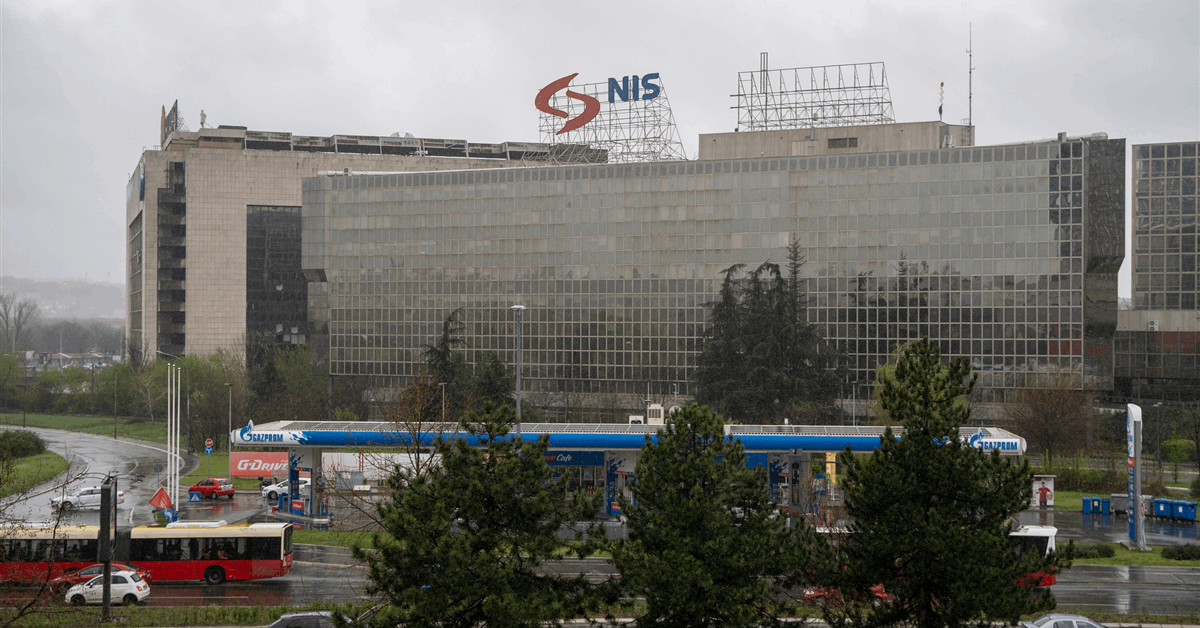
Serbia’s recent short-term gas supply agreement with Russia, extending only until the end of the year, has unveiled a critical fault line in European energy security that sophisticated investors cannot afford to overlook. This development, far from being an isolated incident, underscores the persistent geopolitical complexities shaping global energy markets and presents immediate risks for the Balkan nation while sending broader signals across the investment landscape. As President Aleksandar Vucic expressed “disappointment” after seeking a three-year contract, the immediate implications for Serbia’s winter energy supply are stark, amplified by the shadow of US sanctions on the Russian-controlled Naftna Industrija Srbije (NIS).
Serbia’s Immediate Energy Security Quandary
The decision by Gazprom to offer only a short-term gas deal has left Serbia in a precarious position, with its President having pursued a more stable, long-term commitment. This shorter timeframe introduces significant uncertainty regarding Serbia’s energy supply beyond 2026, especially as winter approaches. The core issue, as articulated by Vucic, appears to be the full implementation of US sanctions on NIS, an oil refiner where Gazprom Neft holds a 56 percent stake. These sanctions, which came into effect earlier this month after temporary waivers expired, have seemingly complicated Russia’s willingness or ability to offer a more extended supply agreement.
Vucic’s rejection of a US suggestion to nationalize NIS to bypass sanctions highlights a commitment to economic principles but also leaves Serbia reliant on a resolution between Moscow and Washington. With Belgrade currently holding only three months of reserves, the urgency of securing stable, long-term gas supplies is paramount. Any shortages this winter could exacerbate existing domestic pressures, given the ongoing anti-government protests that have gripped the nation since November last year. Investors with exposure to the broader European energy sector or regional infrastructure should closely monitor the upcoming meeting between Gazprom Neft CEO Alexander Dyukov and President Vucic in Belgrade, scheduled for Monday, as it could provide crucial insights into potential pathways forward or further entrench the current impasse.
Navigating Market Volatility Amidst Geopolitical Headwinds
The backdrop to Serbia’s energy woes is a global oil market experiencing significant volatility, a factor that amplifies the risk premium for regions with uncertain supply. As of today, our live market snapshot indicates Brent crude trades at $90.38 per barrel, marking a sharp 9.07% decline within the day, with its range fluctuating between $86.08 and $98.97. Similarly, WTI crude stands at $82.59, down 9.41%, having traded between $78.97 and $90.34. This daily downturn is part of a larger trend; Brent has shed nearly 20% in the last fortnight alone, dropping from $112.78 on March 30th to its current level. Gasoline prices also reflect this bearish sentiment, currently at $2.93, a 5.18% drop today.
While the immediate crude price action suggests a market grappling with broader demand concerns or robust supply, the localized energy security risks exemplified by Serbia’s situation contribute to an underlying geopolitical premium. For investors, this means understanding that while headline crude prices may fluctuate, the regional vulnerability of natural gas supply in Europe remains a significant concern. The short-term nature of Serbia’s deal exposes a key European transit route to potential disruption, which, in turn, can influence investor sentiment toward energy infrastructure and utility companies operating in the wider region. Monitoring the interplay between global crude benchmarks and localized natural gas supply stability is crucial for informed capital allocation.
Investor Focus: Decoding Supply Risks and Strategic Plays
Our proprietary intent data reveals that investors are actively seeking clarity on the future of energy markets, particularly regarding the year-end oil price outlook and the production strategies of OPEC+. This focus on long-term price predictions and global supply management directly intersects with the challenges faced by nations like Serbia. A short-term gas deal, born out of geopolitical friction and sanctions, highlights the fragility of energy supply chains and the immediate need for robust diversification strategies.
Investors are increasingly asking about the resilience of energy companies in volatile environments and the impact of geopolitical events on their portfolios. The Serbian situation serves as a stark reminder that regional political tensions, even when seemingly contained, can have tangible impacts on energy availability and pricing. For those evaluating exposure to European energy assets or companies with significant infrastructure in politically sensitive areas, the lack of a long-term gas contract for Serbia necessitates a re-evaluation of risk. It underscores the importance of scrutinizing contractual terms, supply diversification, and the geopolitical leverage held by key energy producers and consumers. While our readers are keen to understand the performance of major players like Repsol, the broader lesson here is the interconnectedness of global politics and local energy supply stability.
Upcoming Events: A Path to Clarity or Further Uncertainty?
The next fortnight presents a series of critical events that could further shape the global energy landscape, directly influencing the environment in which situations like Serbia’s short-term gas deal play out. Investors will be keenly watching the OPEC+ Joint Ministerial Monitoring Committee (JMMC) Meeting on Sunday, April 19th, followed immediately by the full OPEC+ Ministerial Meeting on Monday, April 20th. With Brent crude having experienced a significant downturn in recent weeks, the market will be dissecting every statement for indications of potential production adjustments or shifts in supply strategy. Any decision by OPEC+ to tighten or loosen supply could dramatically impact crude prices, indirectly influencing the leverage of gas-exporting nations and the cost of energy security for importers.
Beyond OPEC+, key weekly data releases will offer further insights into market fundamentals. The API Weekly Crude Inventory report on Tuesday, April 21st, and the EIA Weekly Petroleum Status Report on Wednesday, April 22nd, will provide crucial updates on US supply and demand dynamics. These, alongside the Baker Hughes Rig Count on Friday, April 24th (and again on May 1st), offer a pulse check on drilling activity and future production capacity. While these events focus primarily on oil, their cumulative effect on overall energy market sentiment and price stability is undeniable. For Serbia and other nations facing energy security dilemmas, the global market’s trajectory, influenced by these upcoming events, will dictate the broader context for their supply negotiations and long-term energy planning.


