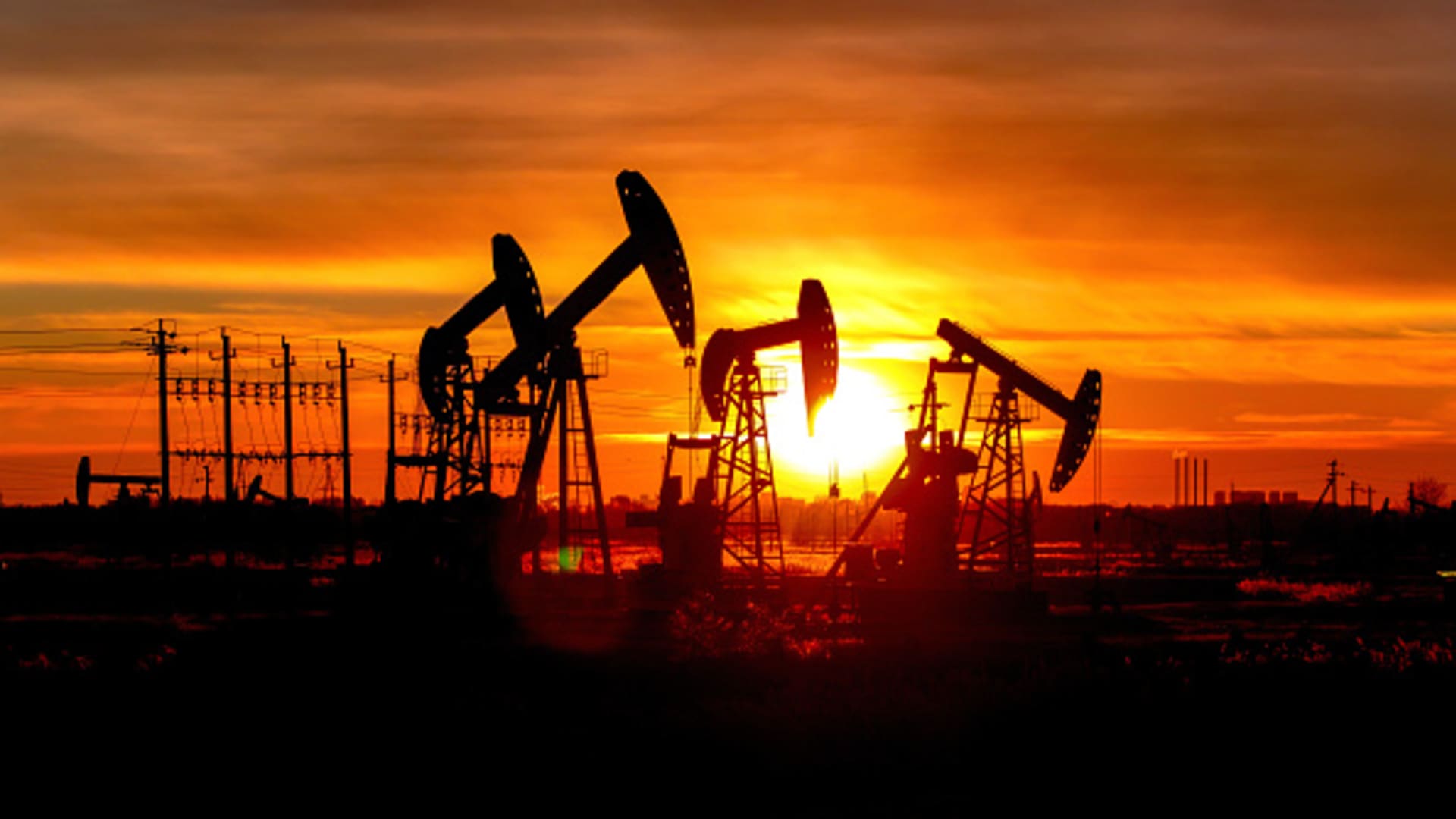
The global energy landscape is once again forcing supermajors to recalibrate their strategies, as the era of unprecedented profits from 2022 gives way to a more challenging crude price environment. Just a few years ago, the likes of Exxon Mobil, Chevron, Shell, BP, and TotalEnergies collectively amassed nearly $200 billion in profits, generously rewarding shareholders through dividends and share buybacks. However, with softening crude prices, these generous payout policies are now under intense scrutiny, compelling leading oil and gas companies to make tough financial decisions that will define their resilience in the coming months.
The Evolving Calculus of Shareholder Returns
For a period, the industry’s largest players were returning as much as 50% of their cash flow from operations (CFFO) to investors. This impressive figure, while a boon for shareholders during the boom, is proving unsustainable in the current market. As crude prices soften, this aggressive return policy risks placing undue strain on balance sheets, potentially pushing companies towards unhealthy levels of debt. The strategic shift is already underway, with BP and TotalEnergies leading by announcing plans to reduce shareholder returns. This move is widely seen as a sensible change in direction, setting a precedent that other major oil companies are likely to follow. Industry experts emphasize that when faced with difficult choices, trimming share buybacks is the most palatable option. Buybacks, often described as “gravy” for investors, are seen as more flexible and less impactful than dividend cuts, which are considered the “meat” of shareholder compensation and could send significant tremors through Wall Street.
Current Market Headwinds and Investor Sentiment
The pressures on oil majors are not merely theoretical; they are reflected directly in today’s market dynamics. As of today, Brent crude trades at $90.38 per barrel, marking a sharp 9.07% decline within the day, with its range fluctuating between $86.08 and $98.97. Similarly, WTI crude has fallen to $82.59, down 9.41% for the day, trading between $78.97 and $90.34. Gasoline prices have also dipped to $2.93, a 5.18% drop. This recent volatility is part of a broader, more troubling trend; Brent crude has shed a substantial $22.4, or nearly 20% of its value, over the last two weeks alone, plummeting from $112.78 on March 30th to today’s levels. This downward trajectory fuels significant investor concern, highlighted by a common question surfacing from our proprietary reader intent data: “What do you predict the price of oil per barrel will be by end of 2026?” Such inquiries underscore the market’s anxiety about sustained lower prices, with some analysts even projecting the potential for crude to dip into the $50 range next year if OPEC continues to release surplus capacity and global inventories build. In response, companies are actively looking to reduce costs and capital spending wherever feasible to maintain financial integrity.
Navigating Future Volatility: Key Events on the Horizon
For investors charting their course through this uncertain environment, the coming weeks present several pivotal events that could significantly influence market direction and, consequently, investment strategies. The immediate focus will be on the OPEC+ Joint Ministerial Monitoring Committee (JMMC) Meeting scheduled for April 19th, followed by the full OPEC+ Ministerial Meeting on April 20th. These gatherings are critical, as they will dictate any adjustments to production quotas, directly impacting global supply. Our proprietary data shows that “What are OPEC+ current production quotas?” is a top query this week, reflecting the market’s keen interest in potential policy shifts. Beyond OPEC+, the market will closely scrutinize the API Weekly Crude Inventory reports on April 21st and 28th, along with the EIA Weekly Petroleum Status Reports on April 22nd and 29th. These inventory figures offer vital insights into supply-demand balances within the U.S. market, serving as leading indicators for global trends. Furthermore, the Baker Hughes Rig Count reports on April 24th and May 1st will provide a window into future production capacity, indicating whether North American producers are scaling back or expanding their drilling activities. Each of these events carries the potential to introduce new volatility or stability, demanding active monitoring from discerning investors.
Strategic Adaptation for a Leaner Future
The current climate demands more than just tactical adjustments; it necessitates a fundamental re-evaluation of operating models for Big Oil. While cutting buybacks is an immediate and sensible step, the long-term imperative is to build greater financial resilience through rigorous cost control and capital discipline. The days of “monster profits” may not return quickly, and therefore, sustaining high shareholder returns will increasingly depend on operational efficiencies and optimized capital allocation rather than simply relying on elevated crude prices. Companies like Exxon Mobil and Chevron, along with their European peers, are already implementing job cuts and cost reduction programs, signaling a broader industry pivot towards a leaner operating structure. Investors must recognize that while dividend stability remains a priority, the ability of these energy giants to maintain healthy balance sheets in a potentially prolonged lower-price environment will ultimately dictate their long-term attractiveness. The challenge now is to navigate this period of pressure without undermining the core appeal of oil and gas investments, demanding agile and forward-thinking strategies from the industry’s leaders.

