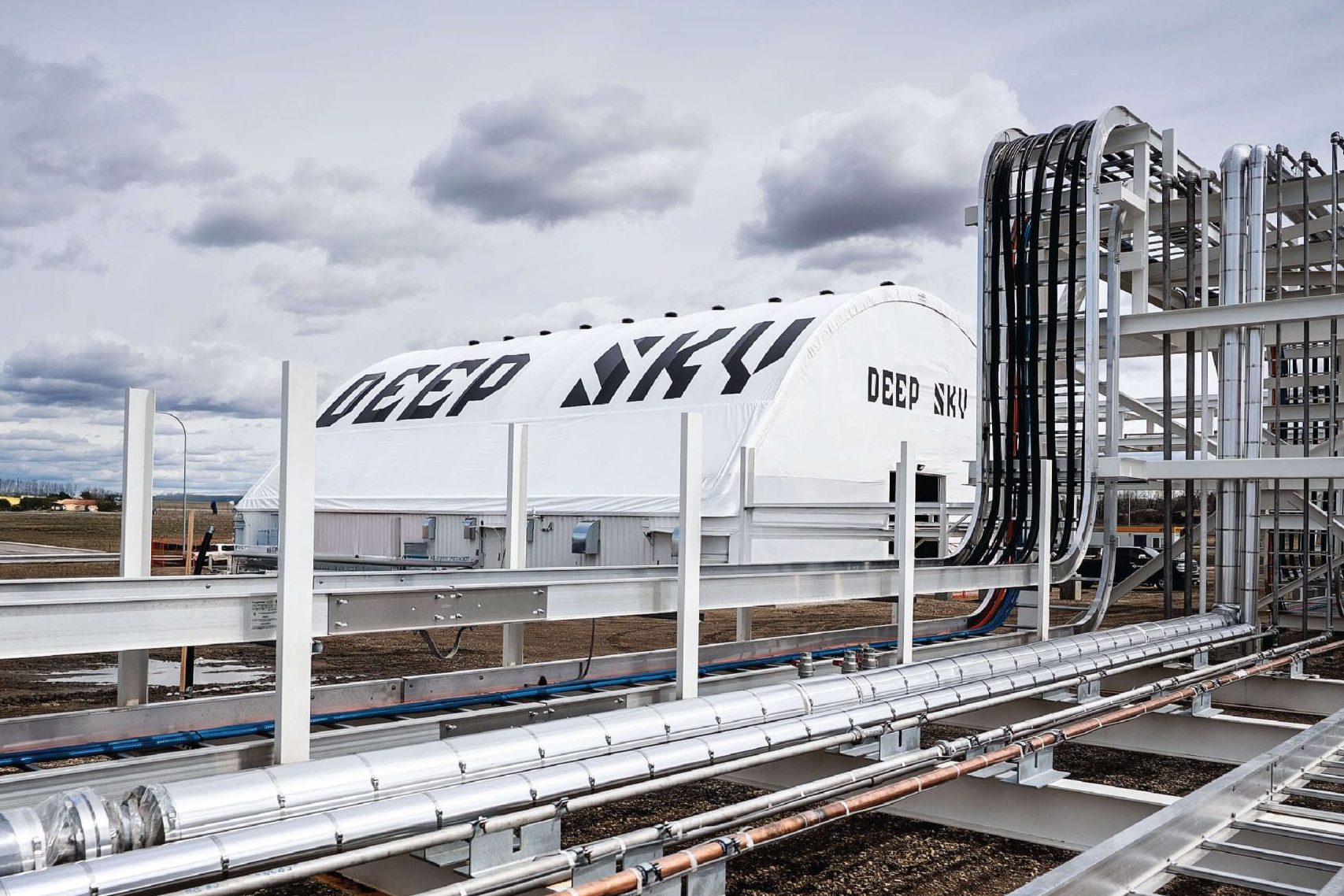
The energy sector is in constant flux, driven by both traditional supply-demand dynamics and the accelerating pivot towards decarbonization. Against a backdrop of volatile crude markets, the emergence of large-scale carbon removal projects represents a significant investment frontier. Deep Sky’s announcement to build a 500,000-tonne annual capacity carbon removal facility in Manitoba, Canada, is not merely a technological feat; it’s a strategic play that signals a maturing market for engineered climate solutions. For investors tracking the evolution of energy portfolios, this project offers a compelling case study in diversification, technological scalability, and the critical role of supportive regional ecosystems.
Canada’s Emerging Carbon Hub: Scale and Strategic Advantage
Deep Sky’s selection of Manitoba for one of the world’s largest carbon removal facilities underscores Canada’s ambition in the engineered carbon sequestration space. With a target annual capacity of 500,000 tonnes of CO₂, this project is designed to operate at a scale necessary to make a meaningful impact on industrial emissions. The initial phase, slated to begin construction in 2026, represents an investment exceeding USD 200 million for a 30,000-tonne capacity. This substantial capital commitment highlights the growing confidence in the commercial viability and technological readiness of direct air capture (DAC) and other carbon removal methods.
Manitoba’s appeal extends beyond its supportive government, which passed enabling CO₂ storage legislation in 2024 with further regulatory details expected later this year. The province boasts an ideal combination of geological suitability, featuring deep saline formations perfect for permanent CO₂ sequestration, and a near-zero-emission hydroelectric grid. This clean energy source is crucial, as the energy intensity of carbon removal technologies demands a low-carbon power supply to ensure net environmental benefit. Investors should view Manitoba’s integrated approach – legislative support, geological assets, and clean energy – as a blueprint for de-risking and scaling future carbon removal ventures.
Navigating the Market: Carbon Removal Amidst Volatile Crude
The investment landscape for energy is currently characterized by significant price fluctuations in traditional commodities. As of today, Brent Crude trades at $90.38, reflecting a notable -9.07% drop within the day’s range of $86.08-$98.97. WTI Crude mirrors this volatility, sitting at $82.59, down -9.41% from its daily high. This downward pressure continues a trend observed over the past two weeks, where Brent has fallen from $112.78 on March 30th to its current level. Such market dynamics raise immediate questions for investors, many of whom are actively asking about the long-term trajectory of oil prices and whether current volatility reflects a temporary correction or a more fundamental shift towards energy alternatives by the end of 2026.
While the immediate focus of many portfolios remains on navigating crude price swings, the long-term imperative for decarbonization remains unyielding. Projects like Deep Sky’s offer a tangible pathway for investors to diversify away from purely fossil fuel-dependent assets into climate-aligned growth sectors. The significant capital flowing into carbon removal, even amidst a challenging crude market, indicates a strategic long-term view that values sustainability and emissions reduction as essential components of future economic stability. This dual perspective is crucial: managing current commodity risks while actively investing in solutions that address the energy transition.
ESG Integration: Indigenous Partnerships as a De-Risking Strategy
A critical, and often overlooked, dimension of large-scale industrial projects is social license and community engagement. Deep Sky’s approach in Manitoba sets a strong precedent through its Declaration of Relationship with the Dakota Grand Council, representing the Dakota Nations of Manitoba. This partnership aims to explore investment and collaboration opportunities in alignment with Indigenous sustainability strategies. For investors, this proactive engagement translates into a significant de-risking factor, enhancing the project’s environmental, social, and governance (ESG) profile.
The inclusion of Indigenous economic participation and shared decision-making not only fosters local support but also provides invaluable traditional ecological knowledge and a long-term community vision. In an era where ESG performance increasingly influences capital allocation, such collaborations signal robust governance and a commitment to equitable development. This approach addresses investor concerns about the sustainability and longevity of industrial projects, ensuring that the benefits are shared broadly and that the project is anchored within the regional social fabric. It’s a strategic move that can attract impact-focused capital and mitigate potential future conflicts, positioning the venture for enduring success.
Forward Outlook: Policy, Prices, and the Carbon Economy’s Trajectory
The coming weeks hold critical insights that could further shape the energy investment landscape, influencing both traditional oil & gas and emerging sectors like carbon removal. The OPEC+ JMMC Meeting on April 19th and the subsequent OPEC+ Ministerial Meeting on April 20th are pivotal events that could dictate global supply strategies and, consequently, crude prices. Following these, the weekly API and EIA petroleum status reports will provide granular data on inventories and demand, while the Baker Hughes Rig Count offers a pulse on upstream activity. Investors are keenly watching these developments, particularly regarding OPEC+’s current production quotas, a frequent topic among our readers.
Any shifts in these traditional energy metrics could influence the competitive landscape for carbon-intensive industries, further solidifying the economic case for projects like Deep Sky’s. As Manitoba finalizes its regulatory details for CO₂ storage later this year, these policy frameworks, combined with evolving carbon credit markets, will define the financial incentives and long-term value proposition for engineered carbon removal. The initial construction phase in 2026 marks the beginning of a multi-decade operational lifespan, offering investors exposure to a sector poised for significant growth as global decarbonization efforts intensify. The trajectory of carbon prices and the increasing demand for verifiable offsets will be key drivers for the sustained profitability and expansion of such facilities.


