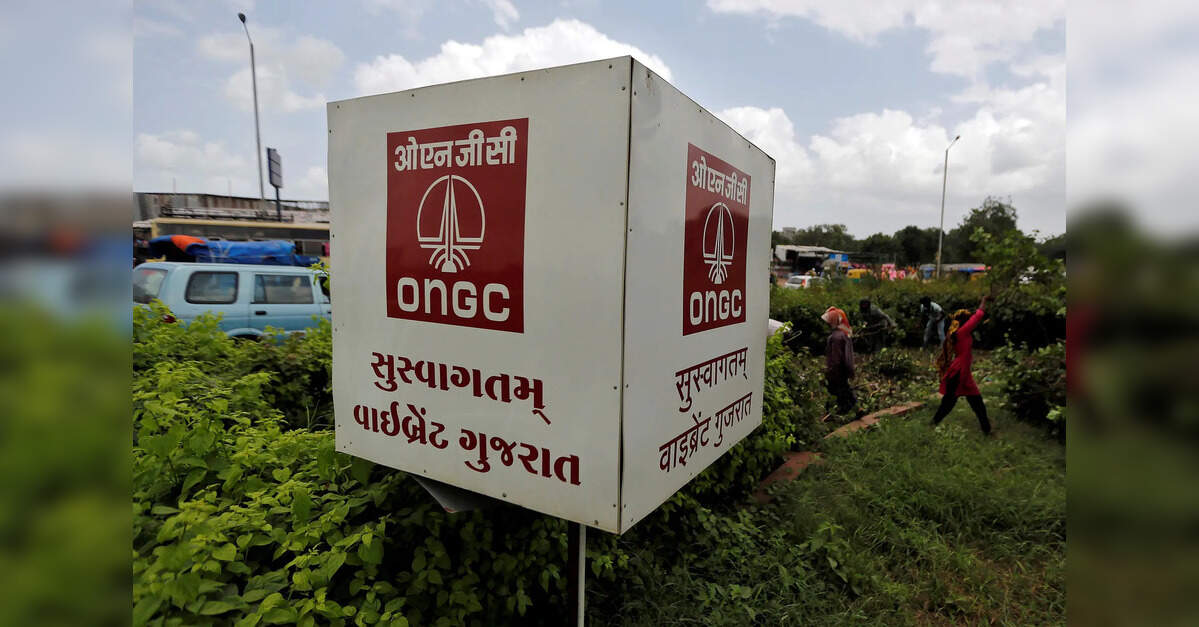
In a significant move that underscores both its strategic commitment and the current market’s demand for enhanced credit security, Oil and Natural Gas Corporation (ONGC) has stepped in to back a substantial bond issuance for its petrochemical subsidiary, ONGC Petro Additions Ltd (OPAL). This isn’t just another corporate guarantee; it marks the first such endorsement from ONGC in 15 years, signaling a critical de-risking strategy for investors eyeing the ₹5000 crore ($563.22 million) multi-tranche bond sale. Amidst a period of pronounced volatility in global crude markets, this unconditional and irrevocable guarantee elevates OPAL’s credit rating to a provisional AAA (CE), transforming the investment landscape for potential bondholders and setting a new precedent for large-scale fundraising in India’s energy sector.
ONGC’s Strategic Backing: A 15-Year Precedent Resurfaces
ONGC’s decision to provide an unconditional and irrevocable guarantee for OPAL’s upcoming bond sale is a powerful statement, particularly given its rarity. This is the first time the energy giant has extended such a backing since January 2010, when it supported bonds for ONGC Videsh Ltd. Such an intervention is not made lightly and highlights the strategic importance of OPAL’s petrochemical project in Gujarat. With ONGC holding over 95% ownership in OPAL, the guarantee effectively aligns the subsidiary’s credit profile with that of its highly-rated parent. This move is crucial, as OPAL’s bonds were previously rated AA+ by Crisil. The ONGC guarantee immediately elevates this to a provisional AAA (CE), a significant leap that drastically improves the bonds’ appeal to a broader and more risk-averse investor base, especially state-run institutions that often seek top-tier credit instruments.
Navigating a Turbulent Crude Market: Investor Appetite and Yields
The timing of OPAL’s bond issuance coincides with a period of notable market turbulence, a factor that undoubtedly amplifies the value of ONGC’s guarantee. As of today, Brent Crude trades at $90.38, reflecting a sharp 9.07% decline within the day, with its price range fluctuating between $86.08 and $98.97. Similarly, WTI Crude has seen a 9.41% drop, settling at $82.59, having traded between $78.97 and $90.34. This daily downturn is part of a broader trend; our proprietary data shows Brent has fallen by $22.4, or nearly 20%, from $112.78 on March 30th to its current level. Gasoline prices have also dipped, now at $2.93 per gallon, down 5.18% today. This significant market softening creates a challenging environment for issuers. Investors, facing uncertainty and potential downside risks, are naturally more cautious about locking in lower yields. This sentiment is palpable, with market intelligence indicating that while issuers often push for very low coupon rates, investor discomfort with exposure at diminished returns has historically constrained issuance sizes. ONGC’s AAA (CE) guarantee directly addresses this unease, offering a layer of security that can attract capital even in a yield-sensitive market.
Forward Outlook and Investor Focus: What’s Next for Energy Markets?
The successful placement of OPAL’s five-year bonds, particularly the hunt for an anchor investor, will undoubtedly be influenced by upcoming events in the global energy calendar. Our reader intent data reveals that investors are keenly focused on the future trajectory of crude prices, with many asking for predictions on oil prices by the end of 2026, and also seeking clarity on OPEC+ production quotas. These questions directly intersect with a series of critical upcoming events: the OPEC+ JMMC Meeting on April 19th, followed by the OPEC+ Ministerial Meeting on April 20th. Any decisions or signals from these gatherings regarding production levels could significantly impact crude prices and, consequently, investor sentiment towards energy-related debt. Additionally, the regular API and EIA Weekly Crude Inventory reports on April 21st and 22nd, respectively, along with the Baker Hughes Rig Count on April 24th, will provide crucial insights into supply-demand dynamics. With OPAL aiming to finalize its bond issuance within this quarter, the stability offered by ONGC’s guarantee becomes even more critical, insulating the offering from potential adverse reactions to these market-moving announcements and reassuring investors amidst ongoing price volatility and uncertainty surrounding future supply policies.
OPAL’s Growth Ambitions Underpinned by Enhanced Credit
OPAL’s current fundraising objective of ₹5000 crore represents a substantial leap from its prior market activities. The company presently has outstanding bonds totaling ₹1760 crore. Its most recent foray into the bond market was 15 months ago, where it successfully raised ₹160 crore through a three-year bond issue at an 8.39% coupon rate. The contrast between that relatively smaller issuance and the current ambitious target highlights OPAL’s significant growth plans for its petrochemical operations. The enhanced provisional AAA (CE) rating, thanks to ONGC’s backing, is not just a cosmetic change; it’s a fundamental enabler for this larger fundraising effort. In an environment where investors are increasingly scrutinizing credit quality and demanding appropriate compensation for risk, the highest possible domestic rating offers a competitive edge. It allows OPAL to tap into a wider pool of institutional investors who might otherwise be hesitant due to the inherent project-specific risks or the broader energy market’s fluctuations. This guarantee is therefore a cornerstone in securing the capital required for OPAL’s future expansion and operational stability, ensuring its commitments can be met within stated timelines.


