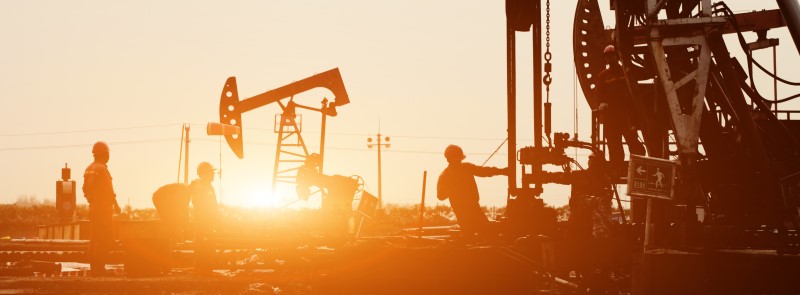
The Texas Railroad Commission (RRC) has launched a critical initiative designed to bolster operator profitability and safeguard state revenues: the State Task Force on Petroleum Theft (STOPTHEFT). This newly formed body, established under Senate Bill 494, directly confronts the escalating challenge of organized petroleum theft that has plagued Texas oil and gas operations. For investors tracking the performance of major players in the Permian Basin and beyond, this development signals a proactive step toward mitigating a significant, often overlooked, drain on financial performance. By bringing together industry leaders, law enforcement, and regulatory experts, Texas aims to close a loophole that has been eroding an estimated 40% of operators’ margins through illicit activities, a move that could translate into tangible value for shareholders.
The Hidden Cost of Doing Business in the Permian
Petroleum theft is far from a minor nuisance; it represents a substantial and sophisticated threat to the economic viability of Texas oil and gas producers. RRC Chairman Jim Wright highlighted that over 40% of operators have reported theft-related losses within the last year alone. This isn’t just about a few barrels here and there; it’s an increasingly organized crime impacting crude oil, condensate, and refined products across the state. Companies like ConocoPhillips, Occidental Petroleum, Diamondback Energy, and Ring Energy, all with executives on the STOPTHEFT task force, are at the forefront of this battle. For investors, these losses translate directly into reduced revenue, diminished cash flow, and ultimately, lower earnings per share. In an industry where every dollar of margin is fiercely contested, the ability to curb these losses effectively represents a direct uplift to the bottom line, enhancing the intrinsic value of these Texas-heavy portfolios.
Navigating Volatility: Every Barrel Counts
The importance of preventing petroleum theft is amplified by current market dynamics, where price volatility continues to test operator resilience. As of today, Brent crude trades at $90.38, reflecting a notable 9.07% decline from its previous close, with a day range between $86.08 and $98.97. Similarly, WTI crude mirrors this trend, standing at $82.59, down 9.41%, having traded between $78.97 and $90.34. This downturn is part of a broader trend; in the last 14 days alone, Brent has shed nearly 20% of its value, dropping from $112.78 to its current level. In such a fluctuating environment, where global crude benchmarks can swing by over $20 in a mere two weeks, the impact of losing physical product to theft becomes even more pronounced. What might have been a manageable loss when Brent was over $110 per barrel becomes a significant hit to profitability at $90.38. Therefore, any initiative that can safeguard realized production volumes directly contributes to margin preservation and operational stability, providing a crucial buffer against unpredictable market swings.
Upcoming Catalysts and Forward-Looking Impact
The STOPTHEFT task force’s inaugural meeting this month is strategically timed, coinciding with a period of intense activity on the global energy calendar. Just days later, investors will keenly watch the full OPEC+ Ministerial Meeting on April 19th for cues on future supply policies. Subsequent API and EIA Weekly Petroleum Status Reports on April 21st, 22nd, 28th, and 29th will provide fresh data on inventory levels, further shaping market sentiment. Amidst these macro forces, the task force’s work on reviewing laws, analyzing economic impacts, and strengthening enforcement practices offers a micro-level catalyst for Texas-focused operators. Successful implementation of STOPTHEFT’s recommendations could lead to a measurable increase in effective production volumes and a reduction in operational expenditures related to security and loss investigation. This proactive stance not only promises to enhance the financial performance of individual companies but also reinforces Texas’s role as a reliable contributor to America’s energy supply, a point emphasized by Commissioner Wayne Christian.
Addressing Investor Concerns: Margins, Security, and Future Value
Our proprietary reader intent data reveals that investors are keenly focused on the future, asking crucial questions such as “what do you predict the price of oil per barrel will be by end of 2026?” and “How well do you think Repsol will end in April 2026?” While global oil prices are influenced by myriad factors, an initiative like STOPTHEFT directly addresses the operational efficiency and profitability of companies operating in Texas, irrespective of the prevailing market price. By effectively reducing “shrinkage,” operators can improve their realized revenue per barrel produced, leading to better financial health. This operational uplift provides a buffer against price volatility and strengthens the investment case for companies with significant exposure to Texas. For investors concerned about the performance of individual entities or the broader market, improved security and reduced theft risk translate into a more predictable and robust earnings profile. The task force’s work, therefore, is not merely about law enforcement; it’s about enhancing the long-term value proposition for investors in Texas’s vital oil and gas sector.


