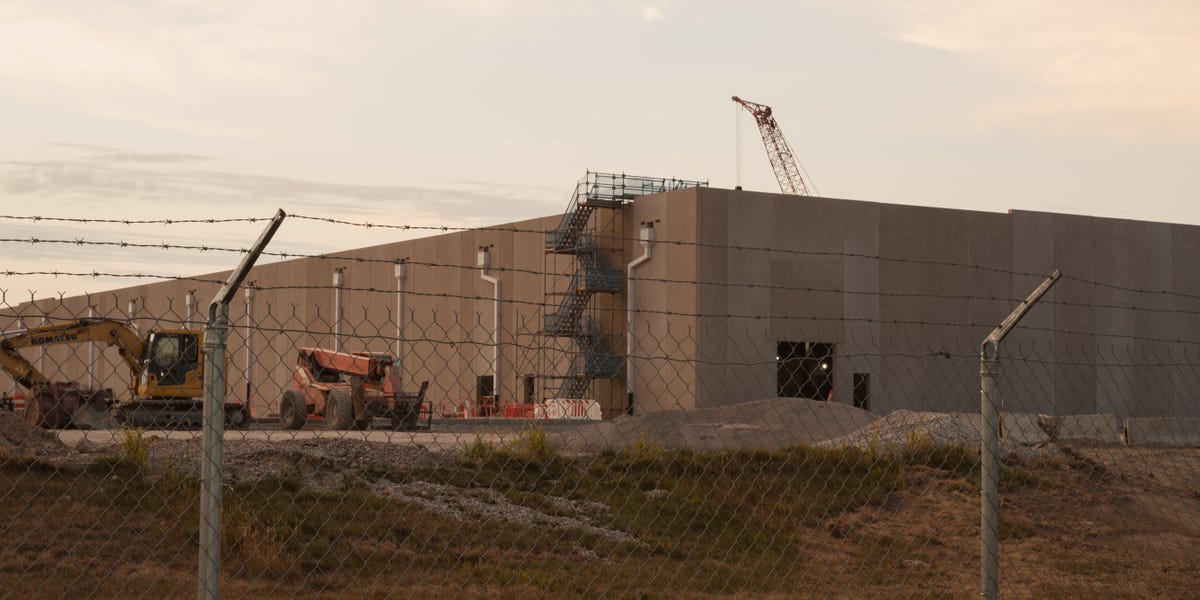
The global energy landscape is undergoing a profound transformation, driven not by traditional industrial expansion, but by the insatiable demands of artificial intelligence. What began as a technological revolution is rapidly evolving into an unprecedented infrastructure build-out, with Silicon Valley leaders echoing a “build, baby, build” mantra for massive data centers. Companies like Meta project an astounding $600 billion in AI infrastructure spending through 2028, while OpenAI and Oracle are committing $500 billion to a single data center project. Amazon alone plans over $30 billion in capital expenditures for AI infrastructure in each of the next two quarters. This colossal investment, however, presents a dual challenge for oil and gas investors: the immense strain it places on global energy grids and the inherent uncertainty surrounding the financial returns of AI itself. Understanding these dynamics is critical for navigating the evolving market.
The AI Energy Leviathan and Grid Strain
The scale of AI infrastructure development is staggering, translating directly into escalating energy demand. According to comprehensive industry mapping, America alone saw 1,240 data centers either built or approved for construction by the close of 2024, a nearly fourfold increase since 2010. This expansion is accelerating, with top energy consumers such as Amazon, Meta, Microsoft, and Google collectively forecast to spend an estimated $320 billion on capital expenditures this year, predominantly for AI infrastructure. To put this into perspective, this figure surpasses the entire GDP of Finland and approaches ExxonMobil’s total revenue from 2024. Such a concentrated surge in power consumption is already taxing electricity grids, leading to concerns about reliability and requiring substantial new investment in generation capacity.
The primary energy sources fueling these data centers are predominantly natural gas and, in some regions, coal, with a growing push for renewables. However, the sheer volume of demand means that fossil fuels will continue to play a crucial role in ensuring grid stability and meeting peak loads. For oil and gas investors, this signifies a structural uplift in demand for natural gas, potentially extending the runway for gas-fired power generation assets and associated infrastructure. The “build, baby, build” ethos of AI is not just about silicon and fiber; it’s fundamentally about gigawatts, and the global energy sector is on the front lines of supplying them.
Market Volatility and Investor Sentiment Amidst the AI Boom
Despite the long-term implications of AI’s energy footprint, the immediate crude oil market continues to react to a complex interplay of supply, demand, and geopolitical factors. As of today, Brent crude trades at $91.8 per barrel, experiencing a 1.89% decline, with its intraday range settling between $91.58 and $93.04. Similarly, WTI crude is priced at $88.88 per barrel, down 2.51% today, fluctuating between $88.75 and $90.34. This recent dip extends a notable trend: Brent has shed $14, or 12.4%, from its $112.57 peak on March 27th to $98.57 yesterday, before today’s further move downwards. Our proprietary analysis of reader intent data indicates a strong focus on these price movements, with investors frequently querying current Brent crude values and seeking clarity on the models driving these responses.
While the tech-heavy Nasdaq has surged 19% this year, with giants like Nvidia, Google, Microsoft, and Oracle posting gains exceeding 25% or even 75%, the oil market operates on different immediate drivers. Many investors are asking about current OPEC+ production quotas, highlighting the persistent influence of supply-side management. However, the underlying, rapidly accelerating energy demand from AI infrastructure provides a fundamental bullish counter-narrative for the long term. Even if the financial returns of AI remain speculative, the physical energy required to power this revolution is a concrete and growing demand driver for the oil and gas sector, offering a degree of insulation from the potential “bubble” concerns that cloud the AI tech space itself.
Forward-Looking Demand Drivers and Upcoming Energy Catalysts
The trajectory of AI infrastructure spending signals a significant and sustained increase in global electricity demand, which will invariably lean on traditional energy sources for years to come. The comparison of this construction boom to monumental projects like the Apollo space program or the interstate highway system underscores its transformative potential for energy markets. This burgeoning demand, while long-term, will subtly influence the strategic decisions made by major energy producers and regulators in the near term.
Against this backdrop, the upcoming OPEC+ Joint Ministerial Monitoring Committee (JMMC) meeting on April 17th and the full Ministerial Meeting on April 18th are critically important. While these gatherings primarily address existing market balances and geopolitical factors, the persistent undercurrent of growing energy demand from AI could inform discussions around future supply strategies and production quotas. Investors will be keen to see if any signals emerge regarding longer-term market outlooks.
Furthermore, critical weekly data releases will provide real-time insights into market health. The API Weekly Crude Inventory report on April 21st and 28th, followed by the EIA Weekly Petroleum Status Report on April 22nd and 29th, will offer crucial indicators of near-term supply and demand dynamics. Additionally, the Baker Hughes Rig Count on April 24th and May 1st will shed light on North American production activity. While these events primarily reflect immediate market conditions, their cumulative impact will be viewed through the lens of a future increasingly powered by AI, emphasizing the foundational role of stable, abundant energy supply.
The “Dark Fiber” Parallel and Investment Resilience
The sheer scale of capital deployment into AI infrastructure has drawn comparisons to past speculative booms, notably the fiber-optic bust at the turn of the century, which left miles of “dark fiber” and significant investor losses. Executives like OpenAI’s finance chief have even underscored the enormousness of this investment. The core concern for some analysts is whether the revenue generated by AI products and services will ultimately justify the hundreds of billions, if not trillions, being poured into data centers and specialized hardware. If the business case for AI remains untested or underperforms expectations, the economic fallout could be substantial, ranging from stock market corrections to vacant infrastructure.
However, for oil and gas investors, this scenario presents a unique resilience. Even in the event of an AI “bubble” pop, the energy infrastructure built to power these systems still exists and will continue to demand significant power. The physical requirement for electricity, and thus the primary energy sources like natural gas and crude derivatives, is concrete. This positions oil and gas as a foundational investment, less directly exposed to the speculative returns of AI applications and more tethered to the tangible energy consumption of the underlying infrastructure. While the AI sector grapples with uncertain returns, the oil and gas industry stands ready to meet the unavoidable energy needs of this new technological frontier, offering a robust long-term demand story for those focused on foundational commodities.


