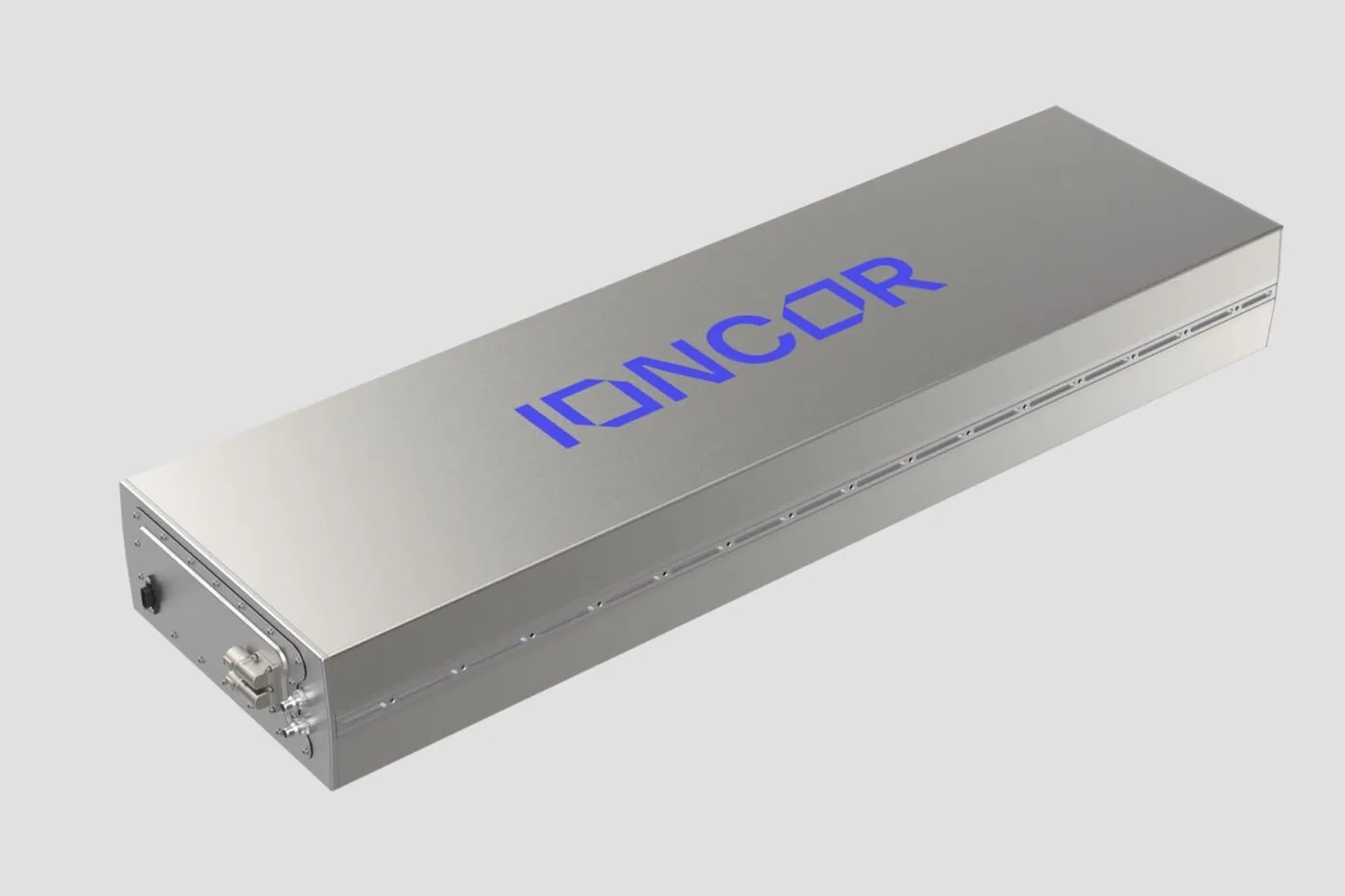
The global energy landscape is undergoing a profound transformation, and while the spotlight often shines on large-scale renewable projects or passenger EV adoption, significant shifts are also occurring in less visible but equally impactful sectors. The recent unveiling of Ioncor’s Energy Pack Long cell-to-pack battery system for electric buses, coupled with its partial nationalization by the Finnish government, serves as a stark reminder for oil and gas investors: technological advancements and strategic geopolitical maneuvers in the electrification space are directly impacting the long-term demand trajectory for traditional hydrocarbons. This is not merely an EV story; it’s a critical signal about the evolving competitive environment and the imperative for investors to recalibrate their energy portfolios in anticipation of future market dynamics.
Advanced Battery Tech Fuels Commercial EV Momentum Amidst Market Volatility
Ioncor’s new Energy Pack Long system represents a significant leap in battery technology for heavy-duty electric vehicles. With a robust capacity of 79 kWh per pack, scalable up to 1,000 kWh, and operating at 666 volts, this cell-to-pack solution boasts industry-leading energy density at 290 Wh/l or 160 Wh/kg. This impressive density allows for flexible integration across various bus platforms, while its design for long life cycles, exceeding 7,000, and rapid charging capabilities (10-80% in just 25 minutes at a 3C rate) directly addresses the operational demands and economic viability of commercial fleets. Such advancements are critical enablers for the widespread adoption of electric buses, directly translating to reduced diesel consumption on a global scale.
The introduction of high-performance solutions like Ioncor’s comes at a time when traditional energy markets are exhibiting notable volatility. As of today, Brent Crude trades at $90.38, marking a significant 9.07% decline from its previous close, with its daily range spanning $86.08 to $98.97. Similarly, WTI Crude stands at $82.59, down 9.41% within a range of $78.97 to $90.34. Gasoline prices have also softened to $2.93, a 5.18% drop. This recent softening in crude and refined product prices, while influenced by immediate supply-demand dynamics and broader macroeconomic sentiment, occurs against a backdrop of increasing long-term demand uncertainty driven by electrification advancements. The 14-day trend for Brent Crude, which saw prices fall by nearly 20% from $112.78 to its current level, underscores the market’s sensitivity to both immediate economic signals and the creeping erosion of future demand, partially fueled by the accelerating pace of EV deployment in sectors like public transport.
Geopolitical Strategy and Shifting Energy Security Paradigms
The strategic partial nationalization of Ioncor by the Finnish government is perhaps as significant as the technical specifications of its new battery system. With Ioncor soon to be 70% owned by the state-owned Finnish Minerals Group and its former parent, Valmet Automotive, becoming 79% state-owned, Finland has committed €20 million in new capital. This move is explicitly framed by the Finnish government in the context of a “tense geopolitical situation” and a 1,300-kilometre-long direct border with Russia. For oil and gas investors, this signifies a crucial parallel: just as nation-states historically sought to secure domestic oil and gas resources for energy independence and security, they are now strategically investing in and securing control over critical components of the clean energy supply chain, such as advanced battery manufacturing.
Our proprietary data reveals that investors are keenly focused on geopolitical risks and supply chain stability, with frequent inquiries about ‘OPEC+ current production quotas’ and broader questions like ‘what do you predict the price of oil per barrel will be by end of 2026?’. The Finnish government’s intervention in Ioncor underscores a parallel trend in the clean energy sector: states are actively de-risking supply chains and securing domestic production capacity for technologies vital to their future energy independence. This mirrors the strategic importance historically placed on national oil companies and secure fossil fuel supplies, indicating a fundamental shift in what constitutes a nation’s critical energy assets. Investors in the traditional energy sector must recognize that this shift is not just about environmental policy but about hard geopolitical strategy, influencing capital flows and national priorities away from fossil fuels in the long run.
Navigating Future Demand: Key Dates and Investment Considerations
The continued evolution of battery technology, exemplified by Ioncor’s offerings, presents a persistent long-term headwind for oil demand, even as the market grapples with short-term fluctuations. While electric buses may seem a niche market, the underlying cell-to-pack architecture, high energy density, and fast-charging capabilities developed here are scalable and transferable to other heavy-duty applications, from logistics fleets to mining vehicles, further amplifying their potential for demand destruction in the diesel market. For oil and gas investors, understanding these technological vectors is crucial for assessing the durability of demand forecasts and identifying future areas of risk and opportunity.
Looking ahead, the energy market faces several critical junctures that will shape short-term volatility and require continuous monitoring. The upcoming OPEC+ Ministerial Meeting on April 19th will be closely watched for any adjustments to production quotas, which could significantly impact crude prices in the immediate term. Similarly, the API Weekly Crude Inventory reports on April 21st and 28th, alongside the EIA Weekly Petroleum Status Reports on April 22nd and 29th, will provide vital insights into immediate supply-demand balances and refinery activity. Furthermore, the Baker Hughes Rig Count reports on April 24th and May 1st will offer a snapshot of upstream drilling activity. However, for investors with a longer horizon, these immediate data points must be contextualized against the accelerating pace of electrification. The strategic shift towards EV deployment, bolstered by government backing and continuous technological innovation from companies like Ioncor, suggests a structural change that O&G investors must continually integrate into their models, beyond the immediate weekly data points. The cumulative effect of these advancements will gradually erode demand for refined products, making long-term investment in pure-play fossil fuel assets increasingly challenging without a clear diversification strategy.


