The energy landscape is in constant flux, and while the immediate focus of oil and gas investors often centers on crude prices and geopolitical shifts, foundational technological advancements in complementary sectors are quietly reshaping the long-term outlook. One such development is Dürr’s groundbreaking X.Cellify DC dry coating technology for battery electrodes. This innovation promises to dramatically reduce the cost and environmental footprint of battery manufacturing, a critical driver for the broader energy transition. For astute oil and gas investors, understanding such efficiency gains in renewable energy storage is not merely academic; it’s essential for anticipating future demand scenarios and strategizing resilient portfolios.
Revolutionizing Battery Electrode Manufacturing
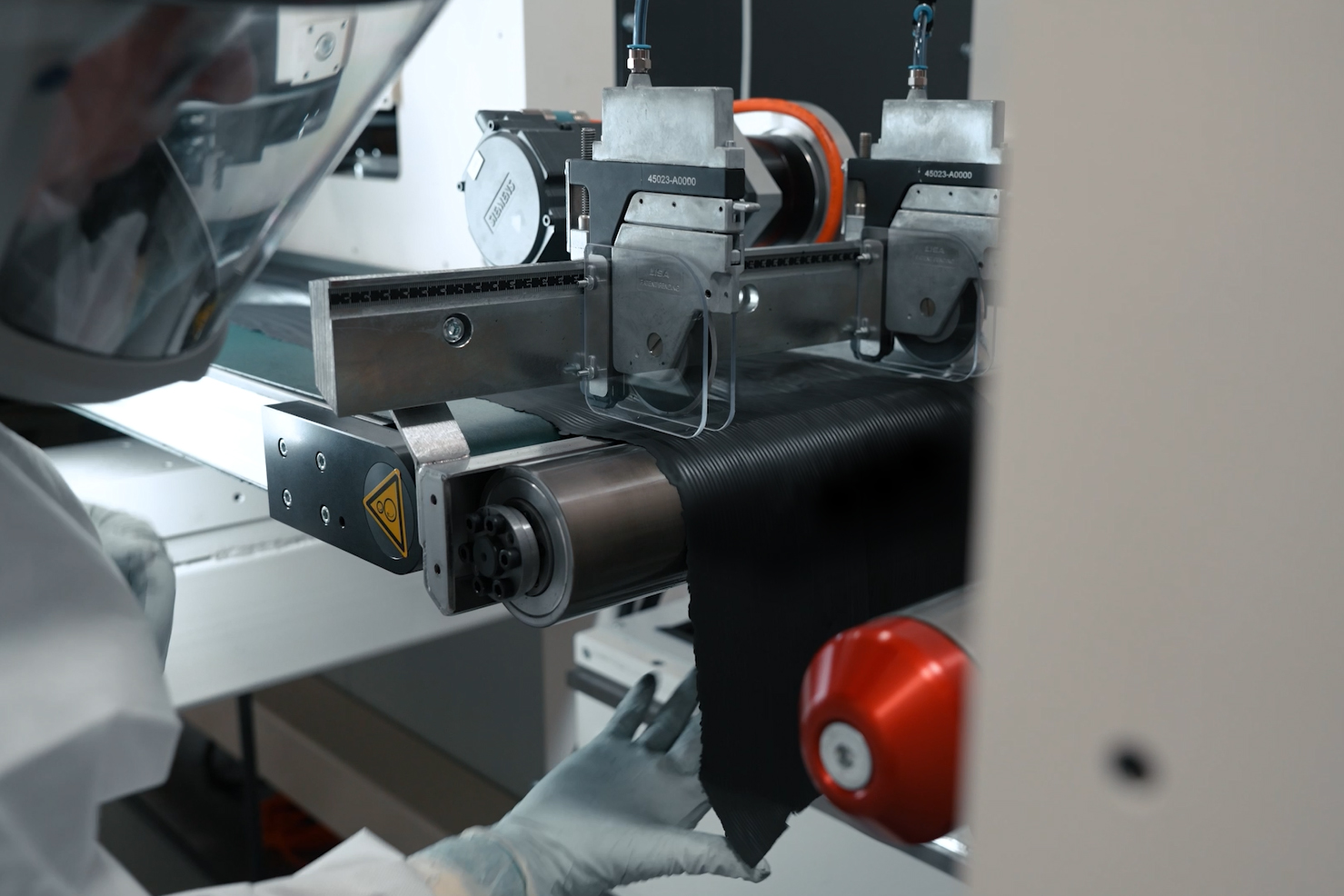
Dürr’s X.Cellify DC represents a significant leap forward in battery production, moving away from the energy-intensive, solvent-dependent wet coating methods that have dominated the industry. This new process creates a free-standing film of active material, which is 100% recyclable until it’s laminated onto the collector foil. The proof of concept, successfully demonstrated at Dürr’s Ingecal facility in Chassieu, France, confirms the technology’s reliability and scalability for gigawatt-scale pilot projects, initially for lithium-ion batteries and, crucially, future solid-state batteries.
The advantages are profound: X.Cellify DC eliminates the need for solvents and energy-guzzling drying ovens. By processing dry powder mixtures into electrodes, it slashes energy consumption by up to 70% and reduces required production space by up to 65%. Furthermore, the “free-standing film” approach minimizes waste. If the film doesn’t meet specifications, it can be returned to the process in its entirety thanks to a closed loop, ensuring no valuable active material is lost. This combination of reduced energy, smaller footprint, and material efficiency translates directly into lower manufacturing costs and a more sustainable production cycle, accelerating the economic viability of advanced battery solutions.
Market Realities and the Long-Term Energy Pivot
While innovations like X.Cellify DC are laying the groundwork for a more electrified future, the traditional oil market continues to navigate its own immediate volatility. As of today, Brent Crude trades at $90.38, reflecting a notable 9.07% decline within a day range of $86.08-$98.97. Similarly, WTI Crude stands at $82.59, down 9.41% from its daily high. This immediate downward pressure follows a more significant trend over the past two weeks, with Brent having fallen from $112.78 on March 30th to its current level, a reduction of nearly 20%. Such fluctuations underscore the sensitivity of crude markets to a myriad of factors, from geopolitical tensions to global economic sentiment.
Yet, against this backdrop of short-term price swings, the long-term implications of advancements in battery technology cannot be overstated. Cheaper, more efficient battery production directly translates to lower costs for electric vehicles (EVs) and grid-scale energy storage. This accelerates the adoption curve for these technologies, gradually eroding demand for fossil fuels over time. For oil and gas investors, this signifies a crucial long-term pivot away from traditional energy sources, making it imperative to assess how their portfolios are positioned for an evolving energy mix.
Investor Horizon: Decoding Future Demand and Portfolio Strategy
Our proprietary reader intent data reveals a keen interest among investors in forward-looking scenarios, with common questions surfacing like “what do you predict the price of oil per barrel will be by end of 2026?” and inquiries into “OPEC+ current production quotas.” These questions highlight the ongoing challenge of forecasting in a dynamic market. While OPEC+ decisions, such as the upcoming Ministerial Meeting on April 19th, will undoubtedly influence short-to-medium term supply dynamics and pricing, the long-term trajectory is increasingly shaped by technological progress in alternative energy.
X.Cellify DC’s potential to significantly lower battery production costs directly impacts the competitiveness of EVs against internal combustion engine vehicles, and the economic feasibility of renewable energy projects requiring extensive storage. This cost curve shift will progressively exert downward pressure on long-term oil demand forecasts, making ambitious price targets for 2026 and beyond increasingly contingent on supply constraints rather than robust demand growth. Investors must therefore broaden their analytical framework, considering not just traditional supply-side factors but also the accelerating pace of technological innovation in the energy transition when formulating their investment strategies.
Navigating Short-Term Signals Amidst Long-Term Trends
For oil and gas investors, the coming weeks offer a mix of immediate market signals and continued reinforcement of longer-term energy transition trends. The OPEC+ Ministerial Meeting on April 19th is a key event, where decisions on production quotas could inject fresh volatility into crude prices. Following this, weekly data points like the API Weekly Crude Inventory reports on April 21st and 28th, and the EIA Weekly Petroleum Status Reports on April 22nd and 29th, will offer crucial insights into current supply-demand balances within the U.S. market. The Baker Hughes Rig Count on April 24th and May 1st will further inform investors about drilling activity and potential future production.
While these events provide vital short-term trading opportunities and risk management insights, they occur in a world where foundational technologies like Dürr’s X.Cellify DC are steadily advancing the energy transition. For oil and gas investors, a robust strategy must acknowledge both the cyclical nature of traditional energy markets and the structural shifts driven by innovation. Integrating a perspective that accounts for reduced battery costs and accelerated electrification will be key to identifying sustainable growth opportunities and mitigating long-term risks in an energy sector undergoing profound transformation.