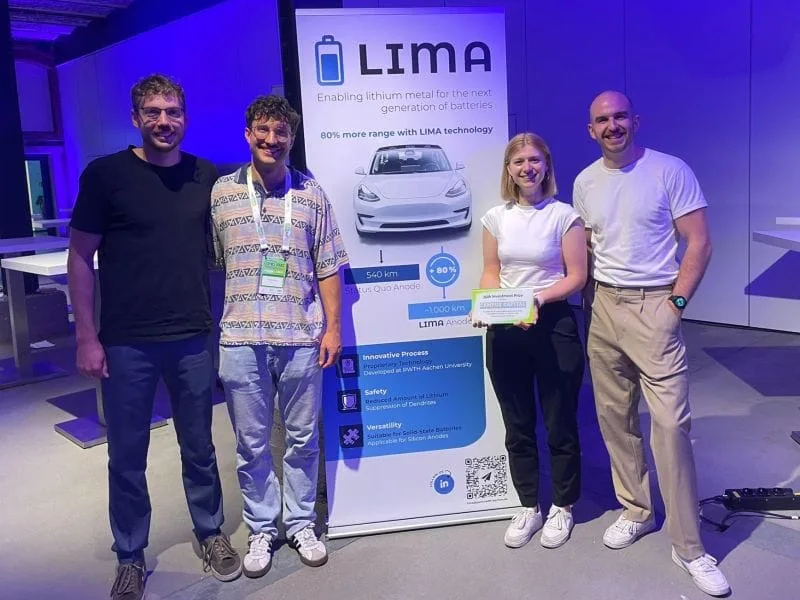
The global energy landscape is undergoing a profound transformation, with electric vehicles (EVs) at the forefront of this shift. For seasoned oil and gas investors, understanding the trajectory of EV technology is no longer an ancillary concern but a critical component of risk assessment and opportunity identification. Recent advancements in battery technology, specifically in lithium metal anodes, signal an accelerating pace of innovation that could reshape future energy demand dynamics. A pioneering melt coating process, dubbed ‘LIMA,’ developed by researchers at RWTH Aachen University, promises to revolutionize the production of ultra-thin lithium metal anodes, a cornerstone for next-generation batteries, including solid-state variants. This European-led innovation offers a glimpse into a future where battery manufacturing is cheaper, more efficient, and less reliant on current complex processes, directly impacting the long-term outlook for fossil fuels.
LIMA: A Game-Changer for Next-Gen Battery Production
The LIMA method represents a significant leap forward in battery manufacturing, addressing fundamental challenges that have historically hampered the scalability and cost-effectiveness of lithium metal anodes. Traditional production involves multi-stage rolling processes, taking thick 100-micrometer lithium foils and reducing them to 30-70 micrometers, followed by lamination onto copper foil. This approach is not only complex and expensive but also results in considerable material loss, especially when many applications only require 20 to 25 micrometers. The Aachen-based team’s innovation centers on a controlled melt coating process that directly applies liquid lithium to a substrate foil. This eliminates the need for lamination and allows for the precise control of layer thickness without mechanical post-processing, significantly reducing material waste and production costs.
This streamlined process is particularly crucial for ultra-thin lithium metal anodes, which are considered key enablers for next-generation batteries, including the highly anticipated solid-state batteries. These advanced batteries promise higher energy density, faster charging times, and improved safety compared to current lithium-ion technology. By enabling inexpensive and industrially feasible production of these critical components, LIMA has the potential to accelerate the commercialization of these superior battery types. Furthermore, the development of this technology within Europe signals a strategic move towards creating independent production capacity for lithium metal anodes, enhancing supply chain resilience and potentially reducing geopolitical vulnerabilities in the battery sector.
Navigating Current Crude Volatility Amidst the EV Surge
For investors focused on the immediate pulse of the market, the backdrop of such technological advancements is juxtaposed with the inherent volatility of crude oil prices. As of today, Brent crude trades at $90.38, reflecting a notable decline of 9.07% within the day, with WTI crude similarly down 9.41% at $82.59. Gasoline prices have also seen a dip, currently at $2.93, down 5.18%. This recent market movement follows a significant downward trend for Brent, which has fallen from $112.78 on March 30th to its current level, marking a nearly 20% drop in just over two weeks. These fluctuations are often driven by a complex interplay of geopolitical tensions, global economic indicators, and supply-side dynamics.
However, beneath these daily and weekly price swings, a more fundamental transformation is underway, largely fueled by innovations like the LIMA process. Investors frequently ask about the future trajectory of crude, pondering “what do you predict the price of oil per barrel will be by end of 2026?” While short-term factors will continue to influence this, the accelerating development of EV battery technology provides a powerful counter-narrative to perpetual demand growth. As battery costs fall and performance improves, the adoption rate of EVs is set to climb, gradually chipping away at long-term oil demand. This creates a critical dichotomy: managing short-term market noise while positioning portfolios for the inevitable structural shifts driven by technological progress in the energy transition.
Strategic Implications for Energy Portfolios
The rapid pace of innovation in battery technology, exemplified by the LIMA process, carries significant strategic implications for traditional oil and gas investment portfolios. As EV adoption accelerates globally, fueled by more efficient and cost-effective battery production, the long-term demand outlook for crude oil faces increasing headwinds. For investors holding significant stakes in conventional energy, the question isn’t if the energy transition will impact their assets, but how quickly and profoundly. Companies like Repsol, which readers have inquired about regarding their performance by April 2026, are already actively navigating this transition, investing in renewables, hydrogen, and other low-carbon solutions.
The LIMA method’s potential to significantly reduce the cost and complexity of lithium anode production could further compress the total cost of EV ownership, making electric vehicles even more competitive against internal combustion engine vehicles sooner than many forecasts predict. This necessitates a proactive approach for oil and gas investors, considering diversification into sectors that stand to benefit from this shift. This includes companies involved in critical minerals extraction and processing (like lithium), battery manufacturing, EV charging infrastructure, and smart grid technologies. The emergence of ‘LIMA’ as a spin-off company, supported by the ‘EXIST – Startups from Science’ program, also highlights the growing opportunity in venture capital and early-stage investments within the advanced materials and clean energy space.
Balancing Short-Term Signals with Long-Term Transformation
Investors must maintain a dual perspective, balancing the immediate signals from traditional energy markets with the powerful, long-term currents of technological evolution. In the coming weeks, the industry will be closely watching several key events. The OPEC+ Ministerial Meeting on April 19th will be crucial for understanding immediate supply-side policies, with investors keenly monitoring “OPEC+ current production quotas” and their impact on global supply. Following this, the API Weekly Crude Inventory reports on April 21st and 28th, along with the EIA Weekly Petroleum Status Reports on April 22nd and 29th, will provide critical insights into short-term supply and demand balances within the U.S. market. Additionally, the Baker Hughes Rig Count on April 24th and May 1st will offer a snapshot of upstream activity.
These events offer vital short-term trading signals and help shape immediate price discovery. However, the significance of innovations like the LIMA process extends far beyond these cyclical reports. While OPEC+ decisions might influence crude prices tomorrow, the scalability of ultra-thin lithium metal anodes will influence global energy consumption patterns for decades. Astute oil and gas investors recognize that the energy transition is not merely a distant concept but an ongoing phenomenon, accelerated by breakthroughs in materials science and manufacturing. Integrating an understanding of these fundamental technological shifts into investment strategies is paramount for long-term success in a rapidly evolving energy market.