The Trump administration’s recent decision to cancel $7.6 billion in clean energy grants has sent ripples through the energy sector, prompting oil and gas investors to scrutinize the potential implications for traditional hydrocarbon assets. This significant policy reversal, affecting 223 projects across 16 states, is explicitly framed by some as a move to curtail what they term the “Left’s climate agenda.” For investors focused on the oil and gas space, this development raises crucial questions about the competitive landscape, the pace of the energy transition, and the long-term outlook for fossil fuels in an increasingly politicized environment. While the immediate market reaction to such political maneuvers can be complex, understanding the underlying shifts and upcoming catalysts is paramount for informed investment decisions.
Immediate Headwinds for Renewables, Potential Tailwinds for O&G
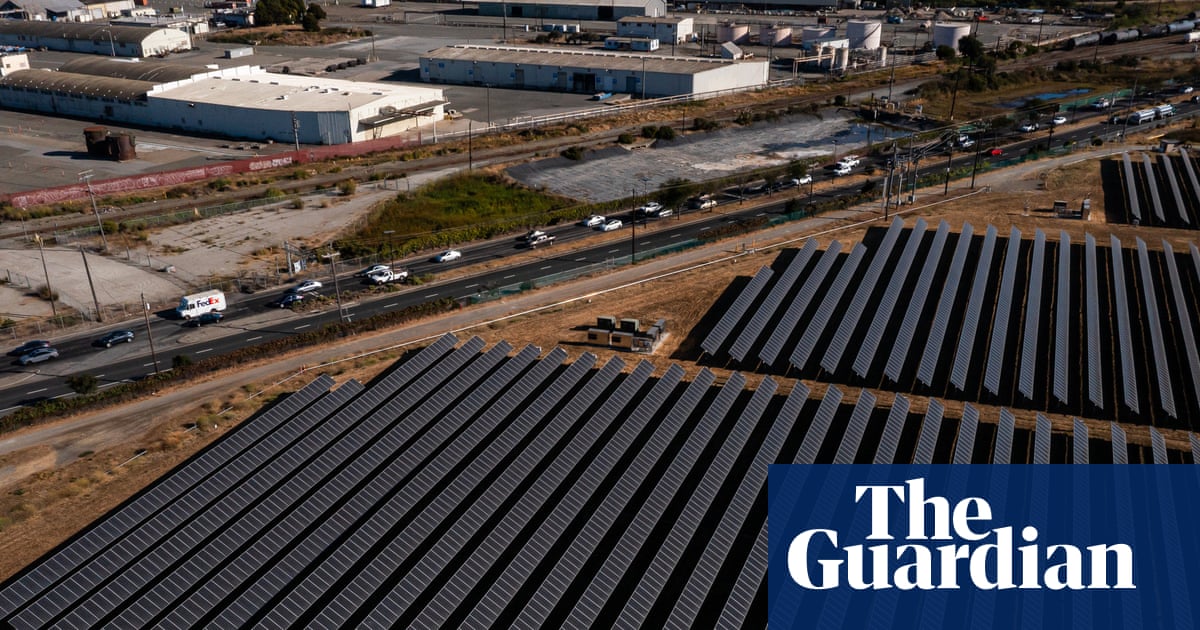
The cancellation of $7.6 billion in grants marks a substantial pullback in federal support for a diverse array of clean energy initiatives. These cuts, originating from bureaus like the Office of Clean Energy Demonstrations and the Office of Energy Efficiency and Renewable Energy, are expected to impact battery plants, hydrogen technology projects, electric grid upgrades, and critical carbon-capture efforts. Notably, high-profile projects such as California’s hydrogen hub, which stood to receive up to $1.2 billion, and a separate $1 billion hydrogen project in the Pacific Northwest, are now on the chopping block. Conversely, hydrogen projects in Texas, West Virginia, Ohio, and Pennsylvania appear to have been spared, suggesting a targeted approach influenced by political alignment rather than purely economic viability or national energy needs, as initially stated by the energy department. For the oil and gas sector, this reduction in subsidized competition, particularly in nascent areas like hydrogen and carbon capture where many integrated energy majors are also expanding, could translate into a temporary, yet meaningful, competitive advantage. It slows the momentum of federally-backed alternatives, potentially prolonging the dominance of hydrocarbon-based solutions in specific energy segments.
Navigating Market Volatility Amidst Policy Shifts and Investor Questions
While the clean energy grant cancellations theoretically offer a structural advantage to oil and gas, current market dynamics reveal a more complex picture. As of today, Brent Crude trades at $90.38 per barrel, a significant decline of 9.07% within the day, with its range spanning $86.08 to $98.97. Similarly, WTI Crude has fallen to $82.59, down 9.41%, trading between $78.97 and $90.34. Gasoline prices also reflect this bearish sentiment, currently at $2.93, a 5.18% drop. This sharp downturn comes after a broader retreat, with Brent having shed nearly 20% from its $112.78 perch just 14 days ago. This divergence between a seemingly positive policy signal for O&G and immediate market weakness is telling. Our proprietary investor intent data indicates that readers are keenly focused on broader market fundamentals, with questions like “what do you predict the price of oil per barrel will be by end of 2026?” and “What are OPEC+ current production quotas?” dominating conversations. This suggests that while the political maneuvering around clean energy is noted, investors are prioritizing macroeconomic headwinds, global supply-demand imbalances, and the strategic decisions of major producers like OPEC+ over domestic policy shifts when assessing immediate price action and long-term outlooks. The significant downside today suggests the market is weighing other factors more heavily than the reduced competition from clean energy projects.
Forward-Looking Catalysts: OPEC+ and Inventory Data Loom Large
Looking ahead, the energy market’s trajectory will be heavily influenced by several critical upcoming events, overshadowing the long-term implications of the grant cuts in the near term. The most immediate and impactful event is the OPEC+ Full Ministerial Meeting scheduled for April 19th. Any adjustments to production quotas from this influential body could significantly alter the supply-demand balance and provide crucial direction for a market currently experiencing notable price declines. Following closely are the weekly crude inventory reports from the American Petroleum Institute (API) on April 21st and the Energy Information Administration (EIA) on April 22nd. These reports offer a granular look at U.S. crude stockpiles, refining activity, and product supplied, serving as vital indicators of domestic demand and supply health. Further reinforcing our understanding of future production trends, the Baker Hughes Rig Count will be released on April 24th. This pattern of weekly inventory data and rig counts will repeat on April 28th (API), April 29th (EIA), and May 1st (Baker Hughes). For oil and gas investors, these data points, rather than domestic clean energy policy, will be the primary drivers of short-to-medium term price volatility and will offer clearer signals on the fundamental health of the market. The political decision to scale back clean energy funding provides a structural backdrop, but the day-to-day and week-to-week reality of the oil market remains driven by these established, recurring fundamental data releases and global producer decisions.
Navigating the Evolving Energy Policy Landscape for O&G Investors
The Trump administration’s decision to cut clean energy grants underscores the volatile and often politicized nature of energy policy in the United States. For oil and gas investors, this move presents a nuanced landscape. On one hand, it removes a significant source of federal funding that would have accelerated the development and deployment of competing energy technologies, potentially extending the runway for traditional fossil fuels. This could be particularly beneficial for companies engaged in conventional oil and gas exploration, production, and refining, as well as those integrating hydrogen and carbon capture into their long-term strategies, but without relying on federal subsidies. The private sector’s continued commitment, as evidenced by California Governor Gavin Newsom’s mention of $10 billion in private funding for the state’s hydrogen project, indicates that innovation will persist, albeit potentially at a slower, less subsidized pace. On the other hand, the highly political nature of these cuts, explicitly targeting states that opposed the administration, introduces an element of policy instability. A future administration could reverse these decisions, leading to a whiplash effect on the energy sector. Investors must, therefore, maintain a focus on companies with robust balance sheets, operational efficiencies, and diversified portfolios that can adapt to rapid shifts in regulatory and funding environments. While the immediate impact is a clear headwind for subsidized clean energy, the long-term investment thesis for oil and gas will continue to be shaped by global demand trends, geopolitical stability, and the industry’s own ability to innovate and decarbonize on its terms, rather than solely by domestic grant programs.


