California’s energy market is undergoing a profound transformation, with the rapid scaling of solar generation and battery storage systems emerging as a potential game-changer for the broader energy landscape. While often overshadowed by global crude market volatility and shifting federal policy, the Golden State’s aggressive push into renewables is setting new benchmarks for decarbonization, offering a crucial blueprint for other regions and presenting both challenges and opportunities for investors across the energy spectrum.
California’s Renewable Powerhouse: A New Energy Blueprint
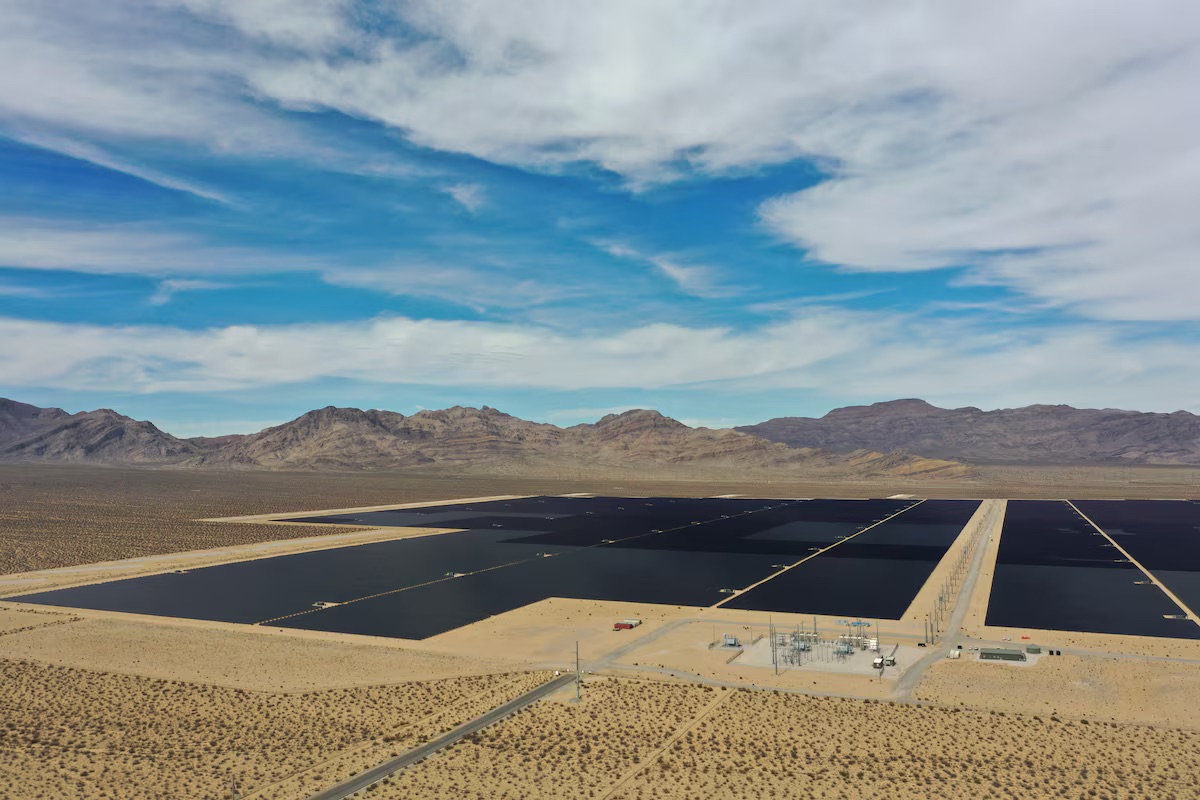
The scale of California’s clean energy deployment in 2025 has been nothing short of remarkable. For an extended period this year, the state’s vast solar farms generated more electricity than its fossil fuel power plants, marking a significant milestone in the energy transition. This surge in solar output was effectively harnessed by a substantial increase in battery storage capacity, allowing utilities to manage peak generation and demand more efficiently. During January to July, solar electricity supplies soared by an impressive 15% compared to the same period in 2024, reaching a record 54,709 gigawatt hours (GWh). This substantial jump of approximately 7,200 GWh was complemented by a roughly 75% rise in battery storage capacity, empowering the state to slash fossil fuel-fired generation by a significant 21%.
The impact on California’s generation mix is undeniable: solar farms now account for a record 39% of total utility-supplied electricity, up from 33% year-over-year. In stark contrast, fossil fuels now constitute only 26% of the state’s power generation, a considerable divergence from the national average of 55%. This achievement, bolstered by a near threefold increase in battery storage capacity to over 14,000 megawatts since 2022, effectively addresses the historical challenge of excess solar output during off-peak demand, proving that large-scale renewable integration is not only feasible but increasingly efficient. This operational success positions California as a vital case study for other states eyeing similar transitions.
Navigating Market Volatility Amidst Structural Shifts
While California’s power market demonstrates a clear trajectory towards decarbonization, the broader energy investment landscape remains intrinsically linked to global commodity prices. As of today, Brent crude trades at $90.38, reflecting a notable 9.07% downturn from yesterday’s close, with a day range between $86.08 and $98.97. Similarly, WTI crude has seen a significant dip, currently priced at $82.59, down 9.41%, trading within a $78.97-$90.34 range. Gasoline prices also reflect this bearish sentiment, standing at $2.93, a 5.18% decrease. This current market snapshot underscores the inherent volatility in fossil fuel markets, a trend evidenced by Brent’s substantial 19.9% decline from $112.78 on March 30th to its current level of $90.38 on April 17th.
Our proprietary reader intent data from the past week highlights that investors are acutely focused on these dynamics, with recurring questions such as “what do you predict the price of oil per barrel will be by end of 2026?” dominating discussions. This reflects a clear concern about the long-term sustainability and profitability of traditional oil and gas investments. While California’s shift primarily impacts electricity generation rather than transportation fuels directly, it signals a broader, albeit gradual, erosion of fossil fuel dominance. Investors are keenly watching how regional energy transitions might influence global supply-demand balances over time, even as short-term geopolitical factors and inventory data continue to drive crude prices.
Upcoming Catalysts and Forward-Looking Analysis
Even as California blazes a trail in clean energy, the next fortnight is packed with critical events that will shape the immediate future of global energy markets. A pivotal point will be the full Ministerial OPEC+ Meeting scheduled for April 19th. Investors will be scrutinizing this gathering for any indications of production policy adjustments, which could significantly impact global supply levels and, consequently, crude prices. Our readers are actively asking about “OPEC+ current production quotas,” underscoring the market’s sensitivity to these decisions.
Further insights into market fundamentals will come from the recurring inventory reports: the API Weekly Crude Inventory on April 21st and 28th, followed by the EIA Weekly Petroleum Status Report on April 22nd and 29th. These reports offer crucial data on U.S. crude, gasoline, and distillate stocks, providing a pulse check on demand and refinery activity. Additionally, the Baker Hughes Rig Count on April 24th and May 1st will shed light on North American drilling activity, an important indicator of future supply. While these events primarily influence the traditional oil and gas sector, their outcomes directly affect the capital allocation decisions that ultimately fund or de-fund the very infrastructure California is moving away from. Investors must weigh these near-term supply-side catalysts against the long-term, demand-side structural shifts exemplified by California’s renewable success.
Investment Opportunities and Risks in a Decarbonizing Grid
California’s aggressive renewable build-out creates a compelling, albeit complex, investment landscape. For clean energy investors, the state offers a robust framework for growth, particularly in utility-scale solar, advanced battery storage, and grid modernization technologies. Companies involved in energy management systems, smart grid solutions, and long-duration storage are likely to find a receptive and expanding market. However, the sheer pace of integration also presents challenges related to grid stability, transmission infrastructure upgrades, and ensuring equitable energy access, which investors must carefully evaluate.
Conversely, for investors heavily concentrated in traditional oil and gas, California’s trajectory serves as a potent reminder of the long-term decarbonization trend. While global demand for crude and natural gas will persist for decades, regional shifts like California’s highlight the need for oil and gas firms to adapt, diversify, and focus on operational efficiency, emissions reduction, and potentially, carbon capture technologies. The declining share of fossil fuels in California’s power mix, now at just 26%, signals a shrinking addressable market for natural gas in electricity generation within progressive states, urging investors to assess the geographic distribution of their fossil fuel assets and the regulatory environments in which they operate. The ongoing energy transition is not uniform, but California’s example provides a tangible look at what is achievable, forcing a re-evaluation of long-held assumptions across the entire energy investment universe.