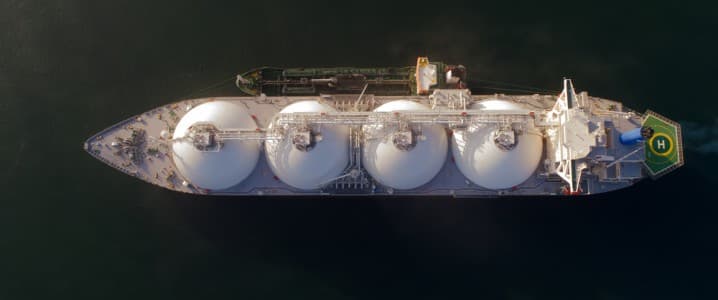
The global shipping industry is on the cusp of a profound transformation, driven by escalating environmental regulations and a strategic pivot towards cleaner energy sources. At the forefront of this shift is Liquefied Natural Gas (LNG), rapidly emerging as the marine fuel of choice. Our proprietary data and market intelligence reveal a sector poised for exponential growth, with demand for LNG bunkering expected to at least double by the end of the decade. For astute investors, this isn’t merely an environmental mandate; it’s a significant profit opportunity unfolding across the value chain, from infrastructure development to vessel propulsion systems. This analysis will delve into the drivers behind this surge, examine the current market landscape, and highlight the strategic pathways for capitalizing on LNG’s undeniable ascent in maritime transport.
Regulatory Impetus and Infrastructure Dominance
The transition to LNG as a marine fuel is not a spontaneous market preference but a direct response to stringent global and regional environmental mandates. Regulations such as the IMO 2020 sulfur cap have already pushed the industry towards alternatives, requiring either exhaust gas scrubbers or cleaner fuels. Adding to this pressure is the European Union’s FuelEU Maritime regulation, which became effective on January 1, 2025. This landmark legislation sets maximum limits for the yearly average greenhouse gas intensity of energy used by ships over 5,000 gross tonnage calling at European ports. These regulations collectively form an undeniable catalyst, compelling shipping companies to adopt cleaner propulsion technologies.
In this evolving landscape, LNG possesses a critical advantage over other nascent alternatives like renewable ammonia and methanol: existing, robust infrastructure. Industry experts, including Tuomas Maljanen, associate director for LNG and new energy at shipbroker Fearnleys, highlight LNG’s “readily available” infrastructure as a significant differentiator. While ammonia and methanol hold long-term promise, they are still in early-stage development, lacking the extensive supply chains and bunkering facilities that LNG already commands globally. This infrastructure maturity, combined with a projected demand for LNG as a marine fuel to exceed 4 million tons by the close of this year and double by 2030, positions LNG as the most practical and immediate solution for compliance and decarbonization.
Navigating Market Volatility: LNG as a Strategic Hedge
Investors frequently probe the future of energy prices, with questions like “what do you predict the price of oil per barrel will be by end of 2026?” dominating our reader intent data. This query underscores a broader concern about market volatility and its impact on energy-related investments. As of today, Brent crude trades at $90.38, marking a significant -9.07% decline within a day range of $86.08-$98.97. Similarly, WTI crude is at $82.59, down -9.41% for the day within a range of $78.97-$90.34. This recent downturn follows a steeper trend, with Brent having fallen from $112.78 on March 30 to its current level, representing a nearly 19.9% drop in just over two weeks. Gasoline prices have also seen a dip, currently at $2.93, down -5.18% for the day.
This kind of rapid fluctuation in conventional oil markets can inject uncertainty into investment portfolios. However, the burgeoning demand for LNG marine fuel offers a compelling counter-narrative. While natural gas prices are not entirely decoupled from crude, the primary drivers for LNG adoption in shipping are regulatory compliance and environmental sustainability, rather than solely price arbitrage against fuel oil. This structural demand provides a degree of insulation from the immediate swings impacting crude and refined products. For investors seeking long-term growth underpinned by regulatory certainty and growing environmental consciousness, the LNG marine fuel sector presents a strategic hedge against the inherent volatility of the broader oil market, offering a more predictable growth trajectory over the coming decade.
Strategic Shifts and Upcoming Market Signals
Major shipping players are already making decisive moves that validate the long-term potential of LNG. Maersk, the Danish shipping titan, for instance, dramatically shifted its strategy late last year, ordering 20 container vessels equipped with dual-fuel engines capable of running on liquefied gas. This move is particularly significant given Maersk’s prior exclusive focus on green methanol as its primary decarbonization fuel until 2024. This strategic pivot by an industry leader signals a clear recognition of LNG’s immediate viability and scalability in achieving emission reduction targets.
Looking ahead, while direct LNG marine fuel specific events are less frequent, the broader energy calendar provides crucial context for investors. The upcoming OPEC+ Ministerial Meeting on April 19 will set the tone for global oil supply policies, a topic of particular interest to our readers asking about current production quotas. Decisions made at this summit, alongside the API Weekly Crude Inventory reports (April 21, April 28) and the EIA Weekly Petroleum Status Reports (April 22, April 29), will influence crude oil and natural gas prices. While the LNG marine fuel market has its own demand drivers, the overall energy price environment impacts the relative economics and investment appeal of all fuels. Sustained high crude prices, potentially influenced by OPEC+ decisions, could further accelerate the economic incentive for shippers to transition to LNG, complementing the powerful regulatory drivers already in place. Investors should monitor these macro events to gauge the broader energy market sentiment and its indirect influence on the pace of LNG adoption.
Unlocking Profit Potential in the Decade Ahead
The doubling of LNG marine fuel demand by 2030, as projected by experts like Jo Friedmann, Senior Vice President of Supply Chain Research at Rystad Energy, presents a multi-faceted opportunity for investors. The profit potential extends beyond direct LNG supply, encompassing the entire ecosystem supporting this transition. Key areas for consideration include companies involved in the construction and operation of LNG bunkering infrastructure, which will need to expand significantly to meet growing demand. Shipyards specializing in the construction of dual-fuel vessels or retrofitting existing fleets represent another vital segment. Furthermore, manufacturers of LNG propulsion systems, cryogenic storage tanks, and related marine equipment stand to benefit immensely.
The “cheap” factor, as anticipated by some industry voices, will likely materialize as economies of scale improve and supply chains become even more efficient, further cementing LNG’s competitive edge. With the regulatory landscape firmly in place and major industry players committing substantial capital, the runway for growth in LNG marine fuel is clear and expansive. Investors who strategically align with companies positioned to capitalize on this fundamental shift – whether in production, infrastructure, or technology – are well-placed to unlock significant value as the global shipping industry charts a course towards a cleaner, LNG-powered future.


