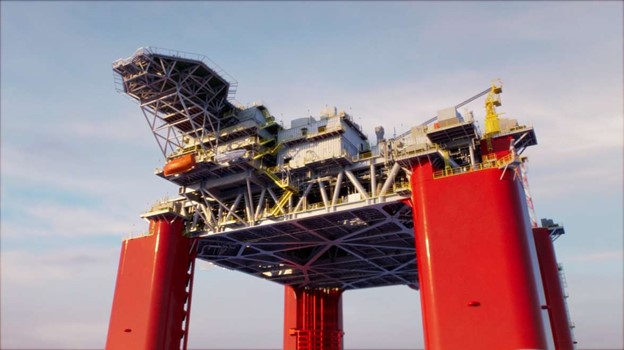
bp’s recent Final Investment Decision (FID) on the $5 billion Tiber-Guadalupe development in the U.S. Gulf of Mexico signals a potent commitment to deepwater upstream expansion, strategically positioning the energy major for future production growth. This move, marking bp’s second new production hub in the region within two years, underscores the enduring importance of the Gulf as a core asset in its global portfolio. While the broader energy market grapples with near-term volatility, this substantial investment highlights a long-term vision centered on high-value, resilient barrels, offering a compelling narrative for investors monitoring the future of oil and gas supply.
Strategic Deepwater Commitment Amidst Market Fluctuations
bp’s 100% ownership of the Tiber-Guadalupe hub, with its designed capacity of 80,000 barrels per day (bpd) and an estimated 350 million barrels of oil equivalent (MMboe) in recoverable resources from its initial phase, firmly entrenches the company’s deepwater strategy. This commitment comes at a time when short-term market dynamics present a mixed picture for crude prices. As of today, Brent crude trades at $90.38 per barrel, experiencing a significant 9.07% decline within the day, with its range fluctuating between $86.08 and $98.97. Similarly, WTI crude is down 9.41% at $82.59, moving within a daily range of $78.97 to $90.34. This recent downturn, which has seen Brent slide by nearly 20% from $112.78 just 14 days ago, underscores the inherent volatility in global energy markets. Yet, bp’s decision to greenlight a project with a first oil target of 2030 speaks volumes about its conviction in the long-term fundamentals of oil demand and the strategic value of premier basins like the Gulf of Mexico, viewing these investments as foundational to future energy security and shareholder returns.
Cost Efficiencies and Portfolio Synergy Drive Value
The Tiber-Guadalupe project is not merely an investment in volume; it’s a shrewd play on efficiency and integration within bp’s existing Gulf portfolio. The company anticipates reducing development costs by approximately $3 per barrel compared to its Kaskida development, largely attributed to the reuse of over 85% of existing platform and subsea designs. This focus on leveraging proven designs and operational synergies aligns perfectly with bp’s disciplined financial framework. Tiber-Guadalupe will become bp’s seventh operated oil and gas production hub in the U.S. Gulf, significantly contributing to the company’s ambitious targets. Together with Kaskida, the project is expected to unlock a substantial portion of the estimated 10 billion barrels of discovered Paleogene resources in the Gulf. This synergy is projected to boost bp’s Gulf of Mexico portfolio production to over 400,000 boed by the end of the decade, a crucial step towards its overarching goal of lifting total U.S. output, both onshore and offshore, to more than 1 MMboe/d. This strategic layering of projects ensures that capital allocation maximizes returns while de-risking execution.
Investor Outlook: Bridging Long-Term Vision with Near-Term Queries
For investors, bp’s $5 billion FID raises pertinent questions about future market conditions and strategic positioning. Our proprietary reader intent data reveals a strong focus this week on forward price predictions, with many asking ‘what do you predict the price of oil per barrel will be by end of 2026?’ and inquiring about OPEC+ production quotas. A significant deepwater investment like Tiber-Guadalupe, with a 2030 first oil date, is a clear long-term bet that current price volatility will stabilize into a supportive environment for upstream projects. It signifies bp’s confidence that global energy demand will necessitate substantial new oil supply well into the next decade, despite ongoing energy transition narratives. Investors are weighing how a company’s commitment to high-return, long-cycle projects like this balances against shorter-term market sentiment and the increasing pressure for decarbonization. bp’s strategy here appears to be a dual approach: maintaining robust, low-cost upstream production to fund and facilitate its transition investments, ensuring sustained cash flow and shareholder value.
Navigating Upcoming Market Catalysts
While the Tiber-Guadalupe project is a long-term play, its ultimate success will unfold within a market shaped by a series of critical near-term catalysts. This Sunday, April 19th, the OPEC+ Ministerial Meeting looms large. Investors are keenly awaiting the outcome, particularly regarding potential adjustments to current production quotas, which directly influence global supply dynamics and crude prices. Following this, market participants will closely monitor the API Weekly Crude Inventory reports on April 21st and 28th, alongside the EIA Weekly Petroleum Status Reports on April 22nd and 29th. These releases provide crucial insights into U.S. supply-demand balances and inventory levels, offering immediate market direction. Furthermore, the Baker Hughes Rig Count on April 24th and May 1st will shed light on North American drilling activity, a key indicator of future production trends. These recurring events, while not directly impacting the Tiber-Guadalupe development timeline, create the overarching market context. A robust demand outlook, supported by OPEC+ discipline and manageable inventory builds, would reinforce the rationale behind bp’s substantial deepwater commitment, validating its long-term strategic vision for the Gulf of Mexico.