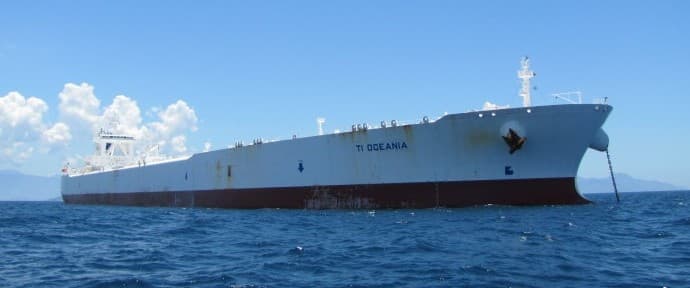
The global oil tanker market is currently experiencing a robust surge, with freight rates for Very Large Crude Carriers (VLCCs) reaching levels not seen in nearly three years. This rally, however, is not a mere echo of past geopolitical disruptions. Instead, it signals a fundamental shift driven by evolving supply dynamics and a complex interplay of global trade routes. For savvy investors, understanding these undercurrents is crucial, particularly as the broader crude market navigates its own volatile path. OilMarketCap’s proprietary data reveals a compelling narrative where physical crude flows are painting a different picture than the daily price swings, offering unique opportunities for those positioned in the logistics backbone of the energy industry.
The Structural Drivers Behind Soaring Tanker Rates
The recent ascent in supertanker freight rates, exemplified by the Middle East-to-China route hitting the $100,000 per day threshold, is a direct consequence of several powerful forces converging. Foremost among these is the sustained increase in crude supply originating from OPEC+ nations and key South American producers. As these regions ramp up exports, the sheer volume of oil needing transportation naturally tightens vessel availability. Beyond just volume, the increased prevalence of longer-haul routes further exacerbates this tightness. With more barrels traveling greater distances, compliant tankers spend more time at sea, effectively reducing the active fleet capacity available for new charters. This demand-side pressure is amplified by the existence of a ‘shadow fleet’ that operates outside of international sanctions regimes. This bifurcation of the global tanker fleet means that compliant vessels, which serve the majority of the market, face a reduced effective supply, allowing owners to command premium rates. The shift in Saudi Arabia’s crude pricing for Asian buyers, lowering costs for upcoming month loadings, further incentivizes these long-distance flows, solidifying the demand for VLCCs and expectedly spilling over to smaller Aframax and Suezmax vessels.
Navigating Crude Price Volatility: Tanker Sector’s Resilience
While the tanker market rides a wave of fundamental strength, the broader crude oil benchmarks have shown significant volatility. As of today, Brent Crude trades at $90.38, marking a substantial -9.07% decline within the day, with its range fluctuating between $86.08 and $98.97. Similarly, WTI Crude stands at $82.59, down -9.41% for the day, having traded between $78.97 and $90.34. This sharp downturn is particularly notable when observing the 14-day Brent trend, which has plummeted from $112.78 on March 30th to its current $90.38, a -$22.4 or -19.9% drop. Despite this significant downward pressure on crude prices, the tanker sector has largely maintained its upward trajectory. This divergence highlights a critical insight: the demand for crude transportation is currently driven more by the volume and geographical spread of production rather than the immediate spot price of the commodity itself. Even with oil prices retreating, the physical movement of barrels from producers in the Middle East and the Americas to major consumption hubs in Asia remains robust. This resilience underscores the sector’s strong underlying fundamentals, suggesting that investments in compliant tanker operators are insulated, to a degree, from short-term commodity price swings.
Upcoming Catalysts: OPEC+ Decisions and Inventory Shifts
The near-term outlook for the tanker market will be heavily influenced by several critical upcoming events, providing clear forward-looking analysis for investors. The most immediate and significant is the OPEC+ Full Ministerial Meeting scheduled for tomorrow, April 19th. This meeting is pivotal, as any adjustments to production quotas will directly impact the volume of crude available for export, particularly from the Middle East. OilMarketCap readers are keenly asking, “What are OPEC+ current production quotas?” – a question that directly ties into potential changes coming from this meeting. If OPEC+ decides to further increase production or reverse previous cuts, as hinted by tanker giant Frontline’s CEO Lars Barstad, it would provide additional tailwinds for tanker demand, especially for compliant vessels. Following this, the market will closely monitor the API Weekly Crude Inventory reports on April 21st and April 28th, along with the EIA Weekly Petroleum Status Reports on April 22nd and April 29th. These inventory figures offer crucial insights into short-term supply and demand balances within the U.S., which, while not directly determining global tanker rates, reflect broader market health and can influence trading sentiment. Furthermore, the Baker Hughes Rig Count on April 24th and May 1st will indicate future production trends, especially from North America, which is another significant source of crude requiring long-haul transportation.
Investor Focus: Beyond Barrel Prices to Global Trade Infrastructure
The current environment prompts investors to look beyond the immediate volatility of crude oil prices and consider the broader infrastructure supporting global energy trade. OilMarketCap’s reader intent data reveals a strong interest in the long-term outlook, with questions like “what do you predict the price of oil per barrel will be by end of 2026?” While predicting precise price points is challenging, the underlying drivers for the tanker sector offer a more discernible thesis. The sustained demand for energy, combined with the geographical dislocation between major producing and consuming regions, ensures a persistent need for efficient and compliant crude transportation. For investors evaluating companies like Repsol or other integrated energy players, understanding the strength of the logistics chain is as critical as assessing upstream or downstream operations. The tanker market’s current strength, driven by fundamental shifts rather than transient geopolitical shocks, suggests that operators with modern, compliant fleets are well-positioned for sustained profitability. This could present an attractive investment avenue for those seeking exposure to the oil and gas sector with a potentially more stable revenue stream, less directly exposed to the day-to-day fluctuations of commodity prices.