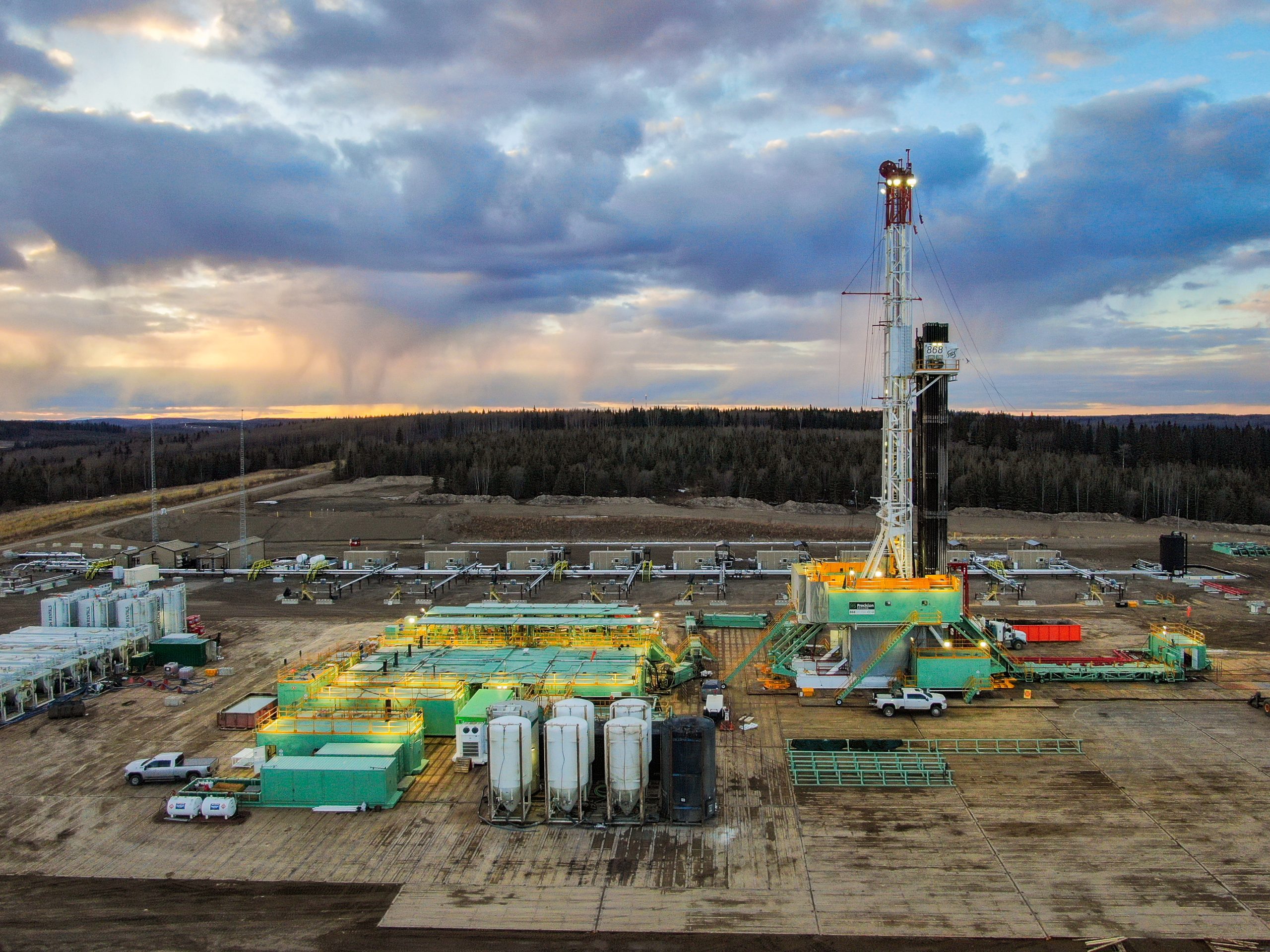
The Canadian oil and gas sector finds itself at a pivotal juncture, navigating a complex landscape shaped by evolving domestic policy and volatile global markets. With the administration of Prime Minister Mark Carney, which took office in late April 2025, a nuanced approach to energy policy appears to be emerging, aiming to foster stability and growth within the vital hydrocarbon industry. This shift, a notable departure from the more confrontational stance of previous Liberal governments, signals a potential opening for renewed investment and strategic development, even as the industry contends with persistent policy legacies and significant global economic pressures.
Canada’s Evolving Energy Policy: A Glimmer of Stability
Since assuming power, Prime Minister Mark Carney’s government has sought to balance its commitment to climate action with an explicit acknowledgment of the oil and gas industry’s crucial role in Canada’s economic fabric. This pragmatic stance represents a significant shift from the anti-hydrocarbon rhetoric that defined much of the preceding decade. The administration has voiced support for critical initiatives, including pipeline modernization, the expansion of export infrastructure, and the diversification of energy products. Notably, there is an active encouragement for investment in liquefied natural gas (LNG) facilities, positioning Canadian resources as a responsible and reliable supply option for global markets.
However, investors must remain cognizant of the enduring policy framework inherited from the past ten years. Key legislation, such as the “no new pipelines” mandate, continues to cast a shadow over large-scale infrastructure projects, presenting a challenge to the government’s stated aim of improving market access. While the new administration advocates for a more collaborative approach, the practical implications of these legacy policies on investment timelines and project approvals will be a critical factor for capital allocation decisions. The market is keenly observing whether the current policy rhetoric translates into tangible regulatory relief and accelerated project development.
Navigating Global Volatility: A Test for Canadian Resilience
The backdrop for Canada’s evolving energy policy is a global market characterized by significant volatility. As of today, Brent Crude trades at $90.38, reflecting a substantial 9.07% decline within the day, with its range fluctuating between $86.08 and $98.97. Similarly, WTI Crude has seen a sharp drop to $82.59, down 9.41%, trading within a daily range of $78.97-$90.34. This immediate downturn follows a broader trend; our proprietary data shows Brent crude prices have plummeted from $112.78 on March 30th to today’s $90.38, representing a nearly 20% contraction in less than three weeks.
This market turbulence underscores the critical importance of a stable domestic investment environment. OilMarketCap.com readers are actively seeking clarity, with many asking, “what do you predict the price of oil per barrel will be by end of 2026?” This question highlights the pervasive uncertainty that permeates investment decisions. While global oil demand, according to the International Energy Agency, was up in 2025, and the industry requires approximately half a trillion dollars annually just to maintain current production levels, the dramatic price swings demonstrate the precarious balance of supply, demand, and geopolitical factors. For Canadian producers, who have historically faced political headwinds, a consistent and supportive federal policy becomes even more vital to attract and retain capital amidst these external pressures.
Unlocking Canada’s Untapped Potential and Technological Edge
Despite past policy restrictions, Canada’s oil and gas sector remains a powerhouse, directly and indirectly supporting hundreds of thousands of jobs across key provinces such as Alberta, Saskatchewan, and Newfoundland and Labrador. The industry’s potential for growth is not solely reliant on new discoveries; significant opportunities lie in enhancing production from mature fields and leveraging advanced technical and computing innovations to access previously untapped reserves. Many of these groundbreaking enhancements, from advanced seismic imaging to artificial intelligence-driven production optimization, have been developed within Canada, giving the nation a distinct technological edge.
Should the Carney government follow through on its promises to genuinely encourage development and streamline regulatory processes, the Canadian industry is exceptionally well-positioned to become a global leader in responsible energy production. This includes not only conventional resources but also the strategic development of LNG export capabilities, which align with global energy transition goals by providing a lower-carbon alternative to other fossil fuels. Investors are increasingly evaluating companies based on their long-term sustainability and operational efficiency, areas where Canadian innovation can truly shine, provided the policy framework fosters, rather than hinders, progress.
Key Events Shaping the Near-Term Outlook for Canadian O&G
Looking ahead, several critical events on the immediate energy calendar will undoubtedly influence global oil prices and, by extension, the outlook for Canadian producers. The most impactful near-term event is the OPEC+ Full Ministerial Meeting scheduled for April 19th. Given the recent steep decline in crude prices, decisions made at this meeting regarding production quotas will be closely watched by investors, many of whom are actively querying “What are OPEC+ current production quotas?” Any move by OPEC+ to adjust supply could significantly impact market stability and Canadian crude differentials.
Beyond OPEC+, weekly data releases will provide crucial insights into market fundamentals. The API Weekly Crude Inventory reports on April 21st and 28th, followed by the EIA Weekly Petroleum Status Reports on April 22nd and 29th, will offer a granular view of U.S. crude stockpiles and demand signals. Significant builds or draws in these inventories can trigger immediate price reactions. Additionally, the Baker Hughes Rig Count on April 24th and May 1st will serve as a bellwether for drilling activity and future supply trends. For Canadian investors, monitoring these global indicators alongside domestic policy developments is essential for making informed decisions, as the interplay between international supply-demand dynamics and Canada’s commitment to fostering a stable investment environment will dictate the sector’s trajectory.