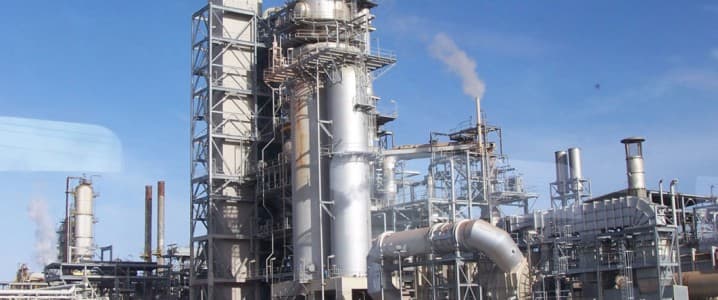
Navigating the Turbid Waters of Nigeria’s Dangote Refinery Investment
Nigeria’s Dangote Refinery, a monumental $20 billion project designed to transform Africa’s largest oil producer from a net fuel importer to a self-sufficient powerhouse, is facing significant headwinds. Initially hailed as a game-changer capable of processing 650,000 barrels per day – enough to satisfy domestic demand and create an export surplus – the facility’s ambitious promise is now shadowed by claims of “sabotage” and deeper systemic challenges. For energy investors scrutinizing emerging markets, the unfolding situation at Dangote is more than just a headline; it’s a critical case study in the intersection of grand industrial vision, volatile local economics, political complexities, and the inherent risks of large-scale infrastructure in developing nations. Understanding the underlying cracks in this foundation is paramount for assessing its long-term viability and broader investment implications across the continent.
Currency Chaos and Squeezed Margins: The Economic Reality Check
The economic model underpinning the Dangote refinery faces an inherent structural flaw: it purchases crude feedstock in U.S. dollars but sells its refined products, primarily gasoline and diesel, in Nigerian Naira. This fundamental currency mismatch creates a precarious financial tightrope, especially in an environment of persistent Naira depreciation. When the local currency weakens, the refinery’s dollar-denominated input costs effectively skyrocket relative to its Naira-denominated revenue, leading to significant cash burn on every liter sold. This dynamic has already forced the plant to suspend Naira sales and even re-sell crude cargoes it couldn’t profitably process, signaling more than just “teething problems.”
Adding to this pressure is the current global crude price environment. As of today, Brent Crude trades at $90.38, reflecting a sharp decline of 9.07% within the day, and a substantial 18.5% drop from $112.78 just two weeks ago. Similarly, WTI Crude stands at $82.59, down 9.41%. While lower crude prices can theoretically benefit refiners by reducing feedstock costs, the volatility and the significant dip in gasoline prices, currently at $2.93 per gallon (down 5.18%), mean that refining margins are under considerable pressure. For a facility grappling with high operational costs and a challenging domestic sales environment, this price movement exacerbates profitability concerns. Nigeria’s historical forfeiture of an estimated $1,000 in value for every barrel of crude exported unrefined underscores the potential, but the current operational and financial hurdles threaten to negate much of that gain.
Policy Volatility and Investor Risk Perception
Beyond the immediate economic challenges, the political landscape introduces another layer of uncertainty for the Dangote refinery. Proposed government reforms aiming to strip the Nigerian National Petroleum Company (NNPC) of its contracting power and transfer it to an upstream regulator are intended to enhance transparency and plug revenue leaks. However, for a multi-billion dollar refinery dependent on predictable, long-term crude supply agreements, such policy shifts introduce significant “contract risk.” Investors, including those in our network who frequently inquire about the stability of long-term oil price predictions for the end of 2026, process these regulatory changes as potential disruptions to their investment thesis.
The refinery owner’s call for outright bans on fuel imports further complicates the narrative. While intended to create a protected domestic market, such protectionist measures have a poor track record in Nigeria, often leading to shortages, increased smuggling, and eventual policy reversals. A truly competitive refinery should thrive on efficiency and market dynamics, not rely on artificial barriers. This situation raises questions about the long-term sustainability of the refinery’s business model and the government’s commitment to market-oriented policies, issues that resonate with investors evaluating the broader stability of energy investments, similar to the queries we see regarding specific players like Repsol’s performance.
Looking Ahead: Macro Events and Operational Stability
The operational integrity of the Dangote refinery is now critically linked to its internal labor relations. Claims of “sabotage” leading to worker dismissals, contrasted with union assertions of organized labor activities, paint a troubling picture. In a nation already battling widespread vandalism and oil theft, internal strife can severely compromise the security and efficiency of such a vital asset. Skilled labor is a cornerstone of any complex industrial operation, and turning this asset into a liability through unresolved disputes poses an existential threat to long-term viability.
Forward-looking investors must also consider the broader energy market context. Key upcoming events will undoubtedly influence the global crude and refined product landscape, impacting the Dangote refinery’s operating environment. The OPEC+ Joint Ministerial Monitoring Committee (JMMC) meeting today, April 18th, followed by the Full Ministerial Meeting tomorrow, April 19th, will set the tone for global crude supply. Discussions around production quotas, a frequent topic among our readership, directly affect feedstock costs. Additionally, the forthcoming API and EIA Weekly Crude Inventory reports on April 21st, 22nd, 28th, and 29th will provide crucial insights into demand trends, which in turn dictate refined product pricing and margins. The volatility seen in Brent crude prices, down over $20 in the last two weeks, underscores how rapidly market fundamentals can shift. For the Dangote refinery, navigating these macro-level dynamics while simultaneously addressing its internal operational and financial challenges will be a formidable task, with the success or failure having profound implications for Nigeria’s energy future and the perceived risk of investing in large-scale African infrastructure projects.


