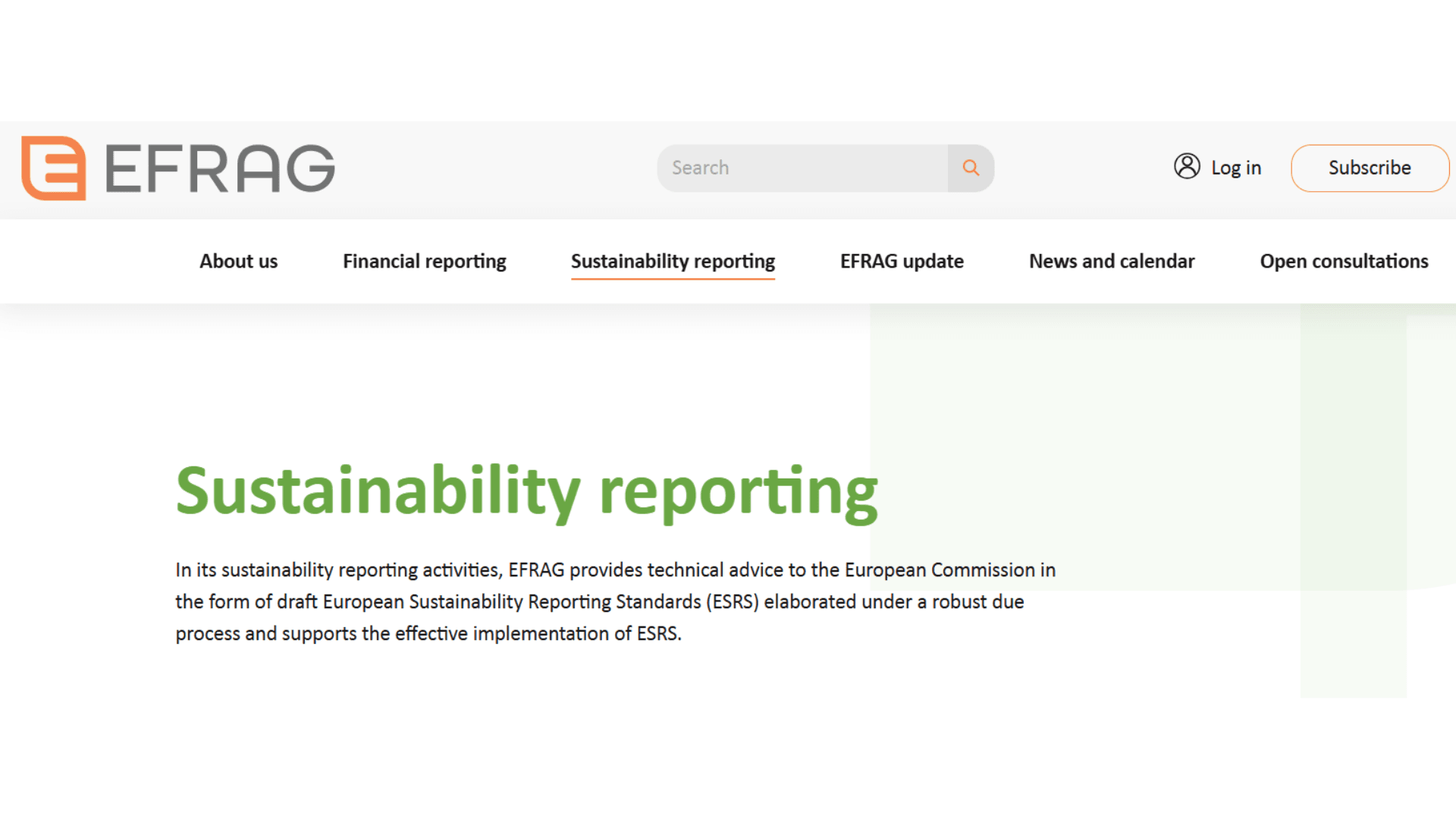
The European Financial Reporting Advisory Group (EFRAG)’s recent reports on digitalizing sustainability reporting for small and medium-sized enterprises (SMEs) mark a pivotal moment for investor transparency across Europe, extending far beyond the immediate scope of these smaller entities. For oil and gas investors, this development is particularly pertinent, as it underpins a broader strategic shift towards verifiable ESG performance across complex supply chains. As global energy markets grapple with significant volatility, demonstrated by today’s steep decline in crude prices, the ability of companies, large and small, to effectively communicate their sustainability efforts becomes an increasingly critical factor in capital allocation and long-term valuation. This analysis delves into how these new reporting frameworks, coupled with a dynamic market outlook and evolving investor demands, will reshape the investment landscape for energy sector participants.
Navigating Volatility: ESG as a Compass in Turbulent Oil Markets
As of today, Brent crude trades at $90.38, marking a significant 9.07% drop within a single day, fluctuating between $86.08 and $98.97. Similarly, WTI crude has seen a sharp decline to $82.59, down 9.41%, with its daily range spanning $78.97 to $90.34. This immediate downturn continues a pronounced trend, with Brent having fallen from $112.78 on March 30th to $91.87 just yesterday, representing an 18.5% decrease over two weeks. This level of market volatility underscores the critical need for robust, transparent data in investment decisions. In such an environment, EFRAG’s initiative to digitalize sustainability reporting for SMEs is not merely a bureaucratic exercise; it is a fundamental building block for enhanced investor confidence. By creating a standardized, accessible framework like the Voluntary Sustainability Reporting Standard (VSME), EFRAG is directly addressing the data gaps that often plague ESG assessments, particularly within the intricate supply chains of larger energy companies. This push towards digitalized disclosure aims to reduce administrative burdens for SMEs while significantly broadening the scope of readily available sustainability data, ultimately providing a clearer picture for investors evaluating the true ESG footprint and future resilience of their energy sector holdings.
Digitalization Drives Deeper ESG Insights for the O&G Value Chain
EFRAG’s two comprehensive reports, mapping over 320 digital tools and platforms, represent a strategic investment in the infrastructure required for widespread ESG adoption. The first report’s evaluation of 100 greenhouse gas (GHG) emissions calculators is particularly relevant for the oil and gas sector. Many exploration, production, and service companies rely heavily on a vast network of SME contractors and suppliers, whose collective emissions contribute significantly to the Scope 3 footprint of major operators. Providing these smaller entities with reliable, comparable carbon accounting tools, assessed for usability and methodological rigor, directly addresses a key challenge for investors: obtaining verifiable data on indirect emissions. Similarly, the second report, which surveyed 223 support platforms, highlights an emerging European digital reporting ecosystem designed to facilitate VSME alignment. While currently fragmented, this ecosystem is poised to mature, offering cost-effective solutions for SMEs to meet disclosure requirements. For investors asking about the long-term performance of companies like Repsol, understanding the sustainability practices embedded throughout their supply chain is paramount. As Patrick de Cambourg, Chair of EFRAG’s Sustainability Reporting Board, noted, this effort is an “initial step towards a much-needed pan-European ecosystem to empower SMEs in their sustainability journey.” This perspective is reinforced by Chiara del Prete, Chair of EFRAG’s Sustainability Reporting Technical Expert Group, who sees the European Commission’s July recommendation accelerating VSME adoption. Improved, digitized reporting from SMEs means more accurate, comprehensive data for assessing the overall ESG risk and opportunity profile of integrated energy companies, moving beyond just their direct operations.
Looking Ahead: Market Events, Investor Expectations, and the Future of Energy Investment
The immediate future of global oil markets will be heavily influenced by a series of critical events in the coming fortnight. Investors are keenly awaiting the outcomes of the OPEC+ Joint Ministerial Monitoring Committee (JMMC) meeting today, April 18th, followed by the full Ministerial meeting tomorrow, April 19th. Decisions regarding production quotas, a frequent point of inquiry from our readers, will have a direct and immediate impact on supply dynamics and, consequently, crude oil prices, which have seen a significant retreat recently. Further insights into demand and supply will come from the API Weekly Crude Inventory reports on April 21st and 28th, and the EIA Weekly Petroleum Status Reports on April 22nd and 29th. These data points are crucial for investors formulating their outlook for the remainder of 2026, a period many are asking about in terms of oil price predictions. While these events dictate short-to-medium term market movements, the underlying push for enhanced ESG transparency, championed by initiatives like EFRAG’s, speaks to a fundamental, long-term shift in capital markets. For companies navigating these volatile price swings, the capacity to demonstrate robust sustainability performance – including through their SME partners – will be a competitive differentiator. Investors are increasingly connecting these dots: a company’s resilience in the face of market fluctuations is intertwined with its ability to adapt to evolving ESG expectations and a lower-carbon future. The digital tools for SME reporting are not just about compliance; they are about building a more resilient, transparent, and ultimately investable energy sector.
Empowering Investor Decisions Through Granular ESG Data
Our proprietary data reveals that investors are actively seeking deeper insights into both specific company performance and broader market trends. Questions like “How well do you think Repsol will end in April 2026?” highlight the demand for granular company-level analysis, while “What do you predict the price of oil per barrel will be by end of 2026?” underscores the focus on long-term market direction. EFRAG’s work directly supports the former by creating a pipeline for more reliable ESG data. When an integrated energy major like Repsol engages with hundreds or thousands of SMEs in its value chain, their collective sustainability performance, particularly in areas like GHG emissions and resource management, profoundly impacts the major’s overall ESG profile. This enhanced visibility, facilitated by digital reporting, empowers investors to make more informed decisions, moving beyond high-level corporate statements to verifiable data points. The simplified framework of the VSME, designed to lower barriers for SMEs, is a strategic move to unlock this critical data. By equipping SMEs with tools to report their environmental and social impact accurately, EFRAG is effectively creating a more transparent and accountable ecosystem. This evolution in reporting infrastructure is crucial for investors aiming to accurately assess risk, identify sustainable growth opportunities, and ensure capital is directed towards companies genuinely committed to the energy transition, regardless of the short-term market dynamics influencing crude oil and gasoline prices.


