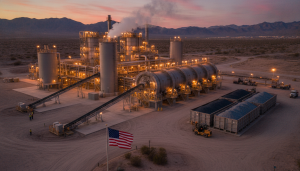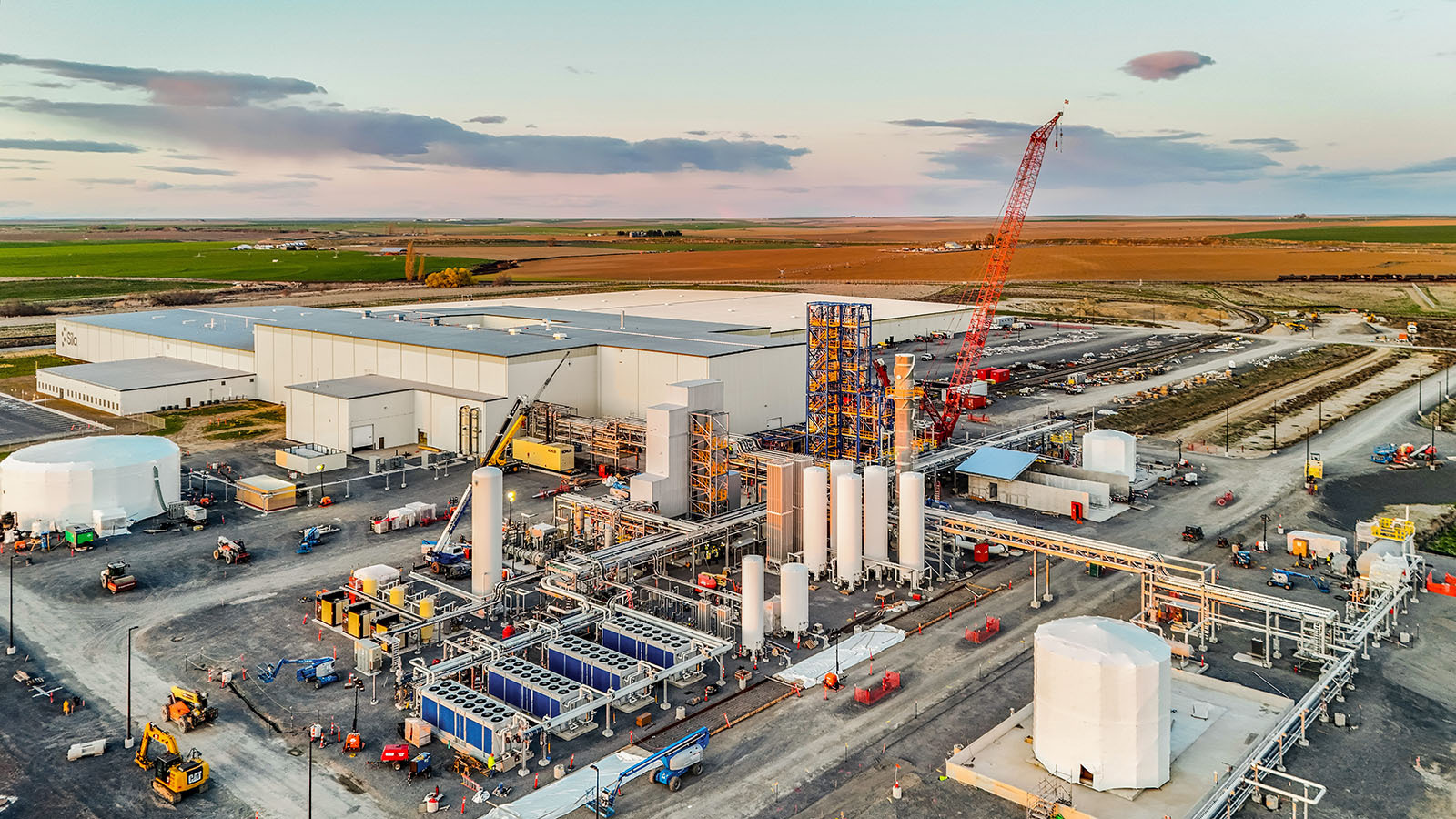
The recent commencement of operations at Sila Moses Lake, a cutting-edge silicon anode plant in Washington state, marks a pivotal moment for domestic battery manufacturing. This facility, poised to produce advanced silicon anode material for electric vehicles (EVs) and other applications, represents a significant step towards bolstering U.S. energy independence and securing critical supply chains. For oil and gas investors, this development, while seemingly distant from traditional crude markets, signals an accelerating shift in future energy demand dynamics. Our analysis at OilMarketCap.com delves into how this domestic manufacturing surge could reshape the investment landscape, balancing long-term structural shifts with immediate market volatility.
Accelerating EV Adoption and Long-Term Demand Erosion
Sila Moses Lake is not just another factory; it’s a strategic asset designed for unprecedented scale. Beginning with an initial capacity of 2-5 GWh and planning to expand up to 250 GWh within five years, this facility is set to become the world’s largest anode production site. By replacing traditionally graphite-based anodes, overwhelmingly sourced from China, with high-performance, American-made silicon-carbon alternatives, the plant addresses critical supply chain vulnerabilities. This domestic innovation directly feeds into the burgeoning EV market, promising faster charging and higher energy density, which are key drivers for consumer adoption. As investors frequently inquire about the long-term trajectory of crude prices, with questions like “What do you predict the price of oil per barrel will be by end of 2026?”, developments like this factory are crucial. Enhanced battery performance and secure domestic supply chains could accelerate EV penetration rates far beyond current projections, leading to a more pronounced erosion of gasoline demand, and consequently, crude oil, in the coming years. This structural shift demands a proactive re-evaluation of long-term oil demand forecasts and investment strategies within the sector.
Navigating Current Market Volatility Amidst Structural Shifts
While the long-term narrative leans towards demand erosion from EVs, the immediate crude oil market presents its own set of challenges and opportunities. As of today, Brent crude trades at $90.38 per barrel, experiencing a significant single-day decline of 9.07%, while WTI crude sits at $82.59, down 9.41%. This sharp correction follows a broader trend, with Brent having fallen by $20.91, or 18.5%, from $112.78 on March 30th to $91.87 just yesterday. Gasoline prices are also feeling the pressure, currently at $2.93, down 5.18% today. This immediate volatility, characterized by wide daily trading ranges ($86.08-$98.97 for Brent, $78.97-$90.34 for WTI), highlights the sensitivity of the market to macroeconomic headwinds, geopolitical tensions, and shifting supply-demand fundamentals. For investors, understanding this short-term flux is paramount, even as the longer-term energy transition unfolds. The significant price drops underscore the fragile balance in the market, making upcoming supply-side decisions particularly impactful.
OPEC+ Decisions and Supply-Side Resilience
The current market weakness, exacerbated by the recent steep price declines, casts a critical light on the upcoming OPEC+ meetings. With the Joint Ministerial Monitoring Committee (JMMC) convening on April 18th and the Full Ministerial meeting scheduled for April 19th, the market will be keenly watching for any signals regarding production policy. Investor interest in “What are OPEC+ current production quotas?” is particularly high in this environment. Given the 18.5% drop in Brent over the past two weeks, the cartel faces increased pressure to stabilize prices, potentially through deeper cuts or an extension of existing quotas. Furthermore, the weekly API Crude Inventory report on April 21st and 28th, along with the EIA Weekly Petroleum Status Report on April 22nd and 29th, will offer crucial insights into U.S. supply and demand dynamics. The Baker Hughes Rig Count on April 24th and May 1st will also provide indicators of future domestic production trends. These recurring events will continue to dictate short-to-medium term price movements, demonstrating that while the long-term transition towards electrification gains momentum, traditional supply-side management remains a dominant force in crude markets.
Strategic Implications for Oil & Gas Investors
The simultaneous rise of domestic battery manufacturing and current crude market volatility presents a complex landscape for oil and gas investors. The Sila Moses Lake plant symbolizes the accelerating pace of the energy transition, signaling a future with less reliance on fossil fuels for transportation. This necessitates a strategic re-evaluation for portfolios heavily weighted in traditional upstream and downstream assets. Companies that are diversifying into renewable energy, carbon capture, or hydrogen technologies may offer a more resilient long-term outlook. However, the immediate market dynamics, characterized by significant price swings, also present opportunities for nimble traders and those with a deep understanding of macroeconomic and geopolitical factors influencing short-term supply and demand. The imperative for investors is to balance the undeniable long-term shift towards electrification with the immediate realities of a volatile global crude market. Prudent investment strategies will increasingly require a dual focus: identifying companies positioned for the energy transition while carefully navigating the cyclical nature of traditional oil and gas. Ignoring either the revolutionary battery advancements or the immediate market signals would be a significant oversight.