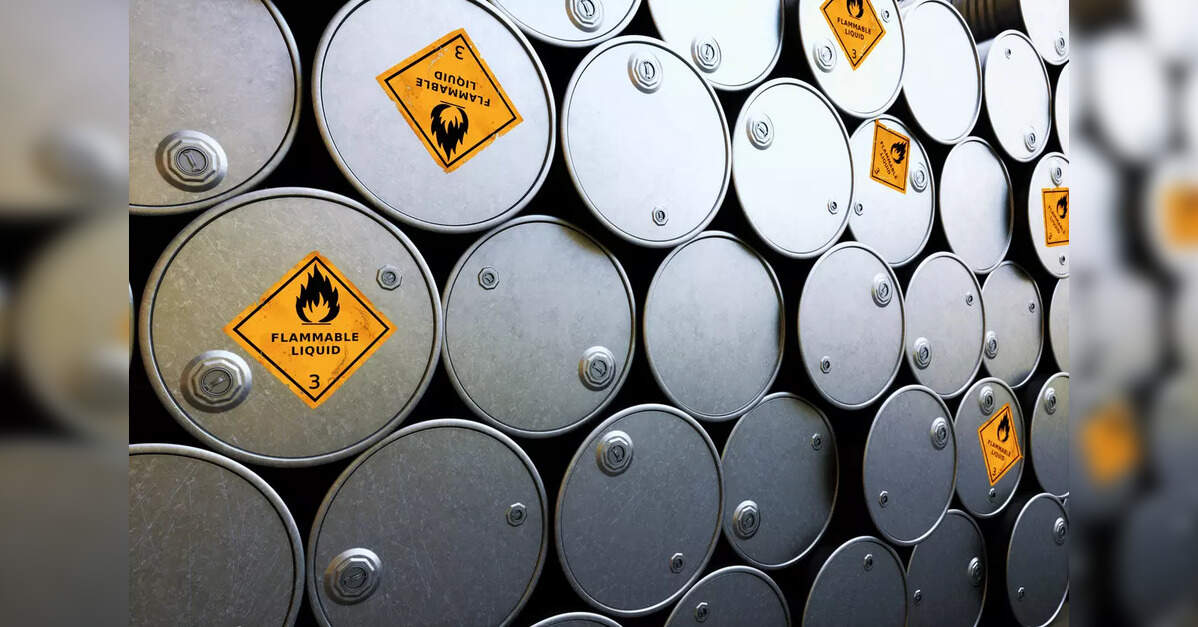
China’s relentless accumulation of crude oil reserves has become a dominant, albeit complex, force in global energy markets. While traditional commercial logic, particularly the market’s current backwardation structure where prompt prices exceed future deliveries, typically discourages storage, Beijing’s actions are clearly driven by a deeper, geopolitical imperative. This strategic stockpiling provides a crucial, though temporary, cushion against global supply shocks, influencing everything from daily price movements to long-term energy security narratives. For investors, understanding the drivers behind this counter-intuitive strategy is key to navigating the volatile landscape of oil and gas markets.
The Geopolitical Undercurrents Driving Beijing’s Demand
The primary catalyst for China’s aggressive crude oil purchases extends far beyond mere economic arbitrage. Geopolitical tensions, particularly the tightening web of sanctions on major producers like Iran, Russia, and Venezuela, have compelled Beijing to fortify its energy independence. Independent refiners, predominantly in Shandong province, have shown remarkable agility, leveraging complex “dark fleet” logistics to secure discounted barrels. This proactive procurement strategy reflects an anticipation of future supply disruptions and the desire to insulate China’s burgeoning economy from external vulnerabilities. Furthermore, the ongoing trade disputes with the United States have spurred China to diversify its energy feedstock sources, opting for crude oil in its “crude-to-chemicals” refining strategy to lessen reliance on specific US-derived products. Investors frequently inquire about the impact of these geopolitical shifts on global supply chains, underscoring the market’s acute awareness of how non-commercial factors dictate significant oil movements.
Market Dynamics: Seizing Opportunity Amid Price Swings
While the strategic motive is paramount, China has also adeptly capitalized on opportunistic market conditions. The period of intense stockpiling coincided with a significant dip in crude prices, allowing Beijing to acquire barrels at highly favorable rates. Customs data previously indicated average import costs dropping to as low as $72.7 per barrel, with landed costs subsequently falling below $70. This stands in stark contrast to today’s market reality. As of this morning, Brent Crude trades at $98.33, marking a 1.07% decline within the day’s range of $97.92 to $98.67. Similarly, WTI Crude hovers at $89.6, down 1.72% from its daily high. This current pricing environment makes further large-scale commercial storage less attractive, highlighting the unique window China exploited. The market has seen considerable volatility recently, with Brent shedding approximately $14, or 12.4%, from its $112.57 peak on March 27th to $98.57 yesterday. This downward trend, while still placing prices well above China’s prior acquisition costs, could be partially buffered by the consistent demand provided by China’s strategic fill. Moreover, Saudi Arabia’s tactical cuts to Official Selling Prices (OSPs) earlier in the year, aimed at recapturing market share in Asia, further sweetened the deal for Chinese refiners equipped to process these specific crude grades.
Expanding Infrastructure and Future Demand Signals
Beyond immediate purchases, China’s long-term energy security vision is evident in its substantial investment in storage and refining infrastructure. The nation’s crude oil storage capacity, which stood at 1.4 billion barrels in 2015, is projected to reach an impressive 2.03 billion barrels by the end of 2024. An additional 124 million barrels of capacity are anticipated by the close of 2025. This expansion is complemented by new refining capacity coming online, including projects at Sinopec’s Zhenhai plant, CNOOC’s Daxie expansion, and the Yulong refinery. These developments signify a sustained, structural increase in China’s demand for crude inputs. Furthermore, the conclusion of seasonal refinery maintenance outages during April and May, which temporarily reduced state-owned refining runs by about 1.2 million barrels per day, particularly at Sinopec facilities, means these units are now returning to full operational capacity, translating into an immediate uptick in crude demand. For investors tracking global supply-demand balances, upcoming events are critical. The OPEC+ Joint Ministerial Monitoring Committee (JMMC) meeting on April 17th, followed by the Full Ministerial meeting on April 18th, will be closely watched for any adjustments to production quotas, a topic frequently raised by our readers. Decisions made by the cartel will undoubtedly consider the underlying strength of Chinese demand. Subsequent API and EIA Weekly Crude Inventory reports on April 21st/22nd and April 28th/29th will offer crucial insights into whether this renewed Chinese appetite is translating into broader global inventory draws or if their domestic stockpiling continues to absorb available supply.
Investment Implications: Navigating the “Critical Buffer”
China’s strategic stockpiling has undeniably acted as a “critical buffer” for the global oil market, absorbing excess supply and providing a temporary floor during periods of price weakness. However, it is imperative for investors to recognize that this is not a “permanent solution.” The limits of storage capacity, even with ongoing expansion, will eventually be reached, and the economics of purchasing crude at higher prices for strategic reserves will face increasing scrutiny. This strategy introduces a layer of non-market volatility, as decisions are based on national security rather than pure profit. Companies positioned to benefit from sustained, albeit potentially volatile, demand for crude and refined products, particularly those with exposure to Asian markets and flexible logistics, may find opportunities. Investors should closely monitor Chinese trade data, refining utilization rates, and official announcements regarding strategic petroleum reserve levels. The interplay between geopolitical tensions, China’s domestic energy policy, and OPEC+’s supply management will continue to be the dominant factors shaping crude oil prices and investment strategies in the coming quarters. Understanding Beijing’s long-term energy security goals remains paramount for anticipating future market movements.


