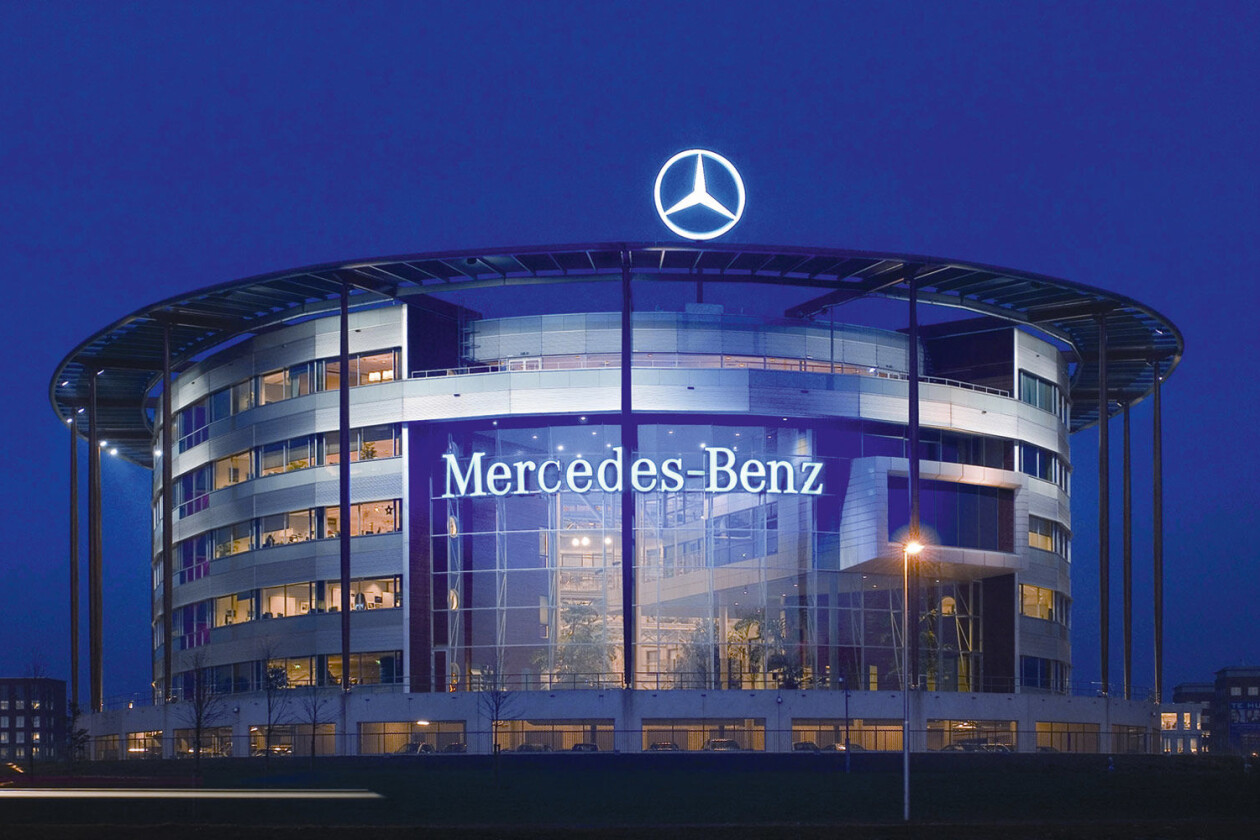
The recent approval for Mercedes-Benz AG to construct a 140-megawatt wind farm at its Papenburg test track in northern Germany signals more than just a corporate sustainability initiative; it represents a tangible acceleration in industrial decarbonization that holds significant implications for the broader energy investment landscape. Slated for completion in 2027, this project, featuring 20 turbines and backed by a 25-year power purchase agreement (PPA) with UKA Group, will supply approximately one-fifth of Mercedes-Benz’s annual electricity demand in Germany. For oil and gas investors, this move underscores the growing trend of large industrial consumers actively decoupling from volatile fossil fuel markets and securing long-term renewable supply, fundamentally reshaping future energy demand profiles.
Industrial Giants De-Risking Against Energy Volatility
Mercedes-Benz’s strategic investment in its own renewable energy generation highlights a critical driver for corporations: insulating operations from the unpredictable swings of global energy markets. As of today, Brent crude trades at $98.22, marking a 1.18% dip in a single day, within a daily range of $97.92 to $98.67. This immediate volatility follows a more significant trend; Brent has seen a notable decline from $112.57 just two weeks ago to $98.57 yesterday, representing a 12.4% drop. Such fluctuations, mirrored in the WTI crude market currently at $89.69 and even in gasoline prices hovering around $3.08, present substantial cost uncertainties for energy-intensive industries. By locking in a 25-year PPA for a significant portion of its electricity needs, Mercedes-Benz is effectively hedging against this unpredictability, ensuring long-term cost stability and predictability. This move isn’t merely about ‘going green’; it’s a savvy economic decision to secure operational resilience and predictability in an increasingly turbulent energy environment, directly impacting the demand for traditionally supplied grid power, often generated from natural gas or coal.
Germany’s Renewable Ambitions and the Supply Chain Shift
The Papenburg wind farm is a microcosm of Germany’s aggressive push towards energy independence and decarbonization. This 140 MW project, part of UKA Group’s substantial 1.5 GW onshore wind pipeline in Germany, demonstrates the scale at which renewable capacity is being deployed. For investors, this signifies a structural shift in the German energy mix, with profound implications for traditional fossil fuel infrastructure and imports. As industrial demand increasingly shifts to localized, renewable sources, the reliance on grid-scale conventional power generation diminishes. The collaboration with Nordex for turbines and Max Bögl Wind AG for hybrid towers illustrates the maturing ecosystem of renewable energy supply chains within Europe. This robust domestic supply chain accelerates project deployment, making such corporate self-sufficiency initiatives more attainable and economically attractive, further eroding the market share for traditional energy sources in industrial applications.
Navigating Divergent Investor Focus: Short-Term Swings vs. Long-Term Transition
Our proprietary reader intent data reveals a fascinating dichotomy in investor focus. While a significant portion of our audience is keenly tracking immediate oil market catalysts, with frequent queries around “OPEC+ current production quotas” and “the current Brent crude price,” the long-term strategic moves by industrial giants like Mercedes-Benz are quietly reshaping the demand side. Investors are rightly focused on the upcoming OPEC+ Joint Ministerial Monitoring Committee (JMMC) meeting tomorrow, April 17th, followed by the Full Ministerial Meeting on Saturday, April 18th, which could dictate near-term supply dynamics. Similarly, the API and EIA weekly crude inventory reports on April 21st and 22nd, respectively, remain crucial gauges of immediate market health. However, these short-term supply-side events must be weighed against the persistent, long-term demand erosion driven by projects like Papenburg. While an OPEC+ decision might move crude prices by a few dollars next week, the cumulative effect of hundreds of megawatts of new renewable capacity coming online for industrial consumers represents a permanent shift in demand. Investors must broaden their perspective to account for both the immediate fluctuations driven by traditional market forces and the accelerating, foundational changes in global energy consumption.
Investment Implications in a Decarbonizing Industrial Landscape
The approval of Mercedes-Benz’s wind farm serves as a powerful signal for investors in both traditional oil and gas and the burgeoning renewable sector. For oil and gas, it underscores the accelerating demand destruction from key industrial consumers, particularly in developed economies. While the global energy transition is complex and will not happen overnight, the pace at which major corporations are committing to substantial, self-generated renewable power should not be underestimated. This trend directly impacts the long-term outlook for refined products and natural gas demand in industrial applications. Conversely, for investors in renewable energy and associated technologies, this project reinforces the robust demand from creditworthy corporations seeking stable, sustainable energy solutions. Companies involved in wind turbine manufacturing, project development, and long-term energy management stand to benefit significantly. The 140 MW Papenburg project, though a single instance, is indicative of a broader, systemic shift where industrial energy procurement is becoming a strategic asset for stability, sustainability, and competitive advantage, offering clear pathways for growth in the energy transition space.


