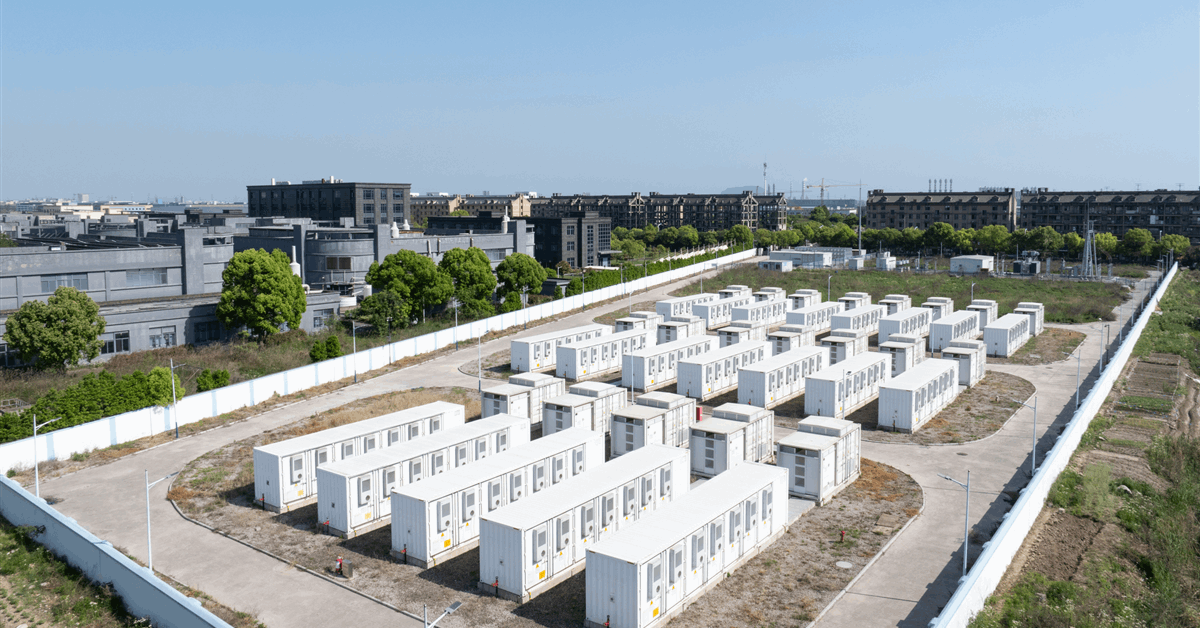
The global energy landscape is undergoing a profound transformation, driven by an imperative for sustainability and enhanced grid resilience. Against this backdrop, long-duration energy storage (LDES) technologies are emerging as critical infrastructure, attracting significant capital from discerning investors. In a notable development, Hydrostor, a leading developer in the LDES space, recently secured a $55 million financing commitment from Export Development Canada (EDC). This substantial backing is earmarked for the development activities of Hydrostor’s 200-megawatt (MW) Silver City Energy Storage Center project, located in Broken Hill, New South Wales, Australia. This advanced compressed air energy storage (A-CAES) facility represents a pivotal step in bridging the gap between intermittent renewable energy generation and consistent power delivery, offering a compelling opportunity for investors seeking exposure to the evolving energy matrix.
LDES: A Strategic Imperative in Volatile Energy Markets
The strategic importance of LDES projects like Silver City cannot be overstated, especially when viewed against the backdrop of fluctuating traditional energy commodity prices. As of today, Brent crude trades at $98.22, marking a 1.18% decline, while West Texas Intermediate (WTI) crude stands at $89.69, down 1.62%. This daily volatility, alongside a more significant 14-day trend showing Brent crude retreating over 12% from $112.57 to $98.57, underscores the inherent unpredictability of fossil fuel markets. Such price swings directly impact operational costs for utilities and industrial consumers, highlighting the pressing need for stable, reliable, and cost-effective energy solutions.
Hydrostor’s A-CAES technology addresses this fundamental market need by providing a scalable method to store excess renewable energy and dispatch it during periods of high demand or low generation. This effectively smooths out the peaks and troughs of renewable energy supply, acting as a crucial shock absorber for the grid. For investors, this translates into a value proposition distinct from traditional upstream oil and gas; LDES offers a pathway to long-term infrastructure investment with a focus on grid stability and energy security, rather than direct commodity price exposure. The $55 million secured development expenditure credit facility from EDC for Silver City not only accelerates a key project but also validates the financial viability and strategic necessity of A-CAES in fortifying global energy grids against commodity price volatility and supply disruptions.
Hydrostor’s Momentum: A Magnet for Institutional Capital
The $55 million commitment from EDC for the Australian project builds on a robust foundation of institutional investment in Hydrostor, signaling growing confidence in its technology and project pipeline. Earlier this year, in February, Hydrostor successfully secured a substantial $200 million investment. This funding consortium included the Canada Growth Fund Inc. (CGF), Goldman Sachs Alternatives, and the Canada Pension Plan Investment Board (CPP Investments). This significant capital injection comprised a $150 million convertible note financing commitment, alongside an additional $50 million convertible development expenditure loan facility. The latter is specifically designated to fund a portion of the development costs for Hydrostor’s Canadian projects, including the impressive 500-MW Quinte Energy Storage Center project slated for Lennox and Addington County, Ontario.
The caliber of these investors—from sovereign wealth funds to major financial institutions—underscores a widespread belief in the commercialization potential of A-CAES technology. This isn’t merely venture capital; it’s smart institutional money recognizing LDES as a cornerstone of future energy infrastructure. For investment analysts, this pattern of securing multi-tier financing, from development-stage credit facilities to large-scale institutional equity, suggests a company moving beyond proof-of-concept into large-scale project execution. These investments validate Hydrostor’s proprietary technology and its ability to attract the necessary capital to bring utility-scale projects to fruition, de-risking future investments in the sector.
Addressing Investor Questions: Energy Security Beyond Crude
Our proprietary reader intent data reveals a consistent theme among investors: a deep concern for energy security and price stability. Frequently, investors inquire about the current Brent crude price and OPEC+ production quotas. These questions highlight the immediate impact of global geopolitics and supply-side management on traditional energy markets. While these factors remain critical for oil and gas investors, LDES technologies like Hydrostor’s offer a complementary solution to the broader energy security challenge.
By enabling the mass storage and reliable dispatch of renewable energy, LDES reduces a grid’s reliance on fossil fuels for baseload power and peak demand, thus mitigating exposure to crude price volatility and the decisions made at OPEC+ meetings. The upcoming OPEC+ Joint Ministerial Monitoring Committee (JMMC) meeting on April 17th, followed by the Full Ministerial on April 18th, will undoubtedly influence short-term oil market sentiment. However, parallel investments in LDES are shaping a long-term energy future where grid stability is increasingly decoupled from these traditional supply-side dynamics. For investors looking to diversify their energy portfolio, LDES represents a strategic move towards assets that enhance grid resilience and offer a degree of insulation from the geopolitical risks inherent in fossil fuel markets, addressing the core investor need for stability and predictable returns.
Forward Outlook: LDES as a Stabilizer Amidst Energy Transition
Looking ahead, the trajectory of the energy sector will be defined by both the enduring influence of traditional fuels and the accelerating growth of renewables. While upcoming data points such as the API Weekly Crude Inventory reports (expected April 21st and 28th) and the EIA Weekly Petroleum Status Reports (scheduled for April 22nd and 29th) will continue to provide vital short-term insights into conventional petroleum supply and demand, these reports exist within a larger narrative of energy transition. The ongoing development of Hydrostor’s Silver City and Quinte projects, totaling 700 MW of advanced energy storage capacity, serves as a powerful testament to this evolving landscape.
The forward-looking analysis indicates that LDES will play an increasingly critical role as grids integrate more intermittent renewable sources. These projects are not merely ‘green’ initiatives; they are fundamental infrastructure investments that enhance the operational efficiency and reliability of national power grids. For investors, this presents a compelling long-term opportunity, as the demand for grid modernization and stability will only intensify. The commitment of significant capital, both public and private, into LDES solutions like A-CAES demonstrates a clear market signal that these technologies are moving from niche applications to essential components of a diversified, resilient energy future. Investing in LDES offers a pathway to participate in the foundational build-out of the next-generation energy infrastructure, providing robust returns independent of the daily fluctuations in crude oil prices.


