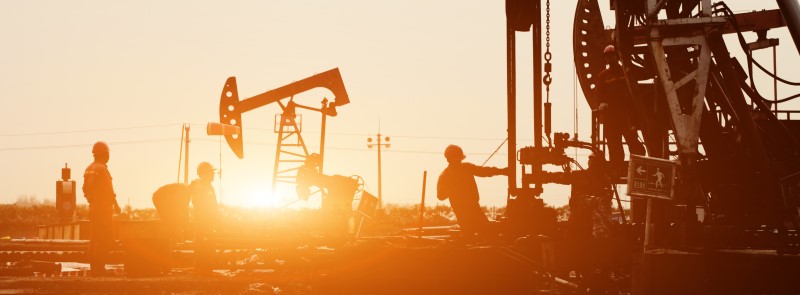
In the dynamic landscape of global energy, the role of U.S. independent oil and gas producers often gets overshadowed by international giants or geopolitical headlines. However, recent industry analysis confirms what savvy investors have long understood: these domestic players are not merely contributors, but the very foundation of America’s upstream sector, driving both energy security and significant economic output. Their operational agility and relentless focus on efficiency make them a critical component of any well-informed energy investment strategy, especially as market conditions continue to evolve.
The Indispensable Economic Engine of U.S. Energy
A comprehensive study has once again underscored the outsized impact of U.S. onshore independent producers. From 2022 through 2024, these firms were responsible for over 85% of domestic crude and condensate output, alongside an astounding 90% of natural gas production. This dominance extends beyond mere volumetric output. In 2024 alone, independents supported a remarkable 3.1 million jobs across the nation, generating $277 billion in labor income and contributing $129 billion in taxes. The broader economic ripple effect is equally impressive, with independents generating $488 billion in GDP output, where every dollar invested yields an additional $1.26 in secondary economic contributions. For investors, these figures illustrate a sector with deep economic roots and significant multiplier effects, indicating robust stability and a crucial role in the national economy, far beyond just barrels and BTUs.
Navigating Volatility: Independents Amidst Shifting Market Tides
The resilience of these independent producers is particularly notable when viewed against the backdrop of recent market fluctuations. As of today, Brent crude trades at $98.38, reflecting a 1.02% decline within the day’s range of $97.92 to $98.67. Similarly, WTI crude sits at $90.05, down 1.23% with a daily range between $89.57 and $90.26. This downward pressure is part of a broader trend; our proprietary data indicates Brent crude has fallen from $112.57 on March 27th to $98.57 as of April 16th, representing a significant 12.4% decrease over the past 14 days. Despite such volatility, independents have consistently driven U.S. production, operating 95% of all producing onshore wells and drilling 90% of new wells between 2022 and 2024. This sustained operational activity highlights their ability to adapt and maintain output, a key factor for investors seeking stable production in an often unpredictable commodity market. Their focus on cost efficiency and rapid deployment allows them to remain viable even when prices soften, distinguishing them as a bedrock of supply.
Forward Outlook: Connecting Independents to Upcoming Market Catalysts
For investors focused on the trajectory of oil and gas markets, the activity of U.S. independents provides a critical lens through which to interpret future supply trends, especially in light of upcoming calendar events. The Baker Hughes Rig Count, scheduled for release on April 17th and again on April 24th, will offer direct insight into drilling activity, overwhelmingly driven by these very independent operators. A sustained or increasing rig count signals continued investment and future production growth from the U.S. shale plays, which can act as a counterbalance to global supply management. Furthermore, the upcoming OPEC+ meetings – the JMMC on April 18th and the Full Ministerial meeting on April 20th – carry significant weight. While OPEC+ decisions directly influence global supply quotas, the consistent output from U.S. independents often dictates the ceiling of effective global supply, especially if OPEC+ opts for production cuts. Investors should closely monitor these events, understanding that the strategic flexibility of U.S. independents positions them to capitalize on any resulting supply-demand imbalances, reinforcing America’s standing as the world’s leading producer and influencing global energy security narratives.
Addressing Investor Concerns: The Interplay of Global Policy and Domestic Production
Our proprietary reader intent data reveals a consistent theme among investors: a keen interest in “OPEC+ current production quotas” and the “current Brent crude price.” These questions underscore the interconnectedness of global energy policy and the day-to-day operations of domestic producers. Investors recognize that while U.S. independents operate within national borders, their profitability and future investment decisions are heavily influenced by global benchmarks like Brent. OPEC+ production quotas, for instance, directly impact the global supply-demand balance, which in turn dictates the price deck under which independents must operate. A tightening of OPEC+ quotas can create a more favorable pricing environment for U.S. producers, potentially accelerating their drilling programs. Conversely, an easing of cuts could introduce more competition, necessitating even greater efficiency. Understanding the core role of independents in U.S. production allows investors to better contextualize global price movements and policy decisions, seeing how domestic output provides a crucial, often counter-cyclical, element to the broader energy market equation.
The Investment Thesis: Agility and Stability in Independent Producers
The evidence is clear: U.S. independent oil and gas producers are not just surviving; they are thriving as the backbone of the nation’s energy infrastructure. Their significant contributions to production, job creation, and economic output, coupled with their proven resilience against market volatility, present a compelling investment thesis. In an era where energy security is paramount and supply chains are frequently tested, the operational agility and domestic focus of these independents offer a degree of stability and predictability that is highly valued. For investors aiming to navigate the complexities of the energy market, a deep understanding of these producers and their pivotal role is essential. Their consistent performance and strategic importance continue to solidify America’s position as a global energy leader, making them a crucial component of a diversified energy portfolio.