Walmart AI Power: Efficiency Redefines Enterprise
While much of the market’s AI enthusiasm has centered on the Magnificent Seven and the digital realm, a quieter, yet profoundly impactful, AI revolution is unfolding within the physical economy. Walmart, the world’s largest retailer, is leveraging artificial intelligence to tackle its immense logistical challenges, presenting a compelling case study for how operational efficiency can redefine enterprise on an unprecedented scale. For oil and gas investors, this isn’t merely a retail story; it’s a potent signal regarding future energy demand, supply chain resilience, and the evolving landscape of industrial consumption. Walmart’s strategic embrace of AI to optimize everything from shelf stocking to global merchandise movement has the potential to ripple across the energy sector, influencing long-term demand models and highlighting the critical need for agile investment strategies.
The Invisible Hand of AI in Physical Logistics
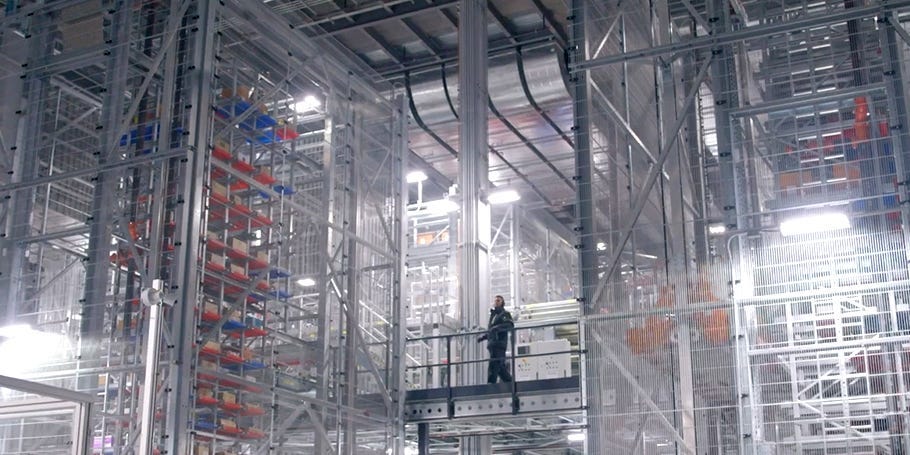
Walmart’s operational footprint is staggering, involving the movement of billions of items annually across a vast network of stores and distribution centers. This scale makes it a prime candidate for AI-driven transformation, specifically in solving complex physical challenges. The company has been developing machine learning tools and automation projects since 2015, long before the recent generative AI boom. Key initiatives include the creation of “digital twins” for facilities, allowing for precise modeling of merchandise flow and inventory planning to ensure products arrive at the optimal time and location. Store associates are also being empowered with AI chatbots on handheld devices, enhancing priority setting and customer service. As Walmart US CEO John Furner noted, it’s “a combination of people being powered by technology,” acknowledging the dynamic nature of retail and the crucial role of human judgment augmented by AI. This blend of physical AI with generative AI promises to be exceptionally helpful in streamlining operations that traditionally consume significant resources.
Energy Demand in the Crosshairs: Walmart’s Efficiency and Market Realities
The implications of Walmart’s AI-driven efficiencies extend directly to energy demand. Optimizing the movement of billions of items inherently means reducing wasted miles, streamlining routes, and minimizing the need for expedited, less fuel-efficient transport. This translates into tangible savings in diesel and gasoline consumption across its massive logistics network. While a single company’s efforts might seem localized, Walmart’s sheer size means even marginal improvements have macro-level effects. For instance, more precise inventory management reduces the urgency for last-minute, less-efficient shipments, while improved store operations can indirectly reduce energy expended on heating, cooling, and lighting through better space utilization and operational flow.
This long-term trend of efficiency gains emerges against a backdrop of dynamic energy markets. As of today, Brent crude trades at $98.36 per barrel, reflecting a -1.04% dip within a daily range of $97.92 to $98.67. WTI crude also saw a decline, settling at $89.96, down -1.33% from its daily range of $89.57 to $90.26. Looking at the broader picture, Brent has seen a notable correction over the past two weeks, falling from $112.57 on March 27th to $98.57 yesterday, a significant drop of $14, or -12.4%. This recent downward pressure, alongside a modest -0.32% decrease in gasoline prices to $3.08, suggests a market grappling with various supply and demand signals. While current price movements are influenced by immediate geopolitical and economic factors, the underlying trend of industrial efficiency, exemplified by Walmart, represents a subtle yet persistent force that could dampen future demand growth projections for transportation fuels, challenging traditional market assumptions.
Forward-Looking Implications: Navigating Supply, Demand, and Upcoming Catalysts
For oil and gas investors, understanding the trajectory of industrial efficiency is paramount, especially when anticipating market reactions to pivotal events. The widespread adoption of “physical AI” across industries, mirroring Walmart’s success, could introduce a structural headwind to demand growth that traditional models may not fully capture. This makes upcoming energy events all the more critical for assessing market sentiment and potential shifts in supply strategies.
The next two weeks are packed with significant catalysts. This Friday, April 17th, we will receive the latest Baker Hughes Rig Count, offering insights into North American drilling activity. More crucially for global supply, the OPEC+ Joint Ministerial Monitoring Committee (JMMC) meets on April 18th, followed by the full OPEC+ Ministerial Meeting on April 20th. These gatherings are central to determining production quotas and overall supply strategy. Investors are keenly watching these meetings for any signals regarding output adjustments, particularly given the recent softening in crude prices and the ongoing discussions around global economic health. Our proprietary data indicates a strong investor interest in OPEC+ production quotas, underscoring the market’s focus on supply-side management. Further insights into demand will come from the API Weekly Crude Inventory reports on April 21st and 28th, and the EIA Weekly Petroleum Status Reports on April 22nd and 29th. These inventory figures will be scrutinized for signs of underlying economic activity and how deeply current efficiency trends are impacting petroleum product consumption. While OPEC+ decisions directly affect supply, the longer-term demand picture, subtly influenced by the widespread adoption of technologies like Walmart’s physical AI, will be a critical consideration for producers contemplating future market stability.
Investor Focus: Strategic Shifts for Energy Portfolios
The widespread integration of AI, particularly in optimizing physical operations like those at Walmart, poses a fundamental question for oil and gas investors: how should portfolios adapt to a potentially more efficient, less energy-intensive future? Investors are increasingly looking for sophisticated tools and insights to navigate these complex dynamics, with many asking about the models and data sources powering our market analyses. The story of Walmart’s AI-driven efficiency serves as a powerful illustration of the need for deep, data-backed analysis in an evolving energy landscape.
While the immediate impact on global oil demand might appear incremental, the aggregate effect of enterprises achieving what Walmart’s e-commerce head David Guggina described – turning data scientist work from “days or weeks” into “minutes” – points to a systemic acceleration of efficiency. For energy portfolios, this suggests a dual approach: while traditional exploration and production remain vital, increasing consideration must be given to companies enabling these efficiencies or those positioned to thrive in a more optimized energy environment. This includes investments in logistics technology, advanced data analytics, and potentially even the infrastructure that supports AI (e.g., power generation for data centers, which themselves require significant energy). Understanding these underlying technological shifts, rather than solely focusing on geopolitical headlines, will be key to long-term success in oil and gas investing.


