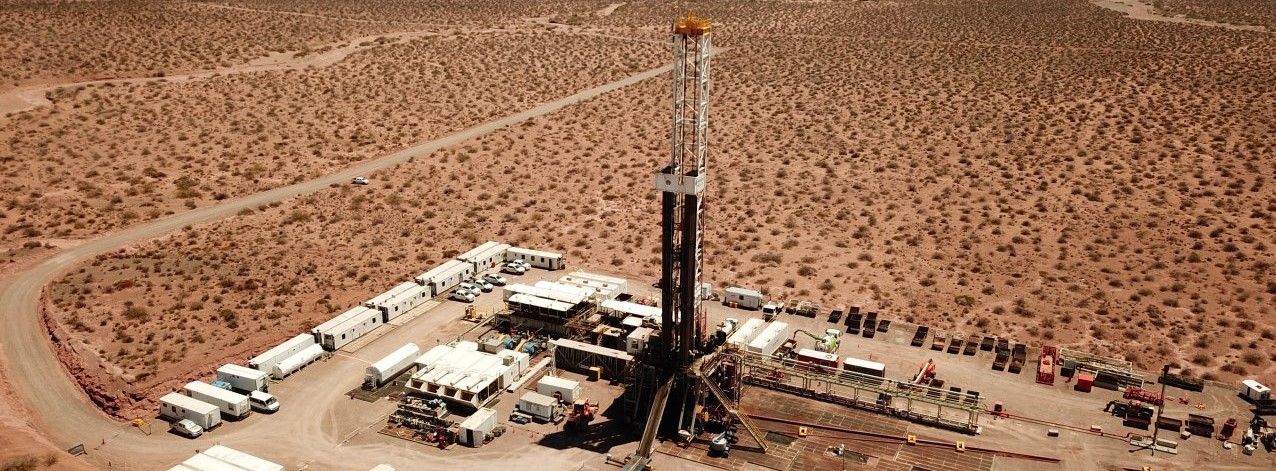
Argentina stands at a critical juncture, aggressively courting international capital to unlock the vast potential of its Vaca Muerta shale resources. While the long-term prize of expanded oil and gas exports, including ambitious LNG projects, remains compelling, investors are currently weighing this future against recent domestic political shifts and broader global market volatility. Our proprietary data, tracking real-time prices and investor sentiment, suggests a keen focus on market stability and policy predictability, factors that will ultimately dictate the flow of crucial investment into the nation’s energy infrastructure.
Navigating Political Crosscurrents in Vaca Muerta
The strategic development of Argentina’s Vaca Muerta shale region is inherently a long-term play, demanding multi-decade commitments for infrastructure. While President Javier Milei’s market-oriented reforms over the past two years have undeniably improved the landscape for shale producers and transporters to access global credit, including securing a signature project-finance deal for a crude export pipeline, recent political developments introduce a layer of short-term uncertainty. A provincial election on September 7th, which saw a boost for the leftist opposition, created immediate market tremors, causing a sell-off and a jump in the country’s risk premium. However, the nation’s energy leadership maintains a steadfast view. As Argentina’s energy chief, Daniel Gonzalez, recently articulated, “When you build a pipeline for the next 20 or 30 years, you’re not looking at a provincial election last week.” This sentiment underscores the government’s belief that while the immediate window for debt issuance might be challenging, the overarching commitment to an open economy will not derail long-term projects.
The Capital Imperative: LNG and Export Infrastructure
The vision for Vaca Muerta extends far beyond domestic supply, targeting a significant role in global energy markets. Key to this ambition are several major projects currently being firmed up, most notably a new pipeline designed to feed floating liquefaction units, and a more expansive, highly ambitious land-based LNG terminal. These initiatives represent a substantial capital call, requiring billions in foreign direct investment. For these large-scale endeavors to succeed, a consistent and predictable policy environment is paramount. As Chevron Corp.’s country manager in Argentina, Ana Simonato, emphasized, investors require future governments to “maintain free-market policies.” This means ensuring stable regulatory frameworks, transparent investment rules, and a commitment to market-based pricing, insulating these projects from political swings that could erode investor confidence and project returns. The sheer scale and complexity of these projects mean that capital providers will scrutinize every sign of policy stability, viewing it as a prerequisite for long-term engagement.
Global Oil Market Dynamics and Investor Calculus
The broader global oil market provides the backdrop against which investment decisions in Argentina’s shale are made. As of today, Brent Crude trades at $98.27, reflecting a -1.13% dip within a day range of $97.92 to $98.67. WTI Crude shows a similar trend, currently at $89.88, down -1.41% within its $89.57-$90.26 range. This current snapshot follows a more significant downturn over the past two weeks, where Brent crude has shed approximately $14, falling from $112.57 on March 27th to $98.57 on April 16th—a decline of about 12.4%. This sustained softening in crude prices directly impacts the financial models for long-term projects, potentially altering internal rates of return and payback periods. Our reader intent data reveals a strong focus on these price movements, with investors frequently asking, “What is the current Brent crude price and what model powers this response?” This indicates that the market’s immediate concern is centered on the underlying commodity value, which in turn influences the appetite for committing capital to new, large-scale upstream and midstream developments in regions like Vaca Muerta. A declining price environment often leads to greater scrutiny of project economics and a higher hurdle for investment.
Looking Ahead: Key Events Shaping Investment Appetite
The coming weeks are packed with critical energy events that could further shape the global supply-demand outlook and, consequently, investor sentiment towards capital-intensive projects in Argentina. This includes the regular Baker Hughes Rig Count reports on April 17th and April 24th, offering insights into drilling activity. However, the most closely watched events are undoubtedly the upcoming OPEC+ meetings: the Joint Ministerial Monitoring Committee (JMMC) on April 18th, followed by the Full Ministerial meeting on April 20th. Our reader data highlights a consistent investor interest in “OPEC+ current production quotas,” underscoring the market’s reliance on these decisions to guide future price expectations. Any signals from OPEC+ regarding production adjustments, whether cuts to support prices or increases in response to demand, will directly influence the perceived profitability and risk of new crude and LNG export infrastructure. Following these, the API Weekly Crude Inventory (April 21st, April 28th) and EIA Weekly Petroleum Status Report (April 22nd, April 29th) will provide crucial data points on U.S. inventory levels and demand trends. These upcoming data releases and policy decisions will collectively inform how investors view the long-term trajectory of global oil and gas markets, directly impacting their willingness to back Argentina’s ambitious shale development plans with the necessary capital.