Alaska LNG Secures Key Offtake: A Beacon for U.S. Pacific Exports Amidst Market Volatility
The landscape of global liquefied natural gas (LNG) investment witnessed a significant development with Glenfarne’s Alaska LNG project securing a crucial Letter of Intent (LOI) for long-term supply with JERA, Japan’s largest power generation company. This 20-year agreement for one million tonnes per annum (MMtpa) of LNG on a Free-on-Board (FOB) basis marks a pivotal step for the only federally authorized LNG export project on the U.S. Pacific Coast. For investors eyeing strategic energy infrastructure, this milestone underscores the enduring demand for reliable, diversified LNG supply, especially from the Asia-Pacific region, providing a counter-narrative to the short-term fluctuations currently impacting the broader crude oil market.
Strategic Imperatives Driving Asia-Pacific LNG Demand
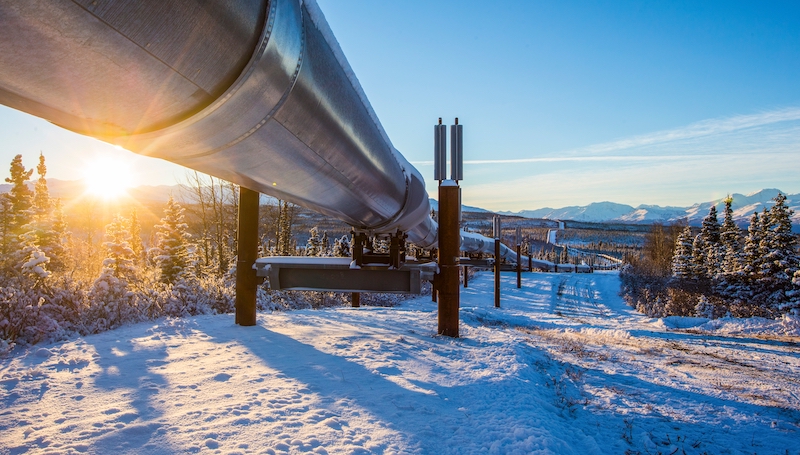
The commitment from JERA, a global leader in LNG procurement, highlights the strategic importance of the Alaska LNG project. Since acquiring a 75% ownership stake in March 2025, Glenfarne has rapidly accelerated commercial progress for the 20-MTPA venture, which is a joint initiative with the Alaska Gasline Development Corporation (AGDC). This LOI with JERA pushes the project past preliminary agreements covering more than half of its third-party offtake capacity, building on earlier understandings with CPC in Taiwan and PTT in Thailand. The project’s unique competitive advantages, including its unparalleled proximity to Asian markets—offering the shortest U.S. shipping routes—and access to abundant, low-volatility natural gas reserves from the North Slope, are clearly resonating with buyers. Notably, Glenfarne is already in discussions with additional potential buyers for LNG volumes that exceed the project’s total capacity, signaling robust and sustained demand for U.S. LNG in a region prioritizing energy security and diversification. This strong commercial traction substantially de-risks the project for future equity and debt investors.
Navigating Macro Headwinds: Differentiating LNG from Crude Oil Volatility
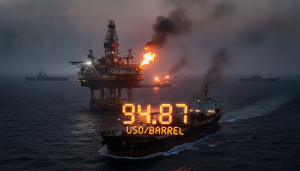
While the long-term outlook for LNG remains robust, investors are keenly aware of the current volatility in the broader energy markets. As of today, Brent Crude trades at $90.38 per barrel, experiencing a significant daily drop of 9.07%, with WTI Crude similarly impacted at $82.59, down 9.41% within the same 24-hour window. This sharp decline follows a pronounced 14-day trend where Brent has fallen from $112.78 on March 30th to $91.87 on April 17th, representing an $20.91 or 18.5% decrease. Gasoline prices have also seen a downturn, now at $2.93, down 5.18%. This macro environment, marked by pronounced price swings, often prompts investor caution. However, it’s crucial for energy investors to differentiate. While crude oil prices reflect immediate supply-demand dynamics and geopolitical tensions, major LNG export projects like Alaska LNG are underpinned by long-term, take-or-pay contracts that largely insulate them from short-term crude market gyrations. These contracts provide revenue stability, making such projects attractive to infrastructure funds and institutional investors seeking predictable returns. Furthermore, Alaska LNG’s design as one of the lowest-carbon LNG projects globally offers a compelling investment thesis, aligning with increasing ESG mandates and positioning it favorably in a decarbonizing world by displacing higher-emission fuels in Asia.
Addressing Investor Concerns: Long-Term Value Amidst Short-Term Noise
Our reader intent data reveals a consistent theme among investors this week: a focus on understanding future price trajectories and the impact of global supply management. Questions like “what do you predict the price of oil per barrel will be by end of 2026?” and “What are OPEC+ current production quotas?” underscore a desire for clarity in an uncertain market. While predicting precise crude oil prices remains challenging given geopolitical fluidity and economic variables, the securing of long-term LNG contracts for projects like Alaska LNG offers a tangible answer to the broader question of energy investment stability. These agreements provide visibility into future cash flows, a stark contrast to the speculative nature of short-term crude trading. Investors should view the Alaska LNG progress through the lens of strategic asset accumulation and energy security, rather than being solely swayed by the daily swings in crude futures. The project’s ability to attract major players like JERA, even as broader oil markets face headwinds, reinforces its fundamental value proposition and the enduring need for reliable natural gas supply to fuel global economies and facilitate energy transitions.
Forward Momentum: Catalysts and Outlook for Alaska LNG
Looking ahead, the Alaska LNG project is positioned for continued momentum, with Glenfarne targeting final investment decisions (FIDs) for its phased development strategy in 2025–2026. This timeline aligns with several upcoming energy market events that, while macro in nature, will collectively shape the investment climate for large-scale energy infrastructure. The imminent OPEC+ Ministerial Meetings on April 18th and 19th will be closely watched for production quota decisions, which invariably influence global energy sentiment. Subsequent weekly data releases, including API and EIA Crude Inventory reports (April 21st, 22nd, 28th, 29th) and Baker Hughes Rig Count figures (April 24th, May 1st), will provide ongoing insights into U.S. supply and demand dynamics. These data points collectively inform the broader energy market’s health, directly impacting the availability and cost of capital for projects like Alaska LNG. The project’s continued success in securing offtake agreements, combined with its strategic location and low-carbon profile, positions it as a resilient investment opportunity, capable of advancing towards FID regardless of short-term market noise. The support from the U.S. Department of Energy, recognizing its potential to cut global CO2 emissions by up to 77 million tonnes per year, further solidifies its strategic importance and long-term viability.