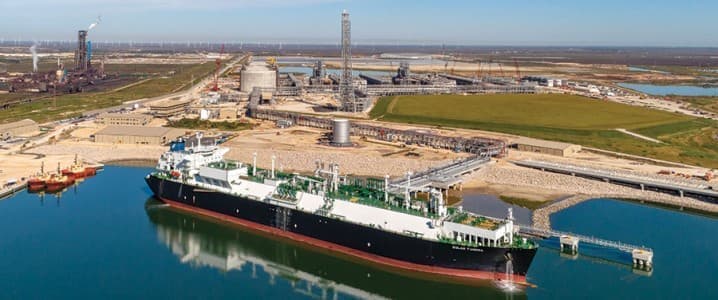
Turkey’s state energy company BOTAS has made a decisive move, locking in a substantial 15 billion cubic meters (Bcm) of liquefied natural gas (LNG) through new contracts with eight major global suppliers. This strategic procurement, extending through 2028 with deliveries commencing this winter, signifies a profound commitment to diversifying Turkey’s energy portfolio. For investors, this isn’t merely a regional news item; it’s a powerful signal of robust, sustained global LNG demand, driven by an accelerating imperative for energy security and supply flexibility in a volatile world.
Turkey’s Energy Calculus: De-Risking and Diversification
Ankara’s substantial LNG commitment directly addresses a critical strategic vulnerability: an over-reliance on pipeline gas from a limited set of suppliers, particularly Russia, which currently accounts for more than 40% of its imports. By securing 15 Bcm from a diverse group including U.S. exporter Cheniere, London-based Hartree, Germany’s SEFE, Norway’s Equinor, Japan’s JERA, and energy giants BP, ENI, and Shell, Turkey is actively building a “multi-source, flexible, and market-oriented” gas market. This move is not just about expanding supply; it’s about hedging against geopolitical risks and supply disruptions that have characterized the global energy landscape in recent years. With deliveries scheduled to begin this winter and continue through 2028, these long-term agreements provide predictable supply volumes, enabling Turkey to leverage its enhanced LNG terminal and floating storage regasification unit capacity to meet rising demand in its industrial and power sectors.
LNG Provides Stability Amidst Crude Market Swings
The strategic value of these long-term LNG contracts becomes even clearer when viewed against the backdrop of the broader energy market. As of today, Brent crude trades at $98.38, reflecting a 1.02% dip in the last trading session, and has seen a notable 12.4% decline over the past two weeks, falling from $112.57 on March 27th to $98.57 on April 16th. WTI crude mirrors this sentiment, currently at $89.99. This recent volatility underscores the unpredictable nature of crude markets, influenced by geopolitical events, supply decisions, and global economic shifts. In contrast, Turkey’s procurement of long-term LNG volumes, announced at a major industry gathering like Gastech, highlights the premium buyers are placing on supply predictability and price stability. These contracted volumes function as a critical hedge, insulating buyers from the sharp price swings that can impact spot markets. For investors, this divergence in market behavior signals LNG’s growing role as a distinct and potentially more stable component of the energy complex, driven by fundamental demand for power generation and industrial feedstock, rather than purely transportation fuels.
Addressing Investor Concerns: LNG’s Place in a Dynamic Portfolio
Our proprietary data indicates that investors are keenly focused on core energy market drivers, frequently asking about current Brent crude prices and OPEC+ production quotas. While crude oil undoubtedly remains a dominant force, Turkey’s substantial LNG commitment offers a crucial perspective: energy security and diversification are paramount, driving significant capital into the natural gas sector. For investors, this means looking beyond traditional crude metrics to understand the evolving energy landscape. The move by BOTAS signals sustained long-term demand for LNG, offering a compelling investment thesis for companies involved in liquefaction, shipping, and regasification. It reinforces the value proposition of integrated majors like Shell, BP, and ENI, whose diversified portfolios include significant LNG operations, as well as pure-play LNG exporters such as Cheniere. As nations prioritize stable, diversified energy sources, the investment case for LNG strengthens, offering a hedge against the geopolitical and economic uncertainties that frequently impact the crude market.
Forward Outlook: Upcoming Events and LNG’s Enduring Appeal
The coming weeks are packed with events that will shape the global energy narrative, primarily influencing crude markets but also indirectly impacting the broader energy complex. Upcoming OPEC+ meetings on April 18th (JMMC) and April 20th (Full Ministerial) will be critical for crude supply decisions. Any moves to maintain or cut production quotas could keep crude prices elevated, potentially enhancing the relative attractiveness of natural gas and LNG as alternatives for industrial and power generation users, further bolstering long-term demand for gas. Additionally, the weekly Baker Hughes Rig Count, scheduled for April 17th and April 24th, provides insights into future oil and associated gas supply. While these reports will shed light on North American production trends, Turkey’s long-term LNG deals demonstrate a foundational commitment to securing gas supply irrespective of short-term crude price fluctuations. The consistent demand for LNG, driven by strategic national interests and industrial growth, indicates that its trajectory is underpinned by structural shifts towards energy independence and reduced emissions, rather than the more cyclical forces that often dictate crude prices. Investors should view these long-term LNG contracts as a strong indicator of resilient demand that will persist through various market cycles, offering a stable growth vector in the evolving energy matrix.


