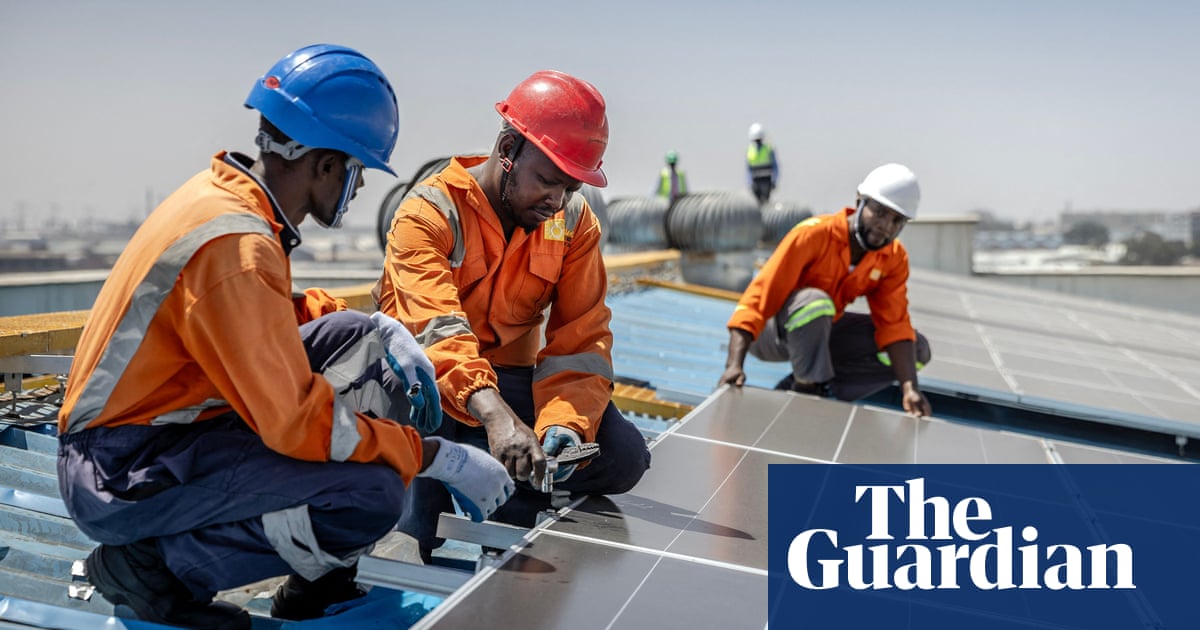
Africa stands at the precipice of a significant energy transformation, a nascent “green boom” that promises to redefine its economic landscape and global energy footprint. While the continent has long been synonymous with traditional hydrocarbon resources, the burgeoning interest and investment in renewable energy, particularly solar power, signal a strategic pivot. This emerging trend, though starting from a modest base, presents compelling opportunities for forward-thinking investors seeking to capitalize on a continent-wide resurgence driven by low-carbon solutions and a pressing need for energy access. Our proprietary data pipelines reveal a complex interplay between shifting global energy markets and Africa’s unique developmental trajectory, demanding a nuanced investment approach.
The Green Shoots of African Energy Transformation
The continent is indeed showing the first tangible signs of a green economy takeoff. Over the past 12 months leading up to June, twenty African nations shattered previous records for solar panel imports. Data indicates a remarkable 60% surge in photovoltaic equipment imports from China, moving from 9MW in 2024 to 15MW of capacity. This dramatic increase, particularly a tripling of imports to countries beyond South Africa, underscores a broadening commitment to solar deployment across the continent. Such growth, while impressive in percentage terms, originates from a comparatively low baseline. Africa, despite possessing the world’s greatest potential for solar power generation, accounted for only 4% of global solar generation last year. To put this into perspective, the International Energy Agency reported that in 2023, Belgium alone possessed as many installed solar panels as the entire African continent. This highlights not only the vast untapped potential but also the immense investment gap that still needs to be addressed to meet the energy demands of approximately 600 million people currently living without electricity, and a billion relying on dirty fuels for cooking.
Navigating Global Energy Headwinds and African Opportunities
The broader energy market provides a dynamic backdrop against which Africa’s green transformation is unfolding. As of today, Brent crude trades at $98, reflecting a 1.4% decline, with its daily range fluctuating between $97.92 and $98.58. WTI crude also saw a dip, currently at $89.74, down 1.57%. This recent volatility is part of a broader trend; our 14-day analysis shows Brent crude declining from $112.57 on March 27th to $98.57 on April 16th, a significant 12.4% reduction. Meanwhile, gasoline prices remain relatively stable at $3.08. These shifts in traditional hydrocarbon prices inevitably influence investor sentiment and capital allocation decisions. A softening oil market can, in some scenarios, divert attention and investment capital towards more stable, long-term renewable projects, especially in regions with high growth potential like Africa. Investors are keenly observing these macro trends, understanding that the cost of conventional energy directly impacts the economic viability and competitive edge of emerging green technologies. The imperative for diversified energy portfolios, less susceptible to geopolitical shocks and price swings, becomes ever more apparent.
Policy Catalysts and Upcoming Milestones for Investment
The push for increased green investment in Africa is not merely market-driven; it is deeply intertwined with strategic policy initiatives and international cooperation. African leaders, currently convened in Addis Ababa for the Africa Climate Summit—a crucial precursor to the global UN COP30 summit in November—are advocating for enhanced financial, technological, and capacity-building support from wealthier nations. Tanzania’s climate envoy, Richard Muyungi, emphasizes that while initial investments have increased, “Africa still needs a lot of financing to be able to be part of the global solution.” This call for stronger international finance and appropriate incentives is critical to unlocking the full potential of the private sector, which remains hesitant without robust frameworks. Looking ahead, the upcoming OPEC+ meetings, including the JMMC on April 18th and the Full Ministerial session on April 20th, will be closely watched. While primarily focused on traditional oil production quotas, the outcomes of these meetings can significantly impact global energy stability and, by extension, the appetite for large-scale energy infrastructure investments, including renewables in Africa. Stable oil prices, often influenced by OPEC+ decisions, can provide a predictable economic environment that encourages long-term capital commitments to green projects.
Addressing Investor Queries and Forging the Path Forward
Our proprietary reader intent data offers invaluable insight into what investors are currently asking. Frequent queries about OPEC+ production quotas and the models powering our real-time Brent crude price data highlight a fundamental desire for market clarity and reliable, actionable intelligence. This investor focus on core market dynamics underscores the importance of a clear investment thesis for Africa’s green energy sector. The humanitarian organization Mercy Corps succinctly frames the opportunity: “Renewable energy is not only Africa’s greatest opportunity, it is also an urgent necessity.” It enables foundational development from irrigation and food storage to healthcare and early-warning systems. Despite the welcome increase in recent renewable energy investments, the public sector and overseas aid remain indispensable partners alongside private capital. The continent’s ambition for renewable energy is undisputed, but without substantial and sustained international financial mechanisms, the transformation risks being fragile and unevenly distributed. For investors, the long-term outlook for Africa’s green economy is compelling: a chance to participate in a market addressing profound energy deficits, driving sustainable development, and generating significant returns as the continent harnesses its unparalleled solar potential.


