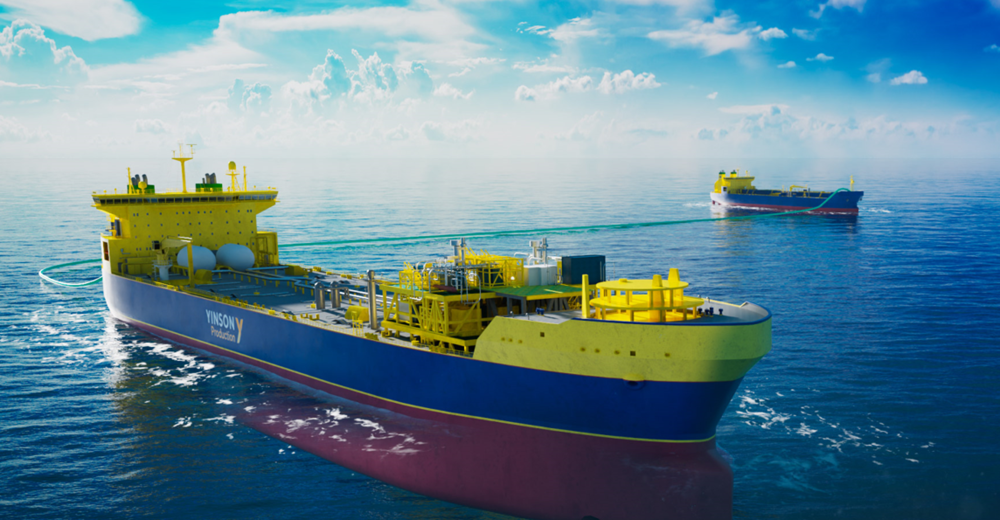
The energy transition is not merely a buzzword; it’s a profound re-engineering of global energy infrastructure, and nowhere is this more evident than in the burgeoning carbon capture and storage (CCS) sector. A significant development underscoring this shift is the recent collaboration between “K” LINE and Havstjerne ANS, a partnership comprising Harbour Energy Norge and Stella Maris CCS (a subsidiary of Yinson Production). This alliance signals a crucial step towards maturing marine-based CO2 value chains, offering a compelling case study for investors monitoring the diversification strategies of established oil and gas players.
The North Sea’s Evolving Role in Carbon Management
The Havstjerne licence, situated in the Norwegian sector of the North Sea approximately 100 km southwest of Egersund, is rapidly becoming a focal point for offshore carbon sequestration. Operated by Harbour Energy with a 60% stake, alongside Stella Maris CCS AS holding 40%, this project leverages the region’s extensive offshore expertise for a new purpose: permanent CO2 storage. The collaboration with “K” LINE aims to optimize technical and commercial solutions for a comprehensive CO2 value chain, centered around Floating Storage and Injection Units (FSIUs) and specialized liquefied CO2 (LCO2) carriers.
FSIUs are proving to be a highly suitable and cost-effective solution for offshore CCS projects, especially where land availability for onshore terminals is limited or where extended pipelines to offshore storage sites would be economically prohibitive. The combined expertise is formidable: Harbour Energy brings deep operational knowledge as an energy operator; Yinson Production, through Stella Maris CCS, contributes extensive experience in offshore engineering, design, and FPSO/FSO operations, having steadily developed its carbon value chain since 2021; and “K” LINE offers a long-standing track record in managing liquefied gas carriers, including its pioneering role in managing LCO2 carriers for the world’s first commercial CO2 transport and storage service since 2024. This synergy is designed to deliver a robust and cost-effective CO2 transport and storage service to industrial emitters across Northern Europe.
Navigating Volatility: Macro Backdrop for Energy Transition Investments
While the long-term trajectory for decarbonization is clear, the broader energy market continues to exhibit significant volatility, influencing capital allocation decisions across the board. As of today, Brent crude trades at $98, reflecting a 1.4% decline on the day, with its range fluctuating between $97.92 and $98.58. Similarly, WTI crude stands at $89.74, down 1.57%, having traded within a range of $89.57 to $90.21. This recent dip follows a notable 14-day trend where Brent crude shed $14, marking a 12.4% decrease from $112.57 on March 27th to $98.57 on April 16th.
Such fluctuations in the traditional hydrocarbon markets present a nuanced environment for energy transition investments. While a strong oil price can provide significant free cash flow for diversification, sustained volatility can also prompt a more conservative approach to capital deployment. However, the strategic imperative for companies like Harbour and Yinson to pivot towards sustainable solutions remains undiminished. Projects like Havstjerne represent critical infrastructure development that is largely driven by regulatory mandates and long-term climate goals, offering a degree of insulation from the daily swings of crude prices and presenting a compelling long-term value proposition for forward-thinking investors.
Strategic Implications for Oil & Gas Diversification
Our proprietary reader intent data reveals a growing curiosity among investors about how established energy companies are adapting to the energy transition. While queries like “What are OPEC+ current production quotas?” and “What is the current Brent crude price?” remain foundational, we’re seeing an increasing volume of engagement around topics concerning new energy technologies and data insights. Questions related to “EnerGPT’s data sources” and “why use EnerGPT” highlight a clear demand for deeper, data-driven analysis of emerging energy trends and the strategic pivots of major players.
The Havstjerne collaboration directly addresses this investor interest by showcasing a tangible and scalable decarbonization pathway. For Harbour Energy and Yinson Production, this partnership signifies a concrete advancement in their carbon value chain development, leveraging existing offshore competencies to unlock new revenue streams in the green economy. “K” LINE’s entry into this partnership brings specialized expertise in LCO2 transport, a high-barrier-to-entry segment critical for the success of marine-based CCS. This blend of traditional offshore operational prowess with highly specialized transport capabilities demonstrates a sophisticated approach to diversification, moving beyond pilot projects to establish a commercial-scale carbon management service. It’s an example of how legacy energy companies are not just adapting, but actively shaping the future energy landscape.
Forward View: Catalysts and Challenges for CCS Growth
Looking ahead, the next two weeks will bring critical market indicators that will shape the broader energy investment landscape, even as the CCS sector forges its own path. Key among these are the upcoming OPEC+ meetings, with the Joint Ministerial Monitoring Committee (JMMC) scheduled for April 18th and the full Ministerial Meeting on April 20th. These deliberations will provide crucial clarity on production quotas, directly influencing global crude supply and pricing dynamics. Concurrently, the routine API and EIA weekly inventory reports on April 21st, 22nd, 28th, and 29th, alongside the Baker Hughes Rig Counts on April 17th and 24th, will offer granular insights into demand trends and drilling activity.
While these events primarily impact traditional hydrocarbons, their outcomes indirectly influence capital allocation decisions for energy transition projects like Havstjerne. A stable or rising crude price environment could potentially free up capital for green investments, while sustained volatility might urge a more cautious approach. Nevertheless, the long-term policy tailwinds for CCS, particularly in Europe, remain robust, driven by ambitious decarbonization targets and carbon pricing mechanisms. The challenge lies in scaling these projects, securing long-term off-take agreements from emitters, and managing regulatory complexities. However, the Havstjerne partnership, with its focus on an integrated FSIU and LCO2 carrier solution, positions itself to overcome some of these hurdles by offering a flexible and efficient service model.
The “K” LINE and Havstjerne ANS collaboration is more than just a partnership; it’s a strategic blueprint for how the oil and gas industry is evolving to meet the demands of the energy transition. By combining deep offshore expertise with specialized LCO2 transport capabilities, the alliance is poised to establish a robust, marine-based CO2 value chain in the North Sea. For investors, this represents a significant opportunity to gain exposure to a critical, high-growth segment of the decarbonization economy, underpinned by strong industry players and a clear commercial pathway, irrespective of short-term fluctuations in the wider crude market.