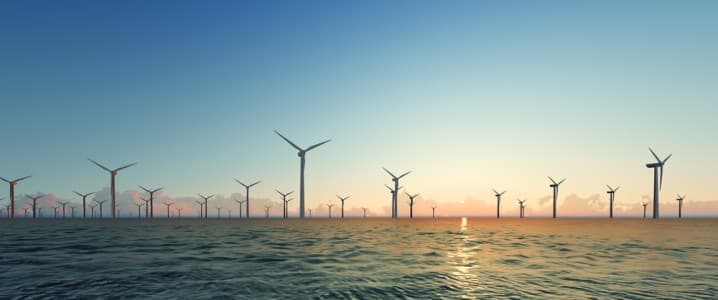
The renewable energy sector, often touted as the future, is currently grappling with significant headwinds, as evidenced by the Danish offshore wind giant Ørsted’s recent shareholder approval for a substantial $9.4 billion emergency rights issue. This massive capital injection underscores the escalating financial pressures confronting developers in the U.S. offshore wind market, driven by a confluence of political intervention, operational delays, and spiraling costs. For investors closely monitoring the broader energy transition, this development serves as a stark reminder that even the most promising green initiatives are not immune to profound market and regulatory risks, demanding a more nuanced assessment of their investment profiles.
U.S. Offshore Wind: A Tempest of Political and Operational Setbacks
Ørsted’s urgent need for capital is directly linked to an increasingly challenging operating environment for its U.S. offshore wind portfolio. The company is currently battling a stop-work order imposed on its nearly completed 704-megawatt Revolution Wind project, a critical asset that, according to court filings, is incurring staggering costs of approximately $15.7 million per week. This financial bleed is compounded by an additional $9.4 million to $11 million weekly on the Sunrise Wind venture, primarily due to vessel utilization fees stemming from construction delays. The root of these issues can largely be traced to a federal directive halting work on a nearby project, Equinor’s Empire Wind 2, which created a ripple effect across the region, directly impacting Ørsted’s Sunrise Wind. With co-investors reportedly withdrawing, a significant portion — two-thirds — of the newly raised $9.4 billion will be funneled into shoring up Sunrise Wind’s financing gaps. The company and its partners have initiated a lawsuit in U.S. federal court, challenging the administration’s stop-work order and seeking an injunction to resume construction. Their argument highlights the unlawful disruption of a near-complete facility and the threat to billions in sunk investments, warning of further cost inflation and potential breaches of offtake contracts if the suspension persists. This legal and operational quagmire illustrates the severe impact political shifts can have on large-scale infrastructure projects, particularly those with long development cycles and high capital intensity.
Mounting Financial Strain and Credit Market Implications
The decision to pursue a $9.4 billion rights issue came on the heels of intensifying financial pressures and a deteriorating credit outlook for Ørsted. Earlier this week, the company revised down its 2025 core profit guidance, narrowing it to a range of $3.5 billion to $4.0 billion from a previous $3.7 billion to $4.2 billion. This downgrade was attributed to a combination of poor summer wind speeds in Europe and commissioning delays at its Greater Changhua 2b project in Taiwan, demonstrating that challenges are not confined to the U.S. market. The precarious financial position was further highlighted last month when S&P Global downgraded Ørsted’s credit rating to BBB-, its lowest investment-grade tier. S&P’s warning was explicit: persistent project delays could rapidly erode the benefits of any equity injection within a matter of months. This set a critical backdrop for Friday’s shareholder vote, which ultimately passed with broad support, indicating a collective understanding of the urgency and necessity of the capital raise. Notably, Equinor, a significant player in both traditional oil and gas and renewable energy, holds a 10% stake in Ørsted and committed to subscribe for approximately $941 million in new shares. This strategic move by a diversified energy major underscores the complex interdependencies within the evolving energy landscape, where traditional energy companies are increasingly navigating investments in the renewable sector.
Divergent Paths: Traditional Oil Markets vs. Renewable Project Risks
The significant capital challenges facing a major offshore wind developer stand in stark contrast to the current dynamics observed in traditional oil and gas markets. As of today, Brent Crude trades at $98.03 per barrel, reflecting a -1.37% dip within a day range of $97.92 to $98.58. WTI Crude follows a similar trajectory, priced at $89.76 per barrel, down -1.55% with a daily range of $89.57 to $90.21. Gasoline prices are also slightly down at $3.08 per gallon. While these daily movements reflect short-term market sentiment, a broader look at the past 14 days reveals a more substantial shift: Brent crude has seen a notable decline from $112.57 on March 27th to $98.57 on April 16th, representing a significant $14 drop or a 12.4% contraction. This volatility in crude prices, often driven by geopolitical factors and supply-demand imbalances, presents one set of investment considerations. However, the Ørsted situation highlights a different, project-specific risk profile within renewables — one heavily influenced by regulatory stability, permitting timelines, and execution challenges. For investors, the decision to allocate capital across the energy spectrum requires a careful assessment of these distinct risk matrices. While crude markets offer liquidity and exposure to macro trends, large-scale renewable projects, despite their long-term growth potential, demand a closer look at micro-level political, operational, and financing risks that can quickly materialize into billions in unexpected costs.
Forward Outlook: Investor Questions and Upcoming Market Catalysts
Our proprietary reader intent data reveals a consistent focus among investors on the immediate drivers of traditional energy markets. Queries regarding “What are OPEC+ current production quotas?” and “What is the current Brent crude price?” frequently top the list, demonstrating a persistent emphasis on real-time price discovery and supply-side fundamentals. While these questions anchor much of the daily analysis in the oil & gas space, the Ørsted situation compels a broader view of energy investment. Looking ahead, the next 14 days are packed with critical events for the traditional energy sector, including the Baker Hughes Rig Count on April 17th and 24th, followed by the significant OPEC+ JMMC meeting on April 18th and the full Ministerial meeting on April 20th, where production policies will be debated. Further guidance will come from the API Weekly Crude Inventory on April 21st and 28th, and the EIA Weekly Petroleum Status Report on April 22nd and 29th. These events will undoubtedly shape short-term crude price trajectories and investor sentiment in the fossil fuel realm. For Ørsted, however, the immediate future hinges on the outcome of its federal lawsuit and the potential for an injunction to resume construction on Revolution Wind. A swift resolution could mitigate further cost escalations and restore some confidence, whereas a prolonged legal battle would continue to drain resources and exacerbate financial pressures. Investors in the broader energy transition will be watching closely to see if political resolve can match the financial commitment now being poured into these critical green infrastructure projects.


