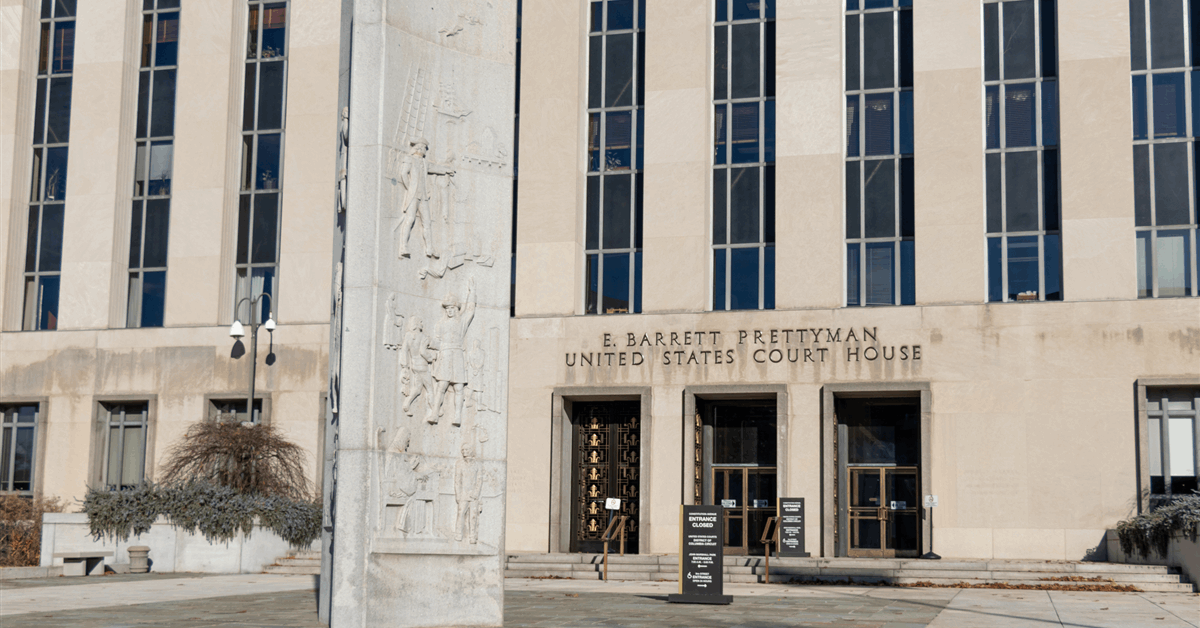
The energy investment landscape is facing increasing volatility, not just from commodity price swings but from escalating regulatory and political headwinds impacting major infrastructure projects. A recent filing by Revolution Wind LLC against the United States District Court for the District of Columbia highlights this growing risk, challenging a government halt order on its substantial offshore wind farm. This legal battle, centered on a 704-megawatt project already 80% complete, signals a critical juncture for investors evaluating the stability and predictability of large-scale energy developments, particularly within the renewable sector. With billions already invested and federal and state permits secured over nearly a decade, the project’s forced pause raises serious questions about the sanctity of regulatory approvals and the potential for political shifts to derail advanced initiatives.
Regulatory Uncertainty Casts Shadow on Renewable Investments
Revolution Wind’s decision to pursue legal action against the Bureau of Ocean Energy Management (BOEM) for a stop-work order underscores a significant challenge for energy infrastructure development: regulatory unpredictability. The company asserts that BOEM lacked the legal authority for the order, which was issued based on a review initiated by a prior administration concerning offshore wind project permitting and the withdrawal of leasing areas. For investors, this creates a complex risk profile. A project that has navigated over nine years of rigorous federal and state reviews, secured all necessary permits in 2023, and reached 80% completion with foundations installed and 45 of 65 turbines in place, should, in theory, be moving towards completion with minimal regulatory friction. The halt, however, introduces a new layer of political and legal uncertainty, threatening billions in committed capital and potentially delaying crucial energy supply. This situation directly addresses the underlying questions investors frequently pose regarding market stability and the reliability of regulatory frameworks for long-term capital deployment in the energy sector.
Energy Demand Collides with Supply Delays Amidst Market Flux
The implications of this project halt extend beyond just Revolution Wind’s balance sheet; they resonate across the regional energy grid and the broader market. The 704 MW project is slated to power over 350,000 homes across Connecticut and Rhode Island by 2026, and crucially, support the rapidly expanding power demands of data centers and AI infrastructure. Regional grid operator ISO New England has explicitly warned that delaying this project would elevate risks to grid reliability and likely increase electricity costs for the region. This critical need for new power generation stands in stark contrast to the regulatory impediment. Meanwhile, the broader energy market continues its dynamic shifts. As of today, Brent crude trades at $98.17, reflecting a 1.23% decline within a day range of $97.92 to $98.58. This movement continues a notable trend from earlier in the month, with Brent having fallen from $112.57 on March 27 to $98.57 by April 16, a substantial 12.4% drop. WTI crude also shows a similar trend, currently at $89.78, down 1.52%. These traditional energy market fluctuations, while distinct from the offshore wind sector, highlight the constant demand for reliable and affordable energy sources, making the delay of a large-scale renewable project all the more impactful on overall energy supply stability.
Upcoming Events and the Shifting Energy Policy Tides
The legal challenge and the underlying policy review occur amidst a series of critical upcoming events that will further shape investor sentiment across the energy complex. In the immediate future, we anticipate the Baker Hughes Rig Count reports (April 17, April 24) offering insights into drilling activity, followed by key OPEC+ meetings (JMMC on April 18, Full Ministerial on April 20) which could dictate crude oil production quotas and significantly impact global supply. Later in the month, API and EIA weekly inventory reports (April 21/28 and April 22/29 respectively) will provide granular data on petroleum status. While these events primarily focus on traditional oil and gas, their outcomes directly influence the competitive landscape for all energy sources. A tightening oil market, for instance, could intensify calls for reliable domestic power generation, potentially increasing pressure to resolve the Revolution Wind dispute. Conversely, an oversupplied market might lessen the immediate urgency. The political directive behind BOEM’s stop order, referencing a review of permitting practices and the withdrawal of offshore wind leasing areas, signals a broader policy recalibration. Investors must consider how this potential shift in federal stance towards renewables could reshape the long-term investment calculus, weighing the policy risks against the growing demand for diversified energy portfolios.
Investor Focus: Navigating Policy Risk and Project Certainty
Investors are increasingly seeking clarity on the fundamental drivers of energy markets, evidenced by the frequent questions our platform receives regarding OPEC+ production quotas, real-time Brent crude prices, and the underlying data sources powering our market insights. The Revolution Wind situation is a stark reminder that beyond commodity prices and operational efficiency, regulatory and political stability are paramount. This legal battle, stemming from a presidential memorandum to review permitting practices, introduces a significant layer of policy risk to what was considered a well-vetted, advanced-stage project. For the energy investor, the takeaway is clear: due diligence must now extend deeply into the political and regulatory landscape, particularly for projects with long development cycles. The outcome of this court challenge will set a precedent for future large-scale energy infrastructure, dictating the perceived reliability of federal approvals and the potential for shifting administrations to re-evaluate or halt projects. Monitoring these developments, alongside the crucial supply-side signals from upcoming OPEC+ decisions and inventory reports, will be essential for making informed investment decisions in an increasingly complex and interconnected global energy market.


