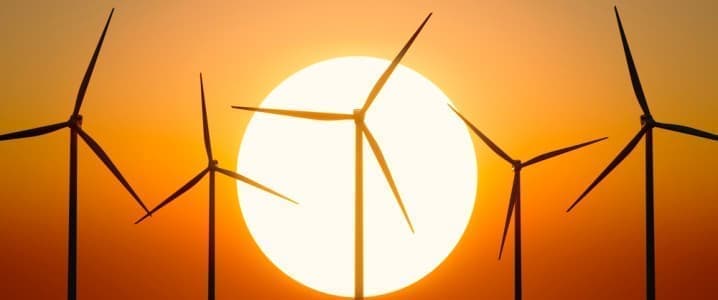
The offshore wind sector, long lauded as a cornerstone of the global energy transition, is currently navigating turbulent waters, a reality sharply underscored by Ørsted’s recent downward revision of its core earnings guidance for 2025. As the world’s largest offshore wind developer, Ørsted’s challenges are not isolated incidents but rather symptomatic of broader industry headwinds. The company cited lower wind speeds across its portfolio and construction delays for a key project in Taiwan as primary drivers for the adjustment, alongside broader industry pressures. This move has prompted an extraordinary shareholders’ meeting to vote on a substantial $9.4 billion rights issue, signaling a critical juncture for both the company and the broader investment thesis in renewable energy infrastructure.
Offshore Wind: Facing Environmental and Execution Hurdles
Ørsted’s revised guidance reflects a confluence of factors, both environmental and operational, impacting the profitability of its ambitious pipeline. The company now expects earnings before interest, tax, depreciation, and amortization (EBITDA) for 2025 to fall within a range of $3.7 billion to $4.2 billion, a notable decrease from the previously anticipated $3.9 billion to $4.4 billion. A direct financial impact of $235 million is attributed to lower-than-normal offshore wind speeds experienced during July and August, coupled with a delay in the construction of the Greater Changhua 2b project in Taiwan. These factors highlight the inherent variability and project execution risks within the renewable energy sector, where natural elements and complex logistical challenges can significantly alter financial projections.
Beyond these specific issues, Ørsted is also grappling with regulatory and permitting hurdles, particularly in the United States. The Revolution Wind project, a 50/50 joint venture with Global Infrastructure Partners’ Skyborn Renewables, recently received a stop-work order from the U.S. Department of the Interior’s Bureau of Ocean Energy Management (BOEM). Despite being 80% complete, with all offshore foundations installed and 45 out of 65 wind turbines in place, the project’s progress has been halted. The partners have responded by suing the U.S. Administration, challenging the order. This situation underscores the critical need for stable regulatory frameworks and efficient permitting processes to de-risk large-scale renewable energy developments and ensure timely project completion, a key concern for investors evaluating the sector’s long-term viability.
Capital Raises and Strategic Alliances Amidst Sector Consolidation
In response to mounting industry challenges, Ørsted is pursuing a substantial capital injection through a $9.4 billion rights issue. This move is a clear indicator of the significant capital requirements and financial pressures facing even established players in the offshore wind market. A notable development in this context is the participation of Equinor, which holds a 10% stake in Ørsted, committing $939 million to the rights issue. Equinor’s decision reflects a strategic vote of confidence in Ørsted’s underlying business model and the long-term competitiveness of offshore wind within the evolving energy mix, particularly in selected geographies. This strategic alignment suggests that the Norwegian energy major foresees value creation through “closer industrial and strategic collaboration” between the two companies.
Equinor’s forward-looking assessment also anticipates “consolidation and new business models” emerging from the current industry challenges. This perspective resonates with what many investors are keen to understand: the strategic plays and structural shifts defining the future of energy investments. Our proprietary reader intent data indicates a strong interest in understanding the drivers behind such strategic decisions, often reflected in questions like “What data sources does EnerGPT use?” or “What models power market responses?” This reflects a deeper investor desire to not just track prices, but to comprehend the fundamental forces and analytical frameworks guiding major corporate actions and sector-wide transformations. Equinor’s move highlights the importance of robust due diligence and strategic foresight in navigating a volatile market where capital allocation decisions can dictate future competitive positioning.
Oil’s Resilience Amidst Renewable Headwinds: A Market Divergence
The operational and financial challenges facing Ørsted stand in stark contrast to the robust, albeit volatile, performance of the traditional oil and gas sector. As of today, Brent Crude trades at $98.17 per barrel, reflecting a daily dip of 1.23% within a range of $97.92 to $98.58. Similarly, WTI Crude stands at $89.78, down 1.52% for the day. While these daily movements suggest some softening, it is crucial to view them within a broader context. Over the past 14 days, Brent Crude has seen a more significant correction, moving from $112.57 on March 27th to $98.57 yesterday, representing a $14 or 12.4% decline. Despite this recent downtrend, current crude price levels remain highly supportive of upstream investment and profitability for oil and gas producers globally.
This divergence in fortunes between established fossil fuel producers and emerging renewable giants like Ørsted prompts a critical re-evaluation for energy investors. While offshore wind battles project delays, permitting issues, and the unpredictable nature of wind speeds, the oil and gas sector continues to generate substantial free cash flow, even with recent price pullbacks. The current gasoline price of $3.08, despite a slight daily decline, further underscores persistent demand. Investors are keenly observing how these contrasting narratives influence capital allocation, with many weighing the long-term decarbonization imperative against the immediate financial realities and higher returns offered by traditional energy assets.
Navigating Future Dynamics: OPEC+ Decisions and Supply-Side Watch
Looking ahead, the energy market’s trajectory will continue to be shaped by a series of critical events and ongoing geopolitical developments. For oil and gas investors, the upcoming OPEC+ meetings are paramount. The Joint Ministerial Monitoring Committee (JMMC) convenes on April 18th, followed by the full OPEC+ Ministerial Meeting on April 20th. These gatherings are closely watched for any indications regarding production quotas and supply strategies, which directly influence global crude prices. Our reader intent data shows significant investor interest in questions such as “What are OPEC+ current production quotas?” underscoring the direct link between these decisions and investment strategies in the upstream sector.
Furthermore, regular data releases like the Baker Hughes Rig Count (scheduled for April 17th and April 24th) and the weekly API and EIA Crude Inventory reports (due on April 21st/22nd and April 28th/29th) will provide crucial insights into supply-side activity and demand patterns in North America. These metrics offer a real-time pulse on the operational health of the oil and gas industry, allowing investors to gauge production trends and market balances. As Ørsted navigates its own specific challenges in the offshore wind space, the broader energy investment community will continue to monitor these key indicators, carefully assessing the relative attractiveness and risk profiles of both traditional and new energy sources in a rapidly evolving global landscape.


