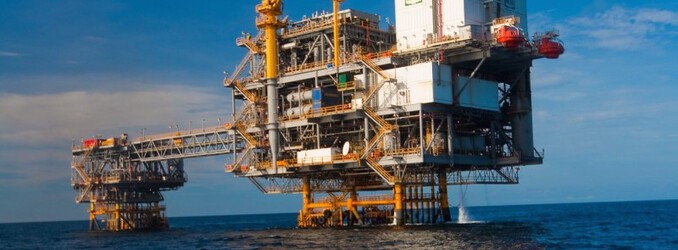
Equatorial Guinea is poised to make a significant play in the global upstream sector, launching its highly anticipated EG Ronda 2026 licensing round this month at African Energy Week. This initiative signals a clear strategic intent: to revitalize its oil and gas industry, attract fresh capital, and unlock substantial exploration and production opportunities across its offshore basins. For investors keenly watching the evolving energy landscape, EG Ronda 2026 represents a critical opportunity to gain exposure to a jurisdiction actively investing in its own potential, at a time when global energy demand continues its upward trajectory.
De-Risking Frontier Exploration: Equatorial Guinea’s Data-Driven Approach
A cornerstone of the EG Ronda 2026 strategy is the country’s proactive effort to de-risk exploration for prospective investors. The Ministry of Hydrocarbons and Mining Development has partnered with Searcher Seismic on an ambitious $60 million program dedicated to acquiring and reprocessing 2D and 3D seismic data. This extensive initiative covers previously uncharted acreage, providing high-quality, modern datasets designed to illuminate frontier potential across Equatorial Guinea’s offshore basins. For exploration and production companies, access to such comprehensive, pre-competed geological information significantly reduces the initial capital outlay and technical uncertainty associated with new ventures, making these licenses inherently more attractive. This commitment to data transparency and geological insight underscores Equatorial Guinea’s serious intent to facilitate successful exploration and development.
A Resurgent Hub: Major Players Cementing Presence
The timing of EG Ronda 2026 is no coincidence; it arrives amidst a period of renewed international interest and significant operational activity within Equatorial Guinea’s oil and gas sector. Energy major ConocoPhillips, following its 2024 acquisition of Marathon Oil, has substantially expanded its footprint, now holding interests in the Alba Unit and Block D. This strategic move ensures long-term participation in both gas and liquid development, further evidenced by ConocoPhillips’ ongoing infill drilling campaign in Alba Block and the successful transport of its inaugural LNG cargo from the Punta Europa facility in June 2025, a key milestone for the country’s flagship Gas Mega Hub initiative.
Independent operator Trident Energy continues to demonstrate strong performance from Block G, home to the producing Ceiba and Okume fields, where it holds a 40.375% operated stake. The company brought its first infill well online in late 2024 and is enhancing subsea integrity through a digital twin solution developed with Canadian technology firm Enaimco. Similarly, Kosmos Energy, a 40% partner in Block G, recently completed an exploration drilling campaign and is leveraging advanced technology for seismic data reprocessing to identify future high-potential opportunities. These efforts by established players are focused on sustaining production and de-risking future development, collectively reinforcing Equatorial Guinea’s status as a viable hub for upstream investment.
Beyond existing fields, new entrants are also expanding their portfolios. Panoro Energy recently inked a production sharing contract for Block EG-23, partnering with national oil company GEPetrol. This shallow-water block covers 600 square kilometers and boasts estimated contingent resources of 104 million barrels of oil and condensate and 215 billion cubic feet of gas, with Panoro initially undertaking subsurface studies before progressing to exploration drilling. Additionally, Vaalco Energy is advancing development of Block P, which contains the Venus discovery with over 20 million barrels of recoverable oil. With a final investment decision anticipated soon, the Venus project targets first oil in 2026 and peak production shortly thereafter. These diverse activities signal a robust and growing interest across the entire upstream value chain.
Navigating Market Headwinds: Licensing Amidst Price Volatility
The launch of EG Ronda 2026 occurs within a dynamic and often volatile global oil market, a factor that profoundly influences investor decisions regarding new frontier plays. As of today, Brent crude trades at $98.57 per barrel, reflecting a modest daily dip of 0.83%, with its intraday range settling between $97.92 and $98.57. WTI crude similarly saw a decline, standing at $90.18 per barrel, down 1.09%, within a daily range of $89.57 to $90.21. This recent dip follows a sharper correction over the past fortnight, with Brent crude shedding approximately $14 per barrel, or 12.4%, from its $112.57 peak just two weeks prior. Investors are keenly watching this interplay between current prices and the long-term viability of substantial capital commitments required for exploration and development.
These market fluctuations directly impact the economic models underpinning potential bids for new licenses. While Equatorial Guinea’s extensive seismic data program aims to de-risk geological uncertainty, the macro price environment remains a critical component of investment calculus. Sophisticated investors, as indicated by their frequent inquiries regarding the current Brent crude price and underlying market data, are clearly prioritizing real-time information to assess both short-term entry points and long-term project profitability. The challenge for Equatorial Guinea, and the opportunity for investors, lies in identifying high-quality assets that can deliver attractive returns across a range of potential price scenarios.
Forward Outlook: EG Ronda 2026 and Upcoming Catalysts
The strategic timing of EG Ronda 2026, coinciding with African Energy Week later this month, places it on the cusp of several potentially market-moving events. Critical among these are the upcoming OPEC+ meetings, with the Joint Ministerial Monitoring Committee (JMMC) scheduled for April 18th, followed by the full Ministerial Meeting on April 20th. The outcomes of these crucial discussions will directly influence global supply dynamics and, consequently, the price deck against which potential EG Ronda 2026 participants will model their investments. A decision to maintain or adjust current production quotas could significantly alter market sentiment and investor appetite for new exploration plays, especially those in developing jurisdictions.
Beyond OPEC+, investors will closely monitor weekly indicators such as the Baker Hughes Rig Count, along with API and EIA weekly petroleum status reports. These provide granular insights into North American drilling activity, crude inventories, and product demand, all of which contribute to the broader market narrative. For investors considering long-term commitments in Equatorial Guinea, understanding the forward trajectory of global supply and demand, heavily influenced by these recurring events, is paramount. The launch of EG Ronda 2026 thus comes at a pivotal moment, requiring investors to weigh the inherent geological opportunities against an evolving macro-economic and geopolitical backdrop, where OPEC+ policy decisions will serve as a key variable in the coming weeks and months.
Investor Focus: Data, De-risking, and Strategic Positioning
For investment analysts and portfolio managers, the EG Ronda 2026 licensing round presents a compelling case study in balancing frontier potential with strategic de-risking. The significant investment in acquiring and reprocessing high-quality seismic data directly addresses a primary concern for exploration investors: geological uncertainty. This initiative, coupled with the proven track record of existing operators like ConocoPhillips and Trident Energy, demonstrates a supportive and increasingly mature operating environment.
Investors are increasingly leveraging sophisticated platforms to answer critical questions about market fundamentals and project viability, as evidenced by their active inquiries into advanced analytical tools and market data sources. The availability of robust, transparent data for EG Ronda 2026 will be crucial in facilitating informed investment decisions. This round offers a strategic entry point into a revitalized upstream sector, presenting opportunities for companies looking to diversify their portfolios, secure long-term resource positions, and capitalize on the enduring demand for hydrocarbons. Success in EG Ronda 2026 will hinge on a detailed understanding of the acreage, a clear appreciation of the fiscal terms, and a keen eye on how global market dynamics, particularly post-OPEC+ decisions, shape future oil price trajectories.