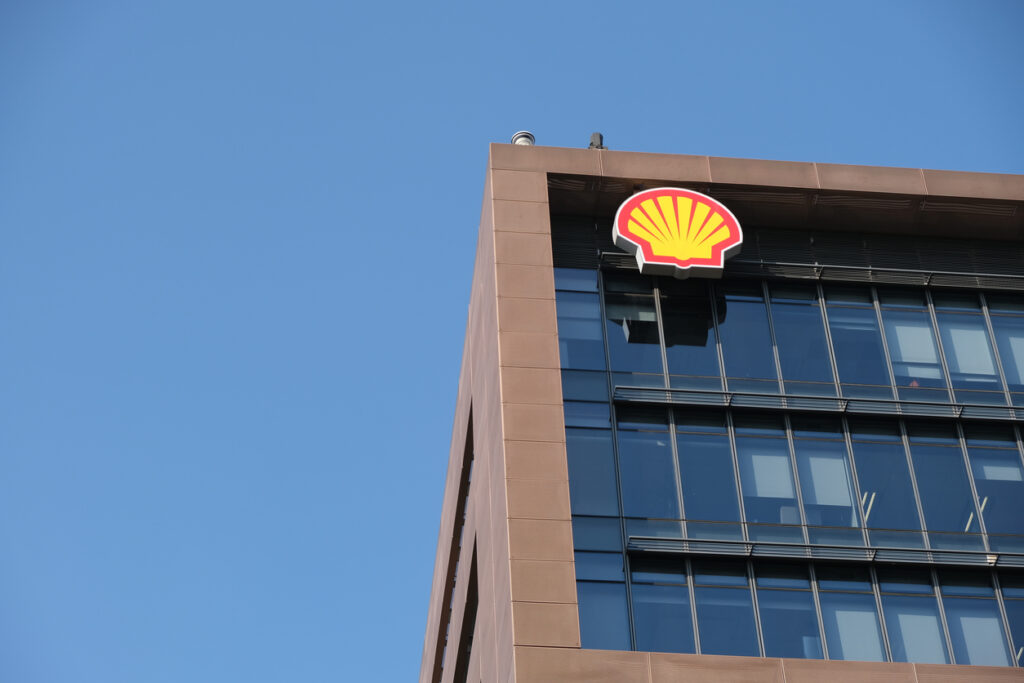
Shell’s strategic re-entry into Angola after a two-decade absence marks a pivotal moment for both the supermajor and Africa’s third-largest oil producer. This move is not merely a corporate decision; it’s a powerful signal to the global investment community that Angola’s concerted efforts to reform its oil and gas sector are yielding tangible results. For investors monitoring the intricate dance of global supply, demand, and geopolitical influences, Shell’s commitment to new Angolan blocks warrants close examination, especially as market dynamics continue to challenge conventional wisdom and demand clarity on future production trajectories.
Angola’s Reforms Attract Major Capital Amidst Market Volatility
Shell’s decision to partner with Chevron and Sonangol EP on Block 33 in the Congo Basin, alongside other agreements for Block 24 in the Kwanza Basin, underscores a renewed confidence in Angola’s long-term potential. This confidence has been hard-won, stemming from a comprehensive reform agenda initiated in 2019 that has notably streamlined licensing processes, improved tax terms, and actively courted major international energy companies. Such structural improvements are critical for attracting the significant capital required for complex deepwater projects, especially when considering the current crude oil price environment.
As of today, Brent Crude trades at $98.34, reflecting a 1.06% decline within a daily range of $97.92 to $98.4. WTI Crude mirrors this sentiment, sitting at $90.02, down 1.26% with a daily range of $89.57 to $90.09. These figures, while seemingly robust, represent a significant recent correction. Our proprietary data indicates that Brent has experienced a notable downturn over the past 14 days, falling from $108.01 on March 26th to $94.58 on April 15th, a substantial decrease of $13.43 or 12.4%. This recent volatility highlights the need for majors like Shell to secure long-term, stable growth opportunities where regulatory frameworks offer predictability. Angola’s reforms, therefore, are perfectly timed to capitalize on this strategic imperative, positioning the nation as an attractive destination for capital despite short-term market fluctuations.
Shell’s Calculated Play for Deepwater Growth
Shell’s investment in Block 33, a deepwater prospect in the prolific Congo Basin, is a testament to the company’s long-term strategy to bolster its upstream portfolio with high-potential, albeit capital-intensive, assets. This is not a short-term gamble but a calculated bet on Angola’s vast undeveloped resources and the success of its regulatory overhaul. The involvement of Chevron, another established deepwater player, further validates the perceived quality of the asset and the improved operating environment. While specifics on estimated reserves and production timelines are yet to emerge, the re-entry of a major like Shell signals a belief that these blocks hold significant commercial viability.
Angola desperately needs this investment to reverse a worrying trend: its oil production fell below one million barrels a day in July, a first since the country’s departure from OPEC two years ago. This decline has directly impacted government revenue, making the attraction of global capital not just desirable but essential for national economic stability. Shell’s investment, alongside deals for Block 24 involving Sonangol, Acrep, and Red Sky Energy, represents concrete steps towards mitigating this output decline and securing Angola’s future as a significant global energy supplier.
Upcoming Events and the Global Supply Dynamic
The timing of Shell’s commitment to Angola provides a fascinating backdrop to the broader global energy landscape. Investors are keenly focused on the factors influencing crude prices, with a recurring question surfacing in our reader intent data: “What are OPEC+ current production quotas?” This highlights the market’s reliance on understanding collective supply decisions. Angola, now outside OPEC+, is pursuing an aggressive strategy to boost its own output, which could introduce a new dynamic into the global supply equation, independent of OPEC+’s coordinated efforts.
Looking ahead, the next two weeks hold several critical events that will shape market sentiment and potentially influence the long-term outlook for investments like Shell’s. The OPEC+ Joint Ministerial Monitoring Committee (JMMC) meets on April 18th, followed by the Full Ministerial Meeting on April 20th. These gatherings are crucial for signaling the cartel’s stance on production levels and overall market management. Simultaneously, investors will be monitoring the Baker Hughes Rig Count on April 17th and 24th for insights into North American drilling activity, and the API and EIA Weekly Crude Inventory reports on April 21st, 22nd, 28th, and 29th, which provide a granular view of U.S. supply and demand balances. How Angola’s ambitious plans to open a bidding round for five additional oil blocks before year-end, following the direct award of five others, will factor into the global supply-demand calculus remains a key question for investors. Increased Angolan output, while crucial for the nation, could add to overall non-OPEC+ supply, potentially influencing future OPEC+ decisions and broader market pricing.
Investor Outlook: Evaluating Angolan Opportunities
For investors, Shell’s return to Angola is a powerful signal to reassess the nation’s investment profile. The reforms have clearly resonated with major players, suggesting an improved risk-reward proposition in a jurisdiction previously viewed with greater caution. The focus on deepwater exploration underscores a commitment to long-term, large-scale projects that can significantly move the needle on a company’s production profile. However, investors must still weigh the inherent risks of frontier exploration and the ongoing need for consistent policy stability.
The continued drive by Angola to attract further investment, evidenced by the upcoming bidding round, indicates a sustained commitment to revitalizing its oil sector. This creates potential opportunities beyond the current Shell and Chevron deals for other energy companies and their associated service providers. While the current Brent crude price of $98.34 may feel like a comfortable level for new investments, the recent 14-day price trend reminds us of market volatility. Investors are keenly interested in “What is the current Brent crude price?” as it directly impacts project economics and valuation models. Angola’s ability to consistently attract investment and increase production will contribute to global supply stability, a factor that could help temper extreme price swings over the long run. Monitoring the aforementioned upcoming industry reports and OPEC+ decisions will be paramount for understanding the broader environment in which these new Angolan projects will mature and contribute to global energy markets.