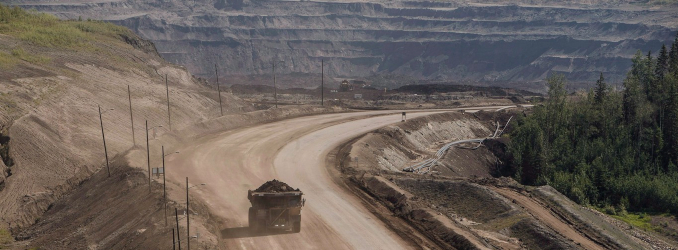
Alberta’s oil sector has achieved a significant milestone, with total provincial oil production surging to a record 4.32 million barrels per day (bpd) in July. This unprecedented output, the highest since at least 2010, was largely driven by a robust increase from the oil sands, which themselves hit a new peak of 3.67 million bpd. The catalyst for this impressive growth is clear: the expanded Trans Mountain pipeline, now providing nearly 600,000 bpd of additional export capacity, has fundamentally reshaped the economics for Canadian producers. For investors, this moment represents a critical inflection point, demonstrating Canada’s ability to consistently deliver supply to global markets and underscoring the strategic value of infrastructure in unlocking resource potential amidst fluctuating crude prices.
Alberta’s Production Surge: Unlocking Capacity and Optimizing Output
The latest regulatory data confirms that Alberta’s oil production is not just growing, but accelerating. The 4.32 million bpd recorded in July signifies a substantial uplift, with the oil sands contributing the lion’s share at 3.67 million bpd. This surge is particularly notable from wells employing steam-assisted gravity drainage (SAGD) and other in-situ methods, indicating a mature and efficient operational base. Year-to-date, total provincial output climbed by a significant 154,000 bpd compared to the same period last year. Companies like Cenovus Energy and Canadian Natural Resources, key players in the region, have been strategically ramping up their operations. The motivation is straightforward: the Trans Mountain pipeline expansion has provided the long-awaited conduit to deliver more crude to tidewater, directly alleviating historical bottlenecks and supporting local crude price differentials. This capacity expansion transforms Canadian heavy oil from a landlocked commodity into a more competitive global offering.
Navigating Volatile Markets: Price Discovery Amidst Record Production
While Alberta’s production sets new records, the broader crude market remains a complex landscape for investors to navigate. As of today, Brent crude trades at $98.2 per barrel, reflecting a modest 1.2% dip within a daily range of $97.92 to $98.38. Similarly, WTI crude sits at $89.81, down 1.49% today, moving between $89.57 and $90.09. This recent softening contrasts with the market’s trajectory over the past two weeks; Brent, for instance, has seen a notable decline from $108.01 on March 26th to $94.58 as of April 15th, representing a 12.4% contraction. This volatility is a key concern for investors, who frequently inquire about the drivers behind crude price fluctuations and the models powering our real-time market data. Despite the increase in Canadian supply, geopolitical tensions, demand outlooks, and inventory shifts continue to exert significant influence. The challenge for producers, even with expanded export capacity, remains optimizing margins in an environment where the global benchmark can swing by double-digit percentages in a short period. This dynamic underscores the importance of cost efficiency and robust hedging strategies for companies operating in the Canadian oil sands.
Strategic Imperatives: Maximizing Throughput and Enhancing Returns
The decision by Canadian producers to boost output isn’t merely about filling new pipeline capacity; it’s a strategic imperative to enhance shareholder value and optimize returns. Historically, Canadian heavy crude traded at a significant discount to WTI due to transportation constraints. With the Trans Mountain expansion, access to higher-priced international markets, particularly in Asia, becomes more viable. This improved market access should, in theory, narrow those differentials, directly benefiting the profitability of Alberta’s oil sands operations. For investors, this translates into potentially stronger cash flows and improved financial performance for companies with significant exposure to the region. The drive to maximize throughput is a direct response to this improved economic calculus, positioning Canada as a more reliable and competitive supplier on the global stage. This move also implicitly contrasts with the supply management strategies of OPEC+ nations, highlighting a divergence in production philosophies where Canada is focused on leveraging infrastructure to expand market share.
Forward Outlook: Key Events Shaping the Supply-Demand Narrative
Looking ahead, several key events on the energy calendar will be critical for investors assessing the future trajectory of oil markets and the implications for Canadian producers. The upcoming OPEC+ meetings are particularly salient, with the Joint Ministerial Monitoring Committee (JMMC) convening on April 18th, followed by the full Ministerial Meeting on April 20th. Investors are keenly asking about OPEC+’s current production quotas and whether the group will maintain existing cuts or signal any adjustments in response to global demand trends and non-OPEC supply growth, such as Alberta’s record output. Any shift in OPEC+ policy could significantly impact global supply-demand balances and crude prices. In North America, the Baker Hughes Rig Count reports, scheduled for April 17th and April 24th, will offer insights into drilling activity and potential future supply trends in the U.S. and Canada. Furthermore, the weekly API and EIA crude inventory reports, due on April 21st, 22nd, 28th, and 29th, will provide crucial real-time data on U.S. supply-demand dynamics. Increased Canadian crude flowing into the U.S. Gulf Coast via the expanded pipeline could influence these inventory levels, affecting WTI pricing and market sentiment. These events collectively will help shape the investment thesis for oil and gas in the coming weeks, providing vital context for Canada’s growing contribution to global supply.
Investment Implications: Canada’s Role in a Dynamic Global Market
Alberta’s record oil production, underpinned by the Trans Mountain pipeline expansion, reinforces Canada’s position as a critical and increasingly efficient global energy supplier. For investors, this development signals a period of enhanced operational stability and potentially stronger financial performance for companies with significant assets in the oil sands. The ability to move more crude to diversified markets provides a strategic advantage, mitigating some of the downside risks associated with regional price bottlenecks. While global crude prices remain subject to numerous geopolitical and economic factors, the operational efficiency and expanded export capacity of the Canadian oil sector offer a compelling long-term investment proposition. Companies that can consistently deliver high volumes while managing costs effectively are well-positioned to capitalize on this new era of improved market access and contribute significantly to global energy security.