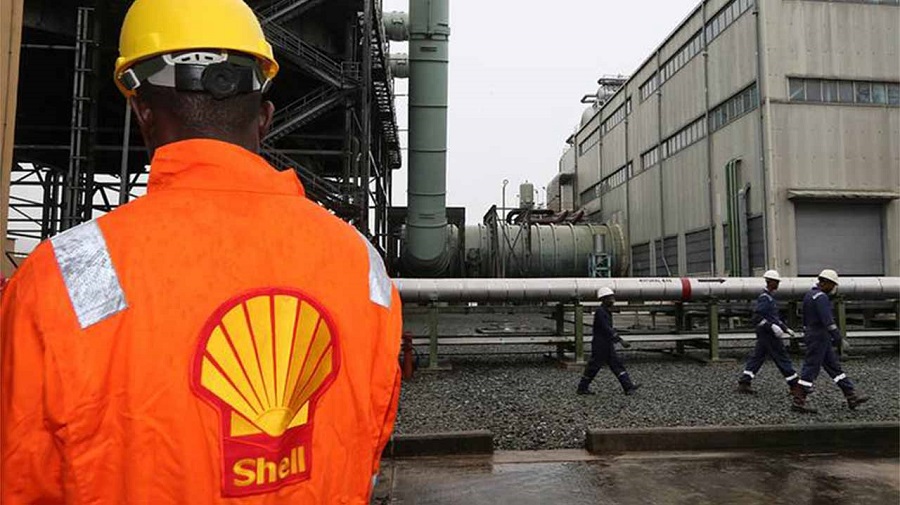
Shell’s Strategic Re-Entry Signals New Chapter for Angolan Oil
After a two-decade absence, Shell’s strategic return to Angola marks a pivotal moment for the nation’s oil sector and a significant signal to global energy investors. This high-profile re-engagement, alongside partners like Chevron and Sonangol EP, underscores the tangible success of Angola’s concerted reform efforts aimed at revitalizing its declining crude production and attracting crucial international capital. Shell’s commitment to Block 33 in the Congo Basin, among other new agreements, positions Angola as an increasingly attractive frontier for long-term oil and gas investment, particularly as the global energy landscape navigates persistent volatility and evolving supply dynamics.
Angola’s Reforms Bear Fruit Amid Production Challenges
Angola, historically Africa’s third-largest oil producer, has faced considerable headwinds, witnessing its crude output fall below one million barrels per day in July, a critical threshold not seen since its departure from OPEC two years prior. This decline directly impacts government revenues, prompting an urgent and sustained push for reforms. Since 2019, the Angolan government has systematically introduced measures designed to streamline licensing processes, enhance fiscal terms, and actively court major international energy companies. The recent agreements, including those for Block 33 and Block 24 in the Kwanza Basin (the latter involving Sonangol, Acrep, and Red Sky Energy), serve as a powerful validation of these reforms. According to Angolan officials, these deals are crucial for developing productive activities and actively mitigating the ongoing decline in oil production, signaling a renewed commitment to unlocking the nation’s vast hydrocarbon potential. Furthermore, the Angolan Petroleum Minister has confirmed plans to open a bidding round for five additional oil blocks before the year-end, part of a larger initiative to bring ten new blocks to market, with half already awarded through direct negotiations. This aggressive push highlights a proactive strategy to secure future production and attract diverse investment.
Navigating Volatility: Angola’s Appeal in a Shifting Market
The timing of Shell’s deepened commitment to Angola is particularly noteworthy given the current state of global oil markets. As of today, Brent Crude trades at $90.38, reflecting a significant 9.07% drop within the day, with WTI Crude following suit at $82.59, down 9.41%. This sharp intraday correction comes after Brent had already seen a notable decline from $112.78 on March 30th to $91.87 by April 17th, illustrating the intense downward pressure on prices recently. Such volatility, while challenging for short-term traders, can often sharpen the focus of integrated majors on long-term, stable production assets. For a company like Shell, Angola offers a substantial deepwater resource base with established infrastructure and a government actively working to create a more favorable operating environment. In a market characterized by rapid price swings and geopolitical uncertainties, securing future supply from a reforming nation like Angola provides a strategic advantage, buffering against the erratic nature of shorter-cycle investments. Investors are keenly observing how global supply-demand dynamics will evolve, and Angola’s efforts to stabilize and grow its output present a compelling narrative for sustained capital deployment.
Investor Focus: OPEC+ Decisions and Future Price Trajectories
Our proprietary data indicates that investors are currently scrutinizing several key questions, including the impact of OPEC+ production quotas and predictions for oil prices by the end of 2026. These concerns are directly relevant to Angola’s strategy and the broader investment outlook. The upcoming OPEC+ Joint Ministerial Monitoring Committee (JMMC) meeting on April 18th, followed by the Full Ministerial meeting on April 19th, will be critical. Any decisions regarding production levels or future market guidance from these meetings will undoubtedly influence global crude prices and, by extension, the attractiveness and profitability of new projects in Angola. A more constrained supply environment from OPEC+ could further incentivize investment in non-OPEC+ sources like Angola, even as the nation aims to increase its own output. Investors are also closely monitoring weekly data releases, such as the API and EIA crude inventory reports scheduled for April 21st, 22nd, 28th, and 29th, as well as the Baker Hughes Rig Count on April 24th and May 1st. These indicators provide vital insights into market rebalancing and the pace of activity, helping to inform long-term price forecasts and assess the viability of significant capital expenditures in new regions. Angola’s ability to attract and retain major players like Shell will be heavily influenced by how these macro factors play out over the coming months and years.
A Promising Horizon for Angolan Hydrocarbons
Shell’s confident return to Angola, after a two-decade hiatus, is more than just a corporate decision; it’s a powerful endorsement of Angola’s strategic reforms and its enduring potential as a major oil producer. This move, coupled with the aggressive new bidding rounds and existing partnerships, underscores a revitalized commitment from Luanda to reverse its production decline and secure its economic future. For international energy companies, Angola represents an opportunity for long-term, deepwater production in a country demonstrating a clear intent to foster a more stable and attractive investment climate. While global oil markets will continue to be subject to geopolitical shifts and supply-demand imbalances, the foundational work being done in Angola today positions it as a compelling destination for sustained capital investment. Investors looking for growth opportunities in established basins with renewed governmental support should keep Angola firmly on their radar, as this new chapter promises significant developments in the years ahead.


