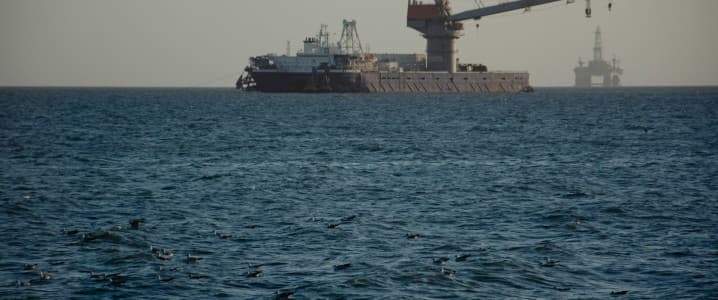
Angola’s energy landscape is witnessing a critical inflection point, with major international operators committing substantial capital amidst a challenging backdrop of declining national crude output. Azule Energy, the joint venture between Eni and BP, has announced a formidable $5 billion investment over the next five years, earmarked for drilling 18 new wells. This commitment mirrors their prior spending since the JV’s inception in 2022, signaling a sustained, multi-billion-dollar effort to revitalize and sustain production from Angola’s crucial offshore assets. Concurrently, TotalEnergies has confirmed a $3 billion program for a Dalia field life extension, underscoring a broader industry belief in the long-term potential of mature deepwater infrastructure, even as Angola navigates its post-OPEC era. This influx of capital arrives at a pivotal time, demanding a closer look at the strategic implications for investors eyeing West African energy plays and the broader global oil market.
Deepwater Revival: Billions Poured into Sustaining Angolan Output
The commitment by Azule Energy to inject another $5 billion into Angola, following a similar investment since 2022, is a powerful statement on the enduring value of the region’s deepwater resources. This capital will primarily fund the drilling of 18 wells, with two-thirds operated by Azule, focusing on development, infill locations, and appraisal work tied into existing subsea infrastructure. This strategy aims to leverage available processing capacity and reduce time to production, a critical factor in mature basins. Similarly, TotalEnergies’ $3 billion Dalia life-extension project further solidifies the trend: rather than solely chasing frontier exploration, significant capital is being deployed to maximize recovery from established deepwater hubs. These investments are crucial for Angola, which saw its crude production fall below 1 million barrels per day for the first time since its departure from OPEC in 2024. Years of natural decline and inconsistent upstream spending have taken a toll, making these multi-billion-dollar programs essential to stemming further output erosion and potentially stabilizing volumes. For investors, this indicates a strategic, long-term bet on improved efficiencies and incremental recovery, rather than a quick production surge.
Angola’s Production Puzzle Amidst Volatile Global Markets
The renewed investment in Angola takes on added significance when viewed against the backdrop of current global energy market dynamics. As of today, Brent crude trades at $90.38, marking a significant 9.07% decline from its previous close, with a daily range between $86.08 and $98.97. WTI crude similarly saw a sharp drop, trading at $82.59, down 9.41%. This recent volatility contrasts with the 14-day trend, where Brent has fallen by $20.91, or 18.5%, from $112.78 on March 30th to $91.87 on April 17th. This sharp market correction, likely driven by macro concerns or shifting supply/demand perceptions, underscores the importance of stable, reliable supply. Angola’s sub-1 million bpd output, while no longer directly subject to OPEC+ quotas since its 2024 exit, still influences the overall supply picture. Many investors are keenly asking about the future trajectory of oil prices, with common queries about what the price of oil per barrel will be by the end of 2026. While Azule’s and TotalEnergies’ investments are not immediate game-changers for global supply, they are foundational to preventing further declines, which in a tight market, could have a disproportionate impact on price stability and the Atlantic Basin’s medium-sweet crude availability.
The Strategic Pivot: Gas Monetization as a Key Growth Driver
Beyond crude oil, Angolan government officials and international operators are increasingly prioritizing gas monetization. This strategic shift is critical for Angola’s energy security and economic diversification, aiming to support domestic power generation, industrial growth, and the development of prospective LNG feedstock. Azule Energy’s 18-well program is expected to include both oil and gas development, with appraisal work designed to tie into existing systems. This focus on gas represents a significant opportunity for investors looking at long-term energy transition plays within traditional oil-producing regions. While oil remains a primary revenue stream, the development of gas resources offers a more sustainable path for national energy supply and export diversification. The ability to utilize existing subsea and processing infrastructure for gas, as indicated by Azule’s plans, is a capital-efficient approach that minimizes greenfield risks and accelerates project timelines, making these projects particularly attractive in the current investment climate.
Navigating Operational Hurdles and Upcoming Market Catalysts
While the capital commitment is substantial, the successful execution of these Angolan projects hinges on overcoming significant operational hurdles. Rig scheduling, securing specialized subsea equipment, and the availability of marine services are persistent challenges within West Africa’s supply chain. These factors directly impact project timelines and costs, and thus, investor returns. Moreover, the broader market context continues to evolve rapidly. Investors are closely monitoring upcoming events such as the OPEC+ Joint Ministerial Monitoring Committee (JMMC) meeting today, April 18th, and the Full Ministerial meeting tomorrow, April 19th. Any signals regarding production policy from these gatherings could impact market sentiment and the perceived urgency for non-OPEC+ supply. Furthermore, the weekly API and EIA crude inventory reports (April 21st/22nd and April 28th/29th) will provide critical insights into short-term supply and demand balances. For instance, if these reports indicate tighter-than-expected inventories, the prospect of additional Angolan liftings in the Atlantic Basin and Asian spot markets, even if delayed by supply chain issues, could become more valuable. These forward-looking events, combined with the operational realities on the ground, will shape the true impact and success of these multi-billion-dollar investments in Angola.


