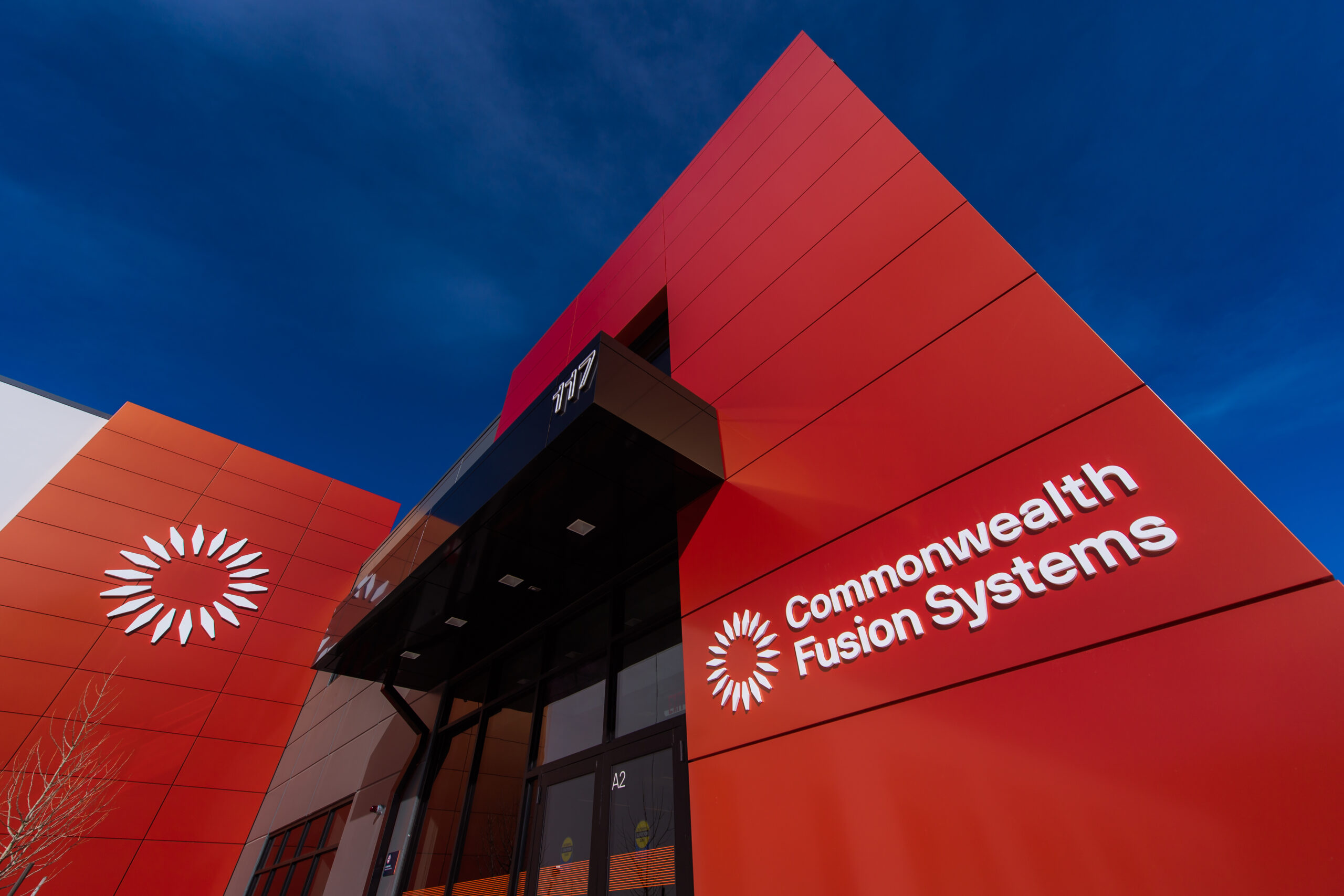
The energy investment landscape is undergoing a profound transformation, and a recent funding round for Commonwealth Fusion Systems (CFS) serves as a potent signal for where sophisticated capital is flowing. CFS, a leader in private fusion energy development, has successfully closed an oversubscribed $863 million Series B2 round. This monumental raise not only marks the largest capital infusion into deep tech and energy since CFS’s own $1.8 billion Series B in 2021 but also underscores a growing investor appetite for disruptive, long-term energy solutions that promise to reshape global power dynamics. With nearly $3 billion raised to date, CFS now accounts for approximately one-third of all private fusion investment worldwide, a testament to the belief that commercial fusion power is moving from theoretical promise to tangible reality. For oil and gas investors, this substantial commitment to fusion energy represents both a competitive force and a potential diversification opportunity, signaling a future energy mix far broader than conventional fossil fuels.
Fusion’s Momentum Amidst Oil Market Volatility
The significant capital inflow into CFS starkly contrasts with the recent volatility observed in traditional commodity markets. As of today, Brent Crude is trading at $90.38, marking a sharp decline of 9.07% within the day, with its price oscillating between $86.08 and $98.97. This daily swing is part of a broader trend, as Brent has shed $20.91, or 18.5%, over the past 14 days, falling from $112.78 on March 30th to $91.87 just yesterday. Similarly, WTI Crude stands at $82.59, down 9.41% today, while Gasoline prices have dipped to $2.93, a 5.18% decrease. This ongoing fluctuation in conventional energy prices highlights the inherent geopolitical and supply-demand risks that define the oil market. In this environment, investors are increasingly seeking long-term growth stories with less exposure to short-term geopolitical shocks. The $863 million secured by CFS, drawing in a diverse mix of new and existing investors including Counterpoint Global (Morgan Stanley), Google, NVIDIA’s NVentures, and a Japanese consortium led by Mitsui & Co., demonstrates a clear belief in fusion’s potential to deliver a stable, reliable, and almost limitless energy source, effectively decoupling energy production from the vagaries of commodity markets. This strategic pivot by major institutional and corporate investors suggests a sophisticated hedging against future energy price instability and a direct play on the burgeoning demand for clean, scalable power.
Strategic Milestones and the Future Energy Grid
The capital raised by CFS is earmarked for critical developmental milestones, specifically the completion of SPARC, its demonstration fusion machine in Massachusetts, and the advancement of ARC, its first planned grid-scale fusion power plant in Virginia. These projects are not merely scientific endeavors; they represent the concrete steps towards commercialization that investors are now funding. The progression of these initiatives has profound implications for the energy transition, offering a glimpse into a future where energy supply is not dictated by finite resources or regional conflicts. While the traditional oil and gas sector remains focused on near-term supply-demand dynamics, as evidenced by upcoming events such as the OPEC+ Joint Ministerial Monitoring Committee (JMMC) meeting tomorrow, April 18th, followed by the Full Ministerial meeting on April 19th, the CFS funding signifies a long-term strategic shift. These OPEC+ discussions will undoubtedly impact short-term production quotas and market sentiment. Similarly, the API Weekly Crude Inventory reports on April 21st and 28th, and the EIA Weekly Petroleum Status Reports on April 22nd and 29th, will provide crucial insights into current supply levels and demand indicators for fossil fuels. However, the substantial investment in CFS suggests that a significant portion of the investment community is looking beyond these immediate cycles, betting on a future where energy security and sustainability are achieved through groundbreaking technologies like fusion, which aims to provide baseload power independent of these traditional market forces. This forward-looking investment strategy offers a compelling narrative for investors seeking to position themselves for the energy paradigm shift.
Addressing Investor Concerns: Beyond Short-Term Oil Prices
Our proprietary reader intent data reveals a consistent theme among investors this week: a deep interest in future oil prices and the stability of the traditional energy supply. Investors are actively asking, “What do you predict the price of oil per barrel will be by end of 2026?” and “What are OPEC+ current production quotas?” These questions highlight a natural preoccupation with the immediate and medium-term outlook for conventional energy. However, the $863 million funding round for CFS offers a powerful counter-narrative and a long-term answer to these very concerns. While short-term forecasts for Brent and WTI remain crucial for many portfolios, the investment in fusion energy signals a strategic move towards a future where the constraints of fossil fuels—their price volatility, geopolitical dependencies, and environmental impact—are ultimately transcended. Investors like Vinod Khosla of Khosla Ventures and Dennis Lynch of Counterpoint Global are not merely making a bet on a technology; they are investing in a future where “limitless energy” fuels the age of AI and addresses the accelerating global demand for power. This perspective suggests that while traditional oil and gas will continue to play a vital role for decades, smart money is also being allocated to pioneering solutions that aim to fundamentally alter the energy supply curve, providing a long-term hedge against the very price and supply uncertainties that currently dominate investor inquiries.
The Deep Tech Advantage in Energy Investment
The investor roster for CFS’s latest round reads like a who’s who of deep tech and venture capital, including Breakthrough Energy Ventures, Khosla Ventures, Emerson Collective, and former Google CEO Eric Schmidt. Their increased stakes and new commitments underscore the “deep tech” advantage CFS brings to the energy sector. This isn’t just about clean energy; it’s about a fundamental scientific breakthrough being engineered into a commercial product. The confidence from investors like Google and NVIDIA’s NVentures is particularly telling, as these tech giants understand the insatiable energy demands of data centers and artificial intelligence. They recognize that current renewable energy sources, while vital, may not provide the consistent, high-density baseload power required for a fully electrified, AI-driven future. Fusion energy, with its promise of virtually emissions-free, constantly available power, presents a scalable solution. This deep tech investment approach in energy contrasts with more conventional plays in renewables or efficiency, targeting instead a transformational shift in how energy is produced. For investors, it represents an opportunity to capitalize on the birth of a new global industry, one that could redefine energy independence and security on an unprecedented scale, offering returns potentially uncorrelated with the performance of existing energy assets.


