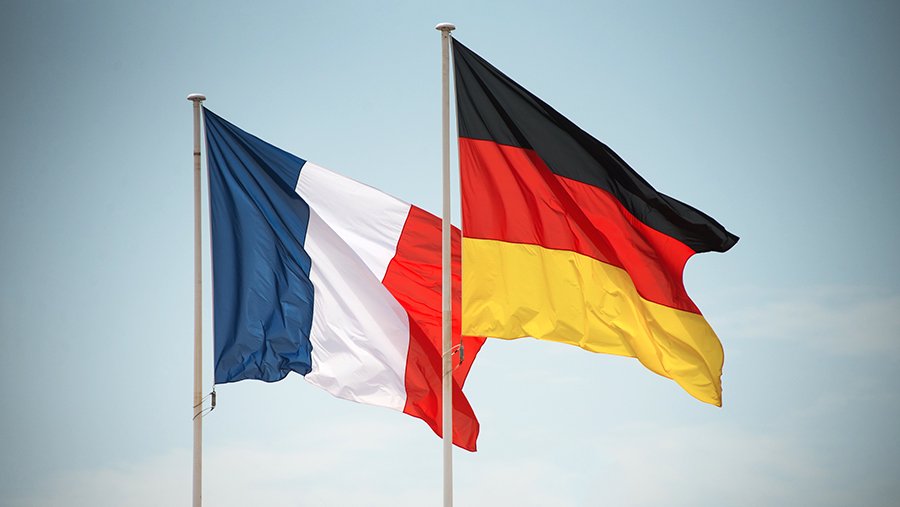
The European energy landscape is undergoing a significant, albeit gradual, transformation, with a recent agreement between France and Germany signaling a pivotal shift that demands attention from oil and gas investors. A joint roadmap, endorsed by President Emmanuel Macron and Chancellor Friedrich Merz at the Franco-German Council of Ministers in Toulon, has cemented nuclear energy’s eligibility for European Union financing. This move, particularly remarkable given Germany’s historical nuclear phase-out, enshrines the principle of “non-discrimination” for nuclear power, granting it equal access to transition funds alongside renewables. For investors navigating complex energy markets, this development is not merely a political gesture; it’s a foundational change that could reshape long-term capital allocation strategies, particularly against a backdrop of ongoing crude market volatility and critical upcoming supply decisions.
EU Policy Shift: Leveling the Energy Playing Field
The Franco-German energy roadmap represents a profound evolution in European energy policy. By recognizing nuclear power as an integral part of Europe’s energy transition and ensuring its non-discriminatory access to EU financing mechanisms, the two economic powerhouses are sending a clear signal ahead of crucial EU electricity market reform talks. Germany’s endorsement of this principle, despite its national strategy of phasing out nuclear plants, underscores a strategic political alignment with France, a staunch advocate for nuclear power. This consensus aims to create a more technology-neutral framework for energy development across the continent. For companies like Electricité de France (EDF) and Framatome, which have long called for clearer rules to secure the bankability of nuclear projects, this agreement offers a much-needed policy tailwind. Investors should recognize this as a de-risking factor for future nuclear ventures, potentially unlocking significant capital flows into the sector and broadening the scope of what constitutes “green” or “transition” investment within the EU.
Nuclear’s Resurgence and Investor Confidence
The explicit backing for nuclear financing directly addresses investor concerns regarding the long-term viability and bankability of large-scale, capital-intensive nuclear projects. Our proprietary reader intent data indicates that investors are keenly interested in the performance of European energy players, with specific queries about companies like Repsol and the broader outlook for the sector by the end of 2026. This Franco-German agreement provides a more stable regulatory and financial environment for companies operating in or looking to enter the nuclear space. While Germany may not be building new reactors, its support for the principle ensures that other EU nations keen on expanding their nuclear capacity, such as France, Poland, and the Netherlands, can do so with greater confidence in securing European-level funding. This creates a more diversified energy investment thesis within Europe, where traditional fossil fuel plays will increasingly compete with, or be complemented by, significant nuclear infrastructure development. Investors should evaluate how this policy shift impacts the balance sheets and growth prospects of major European utilities and technology providers involved in nuclear energy.
Crude Volatility Underlines Strategic Energy Diversification
This long-term policy pivot towards nuclear comes at a time of pronounced volatility in global crude markets, starkly highlighting the need for stable and diversified energy sources. As of today, Brent Crude trades at $90.38, reflecting a significant decline of 9.07% within the day, with its range fluctuating between $86.08 and $98.97. Similarly, WTI Crude has seen a sharp drop of 9.41% to $82.59, moving within a daily range of $78.97 to $90.34. This immediate downturn follows a broader trend; over the past 14 days, Brent crude has fallen by $20.91, or 18.5%, from $112.78 to $91.87. Such drastic price movements underscore the inherent geopolitical and supply-side sensitivities of oil markets. For investors, these swings reinforce the strategic value of energy sources like nuclear, which offer greater price stability and reduced reliance on volatile international commodity markets. The implicit message from Brussels, now backed by Paris and Berlin, is that energy security and stability are paramount, driving capital towards less volatile, long-term generation assets, even as fossil fuel prices experience dramatic short-term fluctuations.
Navigating Upcoming Energy Events and Long-Term Outlook
While the Franco-German agreement lays a long-term foundation for nuclear investment, the immediate energy market remains highly dynamic, influenced by a series of critical upcoming events. This weekend, investors will be closely watching the OPEC+ Joint Ministerial Monitoring Committee (JMMC) meeting on April 18th, followed by the full Ministerial Meeting on April 19th. The outcomes of these meetings, particularly regarding production quotas, will significantly impact global crude supply and pricing, directly addressing investor questions about OPEC+ strategy and the potential trajectory of oil prices by the end of 2026. Further insights into immediate supply-demand balances will come from the API Weekly Crude Inventory reports on April 21st and 28th, and the EIA Weekly Petroleum Status Reports on April 22nd and 29th. The Baker Hughes Rig Count on April 24th and May 1st will offer crucial data on upstream activity. These short-term events will dictate the immediate trading environment for oil and gas, but the EU’s strategic push for nuclear diversification provides a crucial counter-narrative. Investors should consider how the ongoing volatility in crude markets, potentially exacerbated or alleviated by OPEC+ decisions, will accelerate or temper the long-term shift towards alternative energy sources, making the policy support for nuclear increasingly relevant for portfolio diversification and risk management.


