The global energy landscape is constantly evolving, with new supply vectors emerging even as existing ones face increasing scrutiny. One such development capturing the attention of oil & gas investors is the rapid progression of the East Africa Crude Oil Pipeline (EACOP) project. After navigating initial funding hurdles and persistent environmental opposition, this ambitious infrastructure endeavor is nearing completion, poised to introduce a significant new source of crude to international markets. This analysis delves into the project’s financial and operational milestones, its strategic implications for global supply, and how it fits into the broader market context influenced by ongoing price volatility and upcoming industry events. For investors tracking long-term supply resilience and diversification, EACOP represents a compelling case study of capital deployment in a complex, high-stakes environment.
EACOP: A Major New Artery for Global Crude Supply
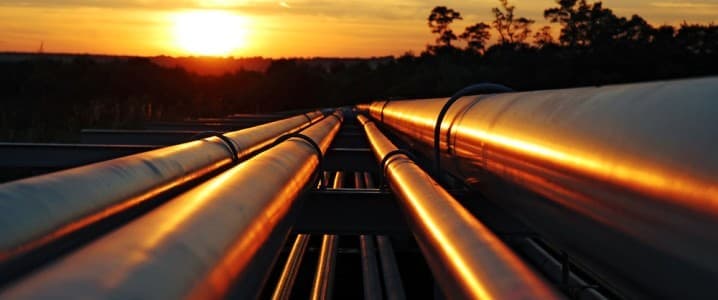
The East Africa Crude Oil Pipeline is fast becoming a tangible reality, with project completion reaching an impressive 64.5%. This monumental effort has already seen $3.6 billion of its estimated $5 billion investment utilized, signaling strong financial commitment and execution momentum. Upon commissioning, EACOP will distinguish itself as the world’s longest heated oil pipeline, stretching from Uganda’s nascent oil fields to the Tanzanian coast, facilitating direct access to global shipping routes. This critical artery is designed to initially transport 216,000 barrels daily, with plans for an eventual ramp-up to 246,000 barrels per day. Such capacity will transform Uganda into a significant oil exporter, fundamentally altering its economic outlook and diversifying the global crude supply matrix. The project’s ownership structure reflects a strategic international collaboration, with TotalEnergies holding a dominant 62% operating stake, alongside national oil companies from Uganda and Tanzania each with 15%, and China’s CNOOC contributing 8%. TotalEnergies’ involvement extends upstream as the operator of the Tilenga project in Uganda, which, along with the Ugandan state oil company-operated Kingfisher project, will feed crude into EACOP, ensuring integrated production and transportation.
Navigating Capital Allocation Amidst ESG Pressures
The journey to realize EACOP has been punctuated by notable financing challenges, primarily due to the reluctance of traditional institutional lenders, such as the World Bank, to fund large-scale fossil fuel projects amidst escalating environmental, social, and governance (ESG) concerns. This shift in lending priorities forced the project consortium to seek alternative funding, ultimately securing the necessary capital from other commercial banks. This development underscores a critical dynamic for investors: while ESG considerations increasingly influence capital allocation, strategic energy projects with robust economics and national importance can still attract significant investment. TotalEnergies, in response to environmental scrutiny, has highlighted EACOP and the associated Tilenga project as among its lowest-emission operations, citing an average Scope 1 and 2 intensity of just 12 kilograms of CO2 equivalent per barrel of oil equivalent. The company projects total lifetime emissions for both projects at 13.5 million tons of CO2. This transparency, coupled with the ability to secure alternative financing, provides a crucial insight for investors evaluating other energy majors and their ability to advance projects in a complex regulatory and social landscape. Many investors are asking how companies like TotalEnergies effectively manage their portfolios given these pressures, and EACOP serves as a prime example of navigating such headwinds.
Market Volatility and the Long-Term Supply Outlook
The advent of new supply sources like EACOP arrives in a particularly dynamic market environment. As of today, Brent Crude trades at $90.38, reflecting a significant intraday decline of 9.07%, having moved within a broad range of $86.08 to $98.97. Similarly, WTI Crude stands at $82.59, down 9.41% for the day. This current intraday volatility is part of a broader trend; our proprietary data reveals Brent crude has experienced a substantial correction, falling from $112.78 on March 30th to $91.87 just yesterday, marking an 18.5% decline over the past two weeks. While short-term price movements are often driven by geopolitical events, inventory data, or speculative trading, the long-term fundamentals of supply and demand remain paramount. Projects such as EACOP, delivering a quarter-million barrels per day, contribute to the global supply resilience that can help buffer against potential disruptions or structural underinvestment. For investors looking beyond immediate fluctuations, the increasing diversification of global oil production sources, particularly from regions like East Africa, offers a valuable risk mitigation factor. It also feeds into the ongoing debate among our readers regarding the trajectory of oil prices by the end of 2026, where new supply additions like this will play a material role in shaping market balances.
Upcoming Market Catalysts and Investor Strategy
As EACOP progresses towards its operational phase, investors must also keep a keen eye on the immediate market catalysts that will shape the environment into which these new barrels are introduced. The coming weeks are packed with critical events. Most notably, the OPEC+ Joint Ministerial Monitoring Committee (JMMC) meeting on April 18th, followed by the Full Ministerial Meeting on April 19th, will be closely watched for any signals regarding future production quotas. These decisions directly influence global supply levels and, consequently, price stability. Many of our readers are keenly interested in OPEC+’s current production quotas and how these upcoming meetings might alter them. Beyond OPEC+, weekly data releases provide crucial insights into North American market health. The API Weekly Crude Inventory reports on April 21st and April 28th, alongside the EIA Weekly Petroleum Status Reports on April 22nd and April 29th, will offer a granular view of U.S. supply, demand, and inventory levels. Further, the Baker Hughes Rig Count on April 24th and May 1st will indicate drilling activity and future production trends. These recurring data points, combined with the strategic addition of new supply from projects like EACOP, create a complex yet discernible path for informed investment decisions. Successful navigation of the oil and gas sector requires not only an understanding of major infrastructure projects but also an acute awareness of the short-term market dynamics that can significantly impact portfolio performance.


