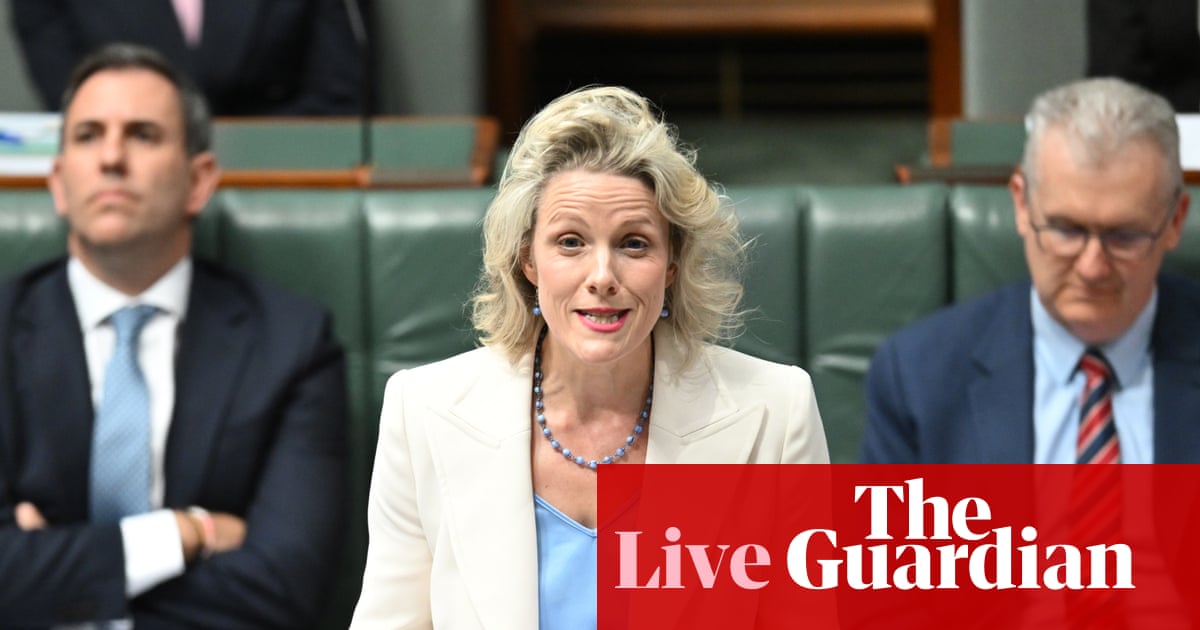
The ongoing debate in Australia surrounding a proposed anti-Net Zero bill represents a significant policy crossroads, with potential ramifications for global energy markets and investment strategies. While the world grapples with the energy transition, a major commodity exporter like Australia contemplating a legislative pushback against decarbonization targets sends a complex signal to investors. This internal policy divergence could influence long-term supply dynamics, investment allocations, and the very narrative surrounding the future of fossil fuels.
Australia’s Policy Crossroads: Balancing Economy and Environment
The discussion around an anti-Net Zero bill in Australia highlights a broader global tension between ambitious climate targets and immediate economic realities. Policy debates, often driven by a complex interplay of public sentiment, industrial lobbying, and cost-of-living pressures, can significantly alter a nation’s energy trajectory. For investors, monitoring these legislative shifts in key resource-rich countries is paramount. An anti-Net Zero stance in Australia, for example, could signal a renewed or sustained commitment to its extensive natural gas and coal resources, potentially impacting global supply forecasts for years to come. Such a move would naturally attract capital looking for jurisdictions with clearer, long-term support for traditional energy, while potentially deterring those focused solely on renewable energy expansion.
Market Dynamics Amidst Policy Uncertainty
Current market conditions reflect an environment sensitive to both supply-demand fundamentals and geopolitical shifts. As of today, Brent Crude trades at $98.38, registering a modest daily decline of 1.02% within a range of $98.11-$98.38. Similarly, WTI Crude stands at $89.96, down 1.33%, oscillating between $89.57 and $90.09. These price points, while stable within their daily ranges, follow a more significant downturn over the past two weeks, with Brent having dropped from $108.01 on March 26th to $94.58 by April 15th, marking a notable 12.4% decrease. This downward trend, possibly influenced by demand concerns or robust non-OPEC+ supply, creates a fascinating backdrop for Australia’s anti-Net Zero debate. Lower prevailing prices might embolden arguments for maintaining traditional energy production, framing it as an economic stabilizer rather than a costly transition. Conversely, it could also make new fossil fuel investments less attractive, irrespective of policy. Investors must weigh these market signals against the long-term policy outlook emerging from Canberra.
Investor Focus: Decoding Supply and Strategy
Our proprietary reader intent data reveals a consistent focus among investors on the core mechanics of the oil market, particularly around supply management and price discovery. Questions such as “What are OPEC+ current production quotas?” and “What is the current Brent crude price?” underscore a need for clarity on the foundational elements driving global energy prices. The Australian anti-Net Zero debate, if it progresses, could add a layer of complexity to these supply calculations. While Australia is not an OPEC+ member, its stance on fossil fuel production and exports carries weight. A policy framework that actively supports or extends the life of its oil and gas sector could indirectly influence the global supply-demand balance, potentially offsetting some of the supply management efforts by OPEC+. Investors are keen to understand how such national policy decisions might interact with broader geopolitical and cartel-driven supply strategies, informing their long-term capital allocation decisions in a volatile market.
Forward Outlook: Key Events Shaping the Energy Landscape
The coming weeks are packed with critical events that will undoubtedly influence energy markets, providing further context for Australia’s ongoing policy discussions. The Baker Hughes Rig Count, scheduled for April 17th and again on April 24th, will offer a fresh look at North American drilling activity, a key indicator of future supply. More significantly, the OPEC+ Joint Ministerial Monitoring Committee (JMMC) meeting on April 18th, followed by the Full Ministerial Meeting on April 20th, are pivotal. These meetings will determine the cartel’s production policy for the foreseeable future, directly impacting global supply. For Australia, any decision to push back against Net Zero targets could be viewed through the lens of these global supply dynamics. If OPEC+ opts for continued production cuts, an Australian policy favoring sustained fossil fuel output could be seen as a counter-balancing force, offering a degree of market stability or, conversely, contributing to an oversupply scenario depending on the global demand trajectory. Meanwhile, the API and EIA weekly crude inventory reports on April 21st/22nd and April 28th/29th will provide granular insights into immediate supply and demand health in the crucial U.S. market, further shaping short-term price movements and investor sentiment.
Investment Implications of Australia’s Stance
The Australian anti-Net Zero bill debate, while domestic in its immediate context, carries significant weight for global energy investors. It highlights the growing divergence in national approaches to the energy transition, creating both risks and opportunities. For companies and funds invested in Australian oil, gas, and even coal, a sustained pro-fossil fuel policy environment could de-risk long-term investments and encourage new capital expenditure. Conversely, for those committed to a rapid decarbonization pathway, such a policy shift could signal a need to re-evaluate exposure. Ultimately, the outcome of this debate will not only shape Australia’s energy future but also contribute to the complex, multi-faceted narrative that defines global oil and gas investment in the coming decade.


