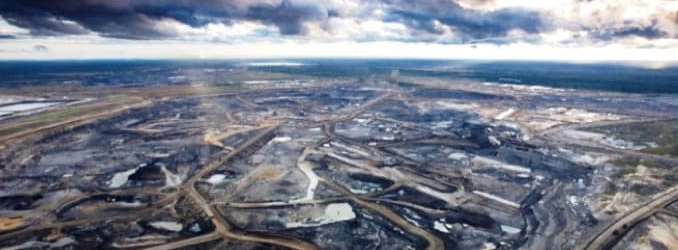
Alberta, Canada’s energy powerhouse, finds itself at a familiar crossroads, grappling with the inherent volatility of global oil prices. The province recently announced a widening fiscal deficit for the current year, a direct consequence of revised, lower oil price projections. This development serves as a stark reminder for investors of the tightrope walked by energy-dependent economies and underscores the critical importance of understanding commodity market dynamics when evaluating regional investment landscapes. For those with exposure to Canadian energy equities or considering new positions, Alberta’s budget adjustments offer a micro-lens into the broader macro forces shaping the oil and gas sector.
The Fiscal Headwinds in Canada’s Energy Heartland
The provincial government of Alberta has revised its fiscal outlook, now projecting a deficit of C$6.5 billion (approximately US$4.7 billion) for the fiscal year ending in March. This represents a C$1.3 billion expansion from previous forecasts, driven predominantly by a C$1.4 billion shortfall in non-renewable resource revenue. As Canada’s leading crude producer and home to the vast oil sands, Alberta relies heavily on royalties from oil and gas extraction, which stand as its second-largest revenue source after taxes. The core of this fiscal adjustment lies in the province’s updated benchmark oil price assumption, now set at an average of $63.75 per barrel for the year – a significant $4.25 lower than initial budget estimates. This downward revision reflects a cautious stance, anticipating headwinds such as U.S. tariffs impacting global energy demand and potential output increases from OPEC+ nations.
Navigating the Current Commodity Landscape: A Price Reality Check
Alberta’s revised price forecast of $63.75 per barrel provides a fascinating contrast to the current market reality. As of today’s close, Brent crude trades around $98.01 per barrel, while WTI hovers near $89.65. This marks a decrease of approximately 1.4% and 1.7% respectively for the day. However, it’s the broader trend that truly informs the narrative: Brent crude has seen a significant pullback from recent highs, specifically a drop of over 12% from $108.01 on March 26th to $94.58 on April 15th. This recent volatility highlights the challenge in long-term fiscal planning for oil-dependent regions. While current prices are well above Alberta’s budgeted average, the recent sharp decline underscores the market’s susceptibility to geopolitical shifts, supply adjustments, and demand uncertainties. For investors, this gap between current market prices and Alberta’s conservative projections presents a nuanced picture: while sustained higher prices could buoy provincial revenues beyond expectations, the recent downward momentum serves as a potent reminder of potential downside risks that could quickly erode any budget cushion.
Key Catalysts on the Horizon: OPEC+ and Inventory Dynamics
The market’s attention remains fixated on several upcoming events that will undoubtedly influence crude price trajectories and, consequently, Alberta’s fiscal health. Investors are keenly awaiting the OPEC+ Joint Ministerial Monitoring Committee (JMMC) meeting on April 18th, followed by the full Ministerial meeting on April 20th. These gatherings are pivotal, as market participants, frequently asking about “OPEC+ current production quotas,” will be scrutinizing any signals regarding output adjustments. Any decision to significantly alter production levels could trigger substantial price movements, either narrowing or widening the gap between Alberta’s budget forecast and actual market performance. Beyond OPEC+, the forthcoming Baker Hughes Rig Counts (April 17th, 24th) and the API and EIA weekly inventory reports (April 21st, 22nd, 28th, 29th) will provide crucial real-time insights into North American supply dynamics and demand. These data points are essential for investors seeking to gauge the health of the physical market and anticipate short-term price swings, directly impacting the profitability of Canadian producers and, by extension, Alberta’s royalty income.
Investor Outlook: Debt Management and Diversification Considerations
Despite the widening deficit, Alberta’s government has indicated a reduction in taxpayer-supported debt, which is forecast to drop to C$84.3 billion by March 31st, down about C$900 million from a year earlier, primarily due to pre-funded debt maturities. The net debt to GDP ratio is projected at 8.7%. While these debt management efforts are positive, a persistent deficit due to lower oil prices could complicate future fiscal stability. For investors, Alberta’s situation reinforces the need for a diversified investment strategy within the energy sector, balancing exposure to upstream production with midstream infrastructure or energy transition plays that may offer more stable cash flows. The consistent queries from our readership regarding “OPEC+ current production quotas” and “the current Brent crude price” underscore the market’s intense focus on these fundamental drivers. Our analytics show a strong investor demand for precise, real-time data and predictive models, highlighting the need for tools that can cut through market noise to inform investment decisions. As Alberta navigates its fiscal challenges, the performance of its dominant oil and gas sector will remain a critical barometer for both the province’s economic health and the broader Canadian energy investment landscape.


