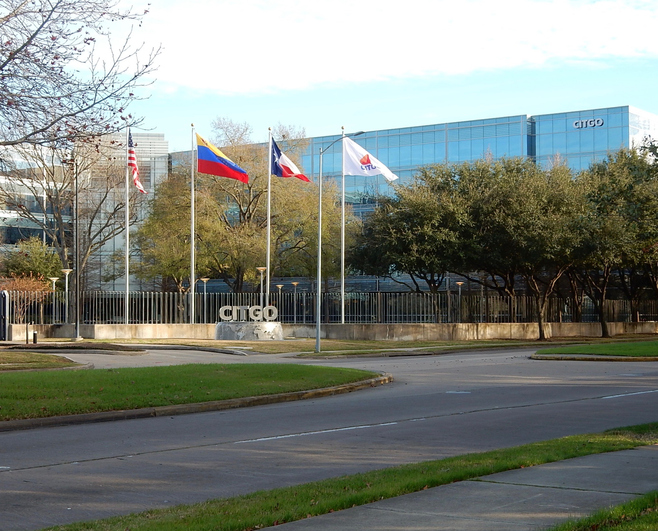
The high-stakes auction for PDV Holding, the U.S.-based parent of Venezuela-owned refiner Citgo Petroleum, has taken another dramatic turn. Elliott Investment Management’s affiliate, Amber Energy, has emerged as the new frontrunner, submitting what a U.S. court officer has deemed the “best bid.” This development upends the previous recommendation of Gold Reserve’s subsidiary, Dalinar Energy, and introduces a fresh layer of complexity into a legal saga that has spanned years and involves nearly $19 billion in creditor claims. For oil and gas investors, this isn’t just a legal skirmish; it’s a critical moment for a significant refining asset, unfolding against a backdrop of volatile energy markets.
The Shifting Sands of the Citgo Auction
The latest twist in the Citgo saga sees Amber Energy’s improved offer on August 22 now sitting atop the bids for PDV Holding. This move challenges Dalinar Energy’s prior $7.4 billion recommendation from last month. Court officer Robert Pincus’s evaluation has set a tight deadline: Dalinar now has a mere three business days to either match or exceed Amber’s terms. Should Dalinar fail to respond adequately, the path will likely clear for Amber Energy. The final sale hearing, where Delaware Judge Leonard Stark will render a definitive decision, is currently slated for mid-September, underscoring the immediate pressure on all parties involved.
Amber’s proposal, though its precise value was not fully detailed in recent filings, had previously indicated a complex structure offering $5.86 billion directly to creditors while simultaneously settling approximately $2.86 billion in claims from holders of defaulted Venezuelan bonds collateralized with Citgo equity. This comprehensive approach, reportedly supported by creditor Koch, aims to resolve multiple facets of the outstanding debt. For Gold Reserve, however, which is seeking to recover around $1.18 billion for expropriated assets, Amber’s current terms reportedly offer minimal compensation, highlighting the fierce competition among the 15 creditors vying for a share of the proceeds from Venezuela’s assets.
Refining Sector Headwinds and the Valuation Conundrum
The intense bidding for Citgo occurs within a challenging and highly dynamic energy market. As of today, Brent Crude trades at $90.38 per barrel, marking a significant 9.07% decline within the day, with its price fluctuating between $86.08 and $98.97. Similarly, WTI Crude has fallen to $82.59, down 9.41%, navigating a daily range of $78.97 to $90.34. This sharp downturn is part of a broader trend; Brent has shed over 18.5% of its value over the past two weeks, dropping from $112.78 on March 30 to $91.87 yesterday. Concurrently, gasoline prices have also seen a dip, currently at $2.93 per gallon, down 5.18% today.
Such volatility in crude prices and the softening of refined product margins directly impact the profitability and, consequently, the valuation of major refining assets like Citgo, the seventh-largest U.S. refiner. Investors are keenly aware of these market dynamics, with questions frequently surfacing regarding the performance of integrated energy majors and the broader outlook for refined products. The substantial decline in crude prices could tighten refining margins, potentially introducing a degree of uncertainty for any bidder. The “best bid” in this environment must reflect not only the asset’s intrinsic value but also the potential for market fluctuations to alter its profitability profile in the coming months and years.
Upcoming Catalysts and Investor Outlook
Looking forward, the energy market calendar is packed with events that could significantly influence crude price trajectories and, by extension, the strategic value of refining assets. Investors are keenly watching for signals from the OPEC+ Joint Ministerial Monitoring Committee (JMMC) meeting scheduled for April 18, followed by the Full Ministerial OPEC+ Meeting on April 19. The outcomes of these meetings, particularly regarding production quotas, will directly impact global supply levels and crude pricing, addressing questions from our readership about current OPEC+ policies and future oil price predictions for 2026.
Beyond OPEC+, the market will be closely scrutinizing the API Weekly Crude Inventory report on April 21 and the EIA Weekly Petroleum Status Report on April 22, both critical indicators of U.S. supply and demand dynamics. These will be followed by the Baker Hughes Rig Count on April 24, offering insights into upstream activity. Further inventory data from API and EIA will follow on April 28 and 29 respectively, with another Baker Hughes Rig Count on May 1. Any major shifts in these reports could further impact crude prices, influencing the perceived risk and reward for the ultimate winner of the Citgo auction. A sudden upward swing in crude prices, for instance, could pressure refining margins, while a sustained decline could offer a more favorable feedstock environment, underscoring the market’s role as a silent arbiter in this multi-billion-dollar transaction.
Strategic Implications for Creditors and the Energy Landscape
The resolution of the Citgo auction carries profound implications, not just for the immediate parties involved but for the broader energy investment landscape and international legal precedents. With creditors collectively pursuing nearly $19 billion, the outcome will dictate how much compensation they ultimately receive for assets expropriated and debts defaulted upon by Venezuela since 2017. Amber Energy’s multi-faceted proposal, which includes settling a significant portion of bond claims, points to a strategy aimed at comprehensive resolution, potentially minimizing future legal entanglements and offering a more secure path to ownership for the buyer.
For the refining sector, the ownership of Citgo is strategically vital. As the seventh-largest U.S. refiner, its operational stability and strategic direction under new ownership will impact regional fuel markets and supply chains. While the focus remains on the legal and financial battle, the long-term stewardship of such a critical asset will be closely watched. Investors must consider the potential for consolidation, operational efficiencies, or strategic shifts that a new owner might bring to Citgo. The intense competition, coupled with the volatile market conditions, underscores the strategic significance of this asset and the substantial financial and political stakes involved for all participants.