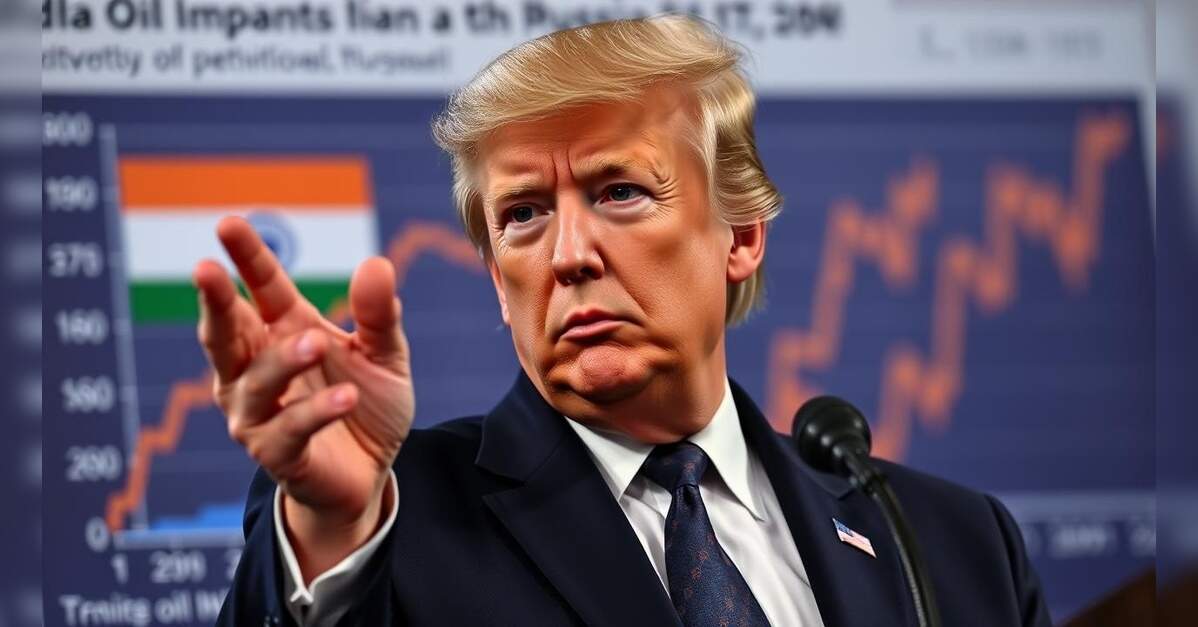
India’s Energy Calculus: Tariffs Threaten Billions in Oil Savings
India, a nation that has skillfully navigated global energy markets to secure discounted crude, now faces a significant challenge that could quickly erode billions in savings. The recent imposition of punitive tariffs by the United States threatens to reshuffle India’s energy sourcing strategy and redefine its complex geopolitical alliances. For investors tracking global oil and gas markets, understanding this evolving dynamic is crucial, as New Delhi’s response could send ripples through international crude benchmarks and impact refining margins worldwide.
The Erosion of Discounted Crude Gains
For over two years, India strategically ramped up imports of Russian crude, a move that analysts estimate has saved the nation more than $17 billion since early 2022. This aggressive procurement strategy, capitalizing on discounted barrels following geopolitical shifts, saw Russian crude escalate from negligible volumes to nearly 40% of India’s total oil purchases. This substantial shift allowed India, the world’s third-largest oil consumer and importer, to buffer its economy against global price volatility.
However, this advantageous position is now under severe threat. New tariffs imposed by the U.S. on Indian imports, reaching up to 50%, are projected to slash Indian exports by over 40%—a staggering $37 billion in the current fiscal year alone. This economic blow far outweighs the savings achieved through discounted oil, creating an undeniable net negative. The fallout extends beyond the energy sector, jeopardizing thousands of jobs in labor-intensive industries like textiles, gems, and jewelry, and posing a significant political challenge for the Indian government.
The economic reality for India is stark: an immediate cessation of Russian oil imports is not only politically challenging but economically unfeasible. Internal government assessments suggest that such a move could see global crude prices surge to approximately $200 per barrel. Furthermore, India would forgo the substantial 7% discount currently enjoyed on Russian oil, adding further pressure to its import bill.
Geopolitical Tightrope: Balancing Strategic Imperatives
India’s predicament highlights a delicate geopolitical balancing act. On one hand, Russia remains an invaluable partner, providing essential defense equipment, geopolitical support in continental Asia, and political backing on sensitive matters. The reliance extends to discounted crude when available, making a complete break difficult and costly. On the other hand, the United States is increasingly viewed as India’s most critical strategic ally, particularly in countering China’s growing influence in the Indo-Pacific region.
Indian government sources indicate a strong desire to mend ties with Washington, signaling an openness to increasing purchases of U.S. energy resources. However, a complete halt to Russian oil imports is currently off the table. Discussions between officials from both nations are ongoing, encompassing vital areas such as trade, energy security, nuclear cooperation, and critical minerals exploration. This underscores India’s strategy: to diversify its energy basket and strengthen its relationship with the U.S. without abandoning its long-standing ties and immediate economic benefits from Russia.
Market Response and Investor Outlook Amidst Uncertainty
The unfolding situation in India adds another layer of complexity to an already dynamic global energy market. As of today, Brent crude trades at $98.01 per barrel, marking a 3.24% increase on the day, after experiencing a notable decline from $108.01 just two weeks prior. WTI crude similarly stands at $89.65, posting a 1.72% gain. These price movements reflect a market sensitive to both immediate supply concerns and broader geopolitical shifts.
Our proprietary reader intent data reveals a keen focus this week on fundamental market drivers. Investors are actively inquiring about current Brent crude prices and, crucially, seeking base-case forecasts for the next quarter. This heightened interest underscores the uncertainty around global supply stability, particularly with potential shifts in major consumer demand patterns like India’s. The potential for India to reduce its intake of Russian barrels could rebalance regional crude flows, while any increase in U.S. energy purchases by India would naturally bolster demand for North American output, influencing global benchmarks and impacting refining economics.
Navigating the Near Future: Upcoming Events and Strategic Pivots
Looking ahead, the next two weeks bring critical calendar events that could further shape the energy landscape. The OPEC+ Joint Ministerial Monitoring Committee (JMMC) meeting on April 18th, followed by the full Ministerial meeting on April 20th, will be closely watched for any signals on production quotas. Any adjustments to OPEC+ output, or even just the rhetoric surrounding them, will directly impact global supply perceptions at a time when a major importer like India is reassessing its sourcing strategy.
For instance, if OPEC+ maintains or tightens cuts, the pressure on India to find alternative, affordable supplies intensifies, making the diplomatic dance with the U.S. even more critical. Further insights into market fundamentals will come from the API and EIA weekly crude inventory reports on April 21st/22nd and 28th/29th, respectively. These data points will offer a clearer picture of demand and supply balances against the backdrop of this evolving geopolitical trade dynamic. The strategic decisions made by key players, such as Mukesh Ambani’s Reliance Industries, which operates the world’s largest refining complex in India, will be central to how India adapts its crude sourcing, with significant implications for global oil flows and pricing.


