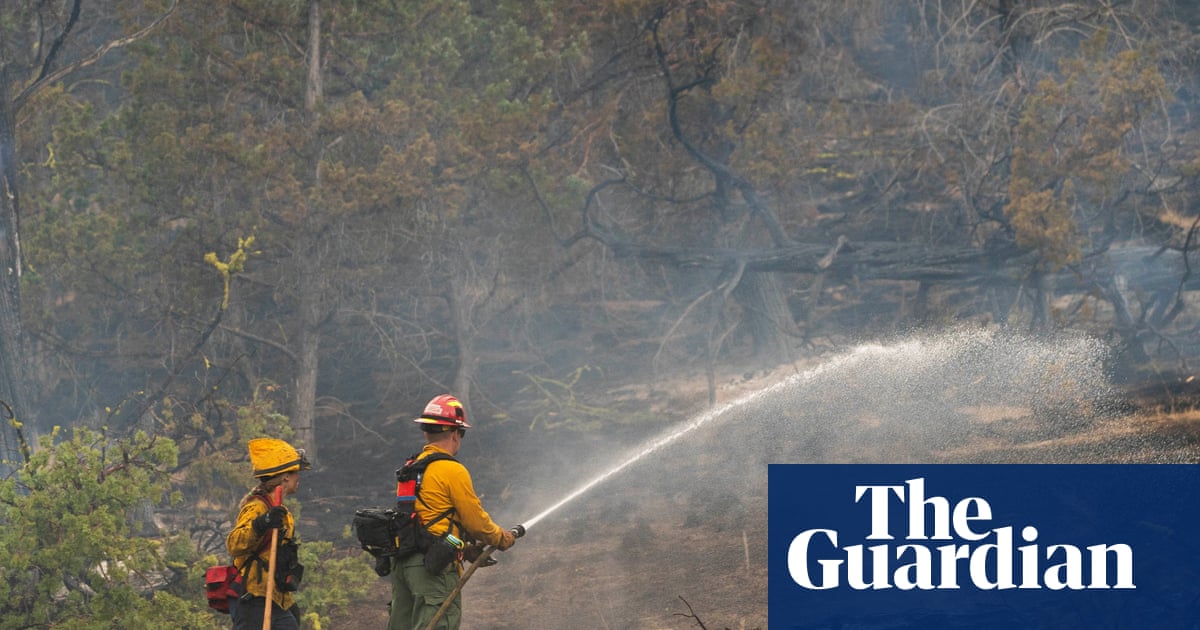
The escalating threat of wildfires across the Western United States, particularly in key energy consumption and transit regions like California, introduces a critical and often underestimated layer of risk for oil and gas investors. While recent efforts have stabilized the Flat fire in central Oregon and contained the Pickett fire in California’s Napa County, these events serve as stark reminders of the vulnerability of energy infrastructure and supply chains to climate-related disruptions. For investors navigating a volatile global energy market, understanding these regional dynamics is crucial for comprehensive risk assessment and strategic positioning.
Immediate Wildfire Impact on Regional Energy Supply and Infrastructure
The current wildfire season underscores the precarious balance between natural forces and human infrastructure. In Oregon, the Flat fire, which had consumed rugged terrain in Deschutes and Jefferson counties, is now showing signs of stabilization thanks to cooler temperatures and some moisture. However, authorities note that only 5% containment has been achieved, and heat advisories through Wednesday, coupled with potential erratic winds from thunderstorms, continue to pose significant challenges. Similarly, the Pickett fire in northern California, charring approximately 10 square miles of remote Napa County, remains only 15% contained. While firefighters have successfully protected valuable assets like the vineyards of Hundred Acre Wines, the proximity of these blazes to populated areas and critical transmission corridors raises alarms.
For the energy sector, even fires not directly engulfing a refinery or gas plant can cause severe disruptions. Preventative power grid shutdowns, necessary to avoid igniting new fires from damaged lines, can cripple local economic activity and impact demand. The strain on emergency services, potential road closures, and localized evacuations can impede the transport of refined products and personnel. Cal Fire’s ongoing efforts to deploy resources to protect critical infrastructure, including wineries, illustrate the proactive measures required, yet these measures themselves carry economic implications and highlight the ongoing operational costs faced by utility and energy companies in high-risk zones.
Crude Price Volatility Amid Broader Market Pressures
The immediate, localized impact of wildfires, while significant for regional stability, currently plays out against a backdrop of broader, more dominant global energy market forces. As of today, Brent crude trades at $90.38 per barrel, marking a substantial 9.07% decline within the day, with its range fluctuating between $86.08 and $98.97. Similarly, WTI crude has seen a sharp 9.41% drop to $82.59, moving within a day range of $78.97 to $90.34. This significant intraday volatility follows a pronounced downward trend for Brent, which has fallen by $20.91, or 18.5%, from $112.78 on March 30th to $90.38 today. Gasoline prices have also mirrored this sentiment, currently at $2.93, down 5.18%.
This market weakness is primarily driven by global macroeconomic concerns, including slowing demand growth forecasts and shifting supply expectations, rather than direct wildfire impacts. However, the presence of persistent regional risks like wildfires adds an unpredictable element to the market’s underlying jitters. While not the catalyst for today’s steep decline, such environmental threats contribute to a heightened sense of overall market instability, influencing investor sentiment and potentially exacerbating price movements when combined with other bearish or bullish signals.
Forward-Looking Catalysts and Investor Concerns
Looking ahead, the energy market faces several critical junctures that will undoubtedly shape price trajectories and investor strategies. The upcoming OPEC+ Joint Ministerial Monitoring Committee (JMMC) and Full Ministerial meetings on April 18th and 19th, respectively, are paramount. Investors are keenly anticipating any signals regarding production quotas, especially given the recent downward pressure on crude prices. A key question on the minds of many of our readers, as our proprietary data indicates, is “What are OPEC+ current production quotas?” and how these might adapt to evolving global demand and supply dynamics.
Beyond OPEC+, crucial demand and supply indicators will emerge from the EIA and API weekly inventory reports scheduled for April 21st, 22nd, 28th, and 29th. These reports will offer vital insights into U.S. crude and product stockpiles, influencing short-term price movements. Furthermore, the Baker Hughes Rig Count on April 24th and May 1st will provide a barometer for North American drilling activity. While these events are global in scope, the recurring threat of regional disruptions like wildfires can subtly influence market perception. Persistent threats to energy infrastructure in key regions could, for example, marginally tighten regional supply, making overall supply figures more sensitive to changes. For investors asking “what do you predict the price of oil per barrel will be by end of 2026,” these compounding factors of global policy, inventory data, and unpredictable environmental events create a complex analytical challenge.
Investing in Resilience: The Long-Term Arc of Energy Infrastructure
The increasing frequency and intensity of wildfires across the American West compel a long-term re-evaluation of energy infrastructure resilience. For oil and gas companies with assets or distribution networks in these vulnerable regions, the cost of doing business is rising. This includes greater capital expenditure on hardening infrastructure, such as undergrounding power lines, implementing advanced fire-detection systems, and investing in vegetation management. Operational costs also escalate due to increased insurance premiums, the need for enhanced emergency response protocols, and potential revenue losses from preventative shutdowns.
Investors must consider how these factors impact the balance sheets and future growth prospects of companies operating in high-risk areas. The focus shifts from merely optimizing production to ensuring the secure and uninterrupted delivery of energy. Companies that demonstrate robust strategies for climate resilience, integrating fire mitigation into their core infrastructure planning, are likely to be viewed more favorably by the market. This includes not only direct oil and gas operators but also midstream pipeline companies and utilities whose networks are exposed to these environmental threats. The challenge is not just to mitigate damage but to proactively build a more resilient energy ecosystem capable of withstanding the growing impacts of climate change, a factor increasingly priced into long-term investment models.


