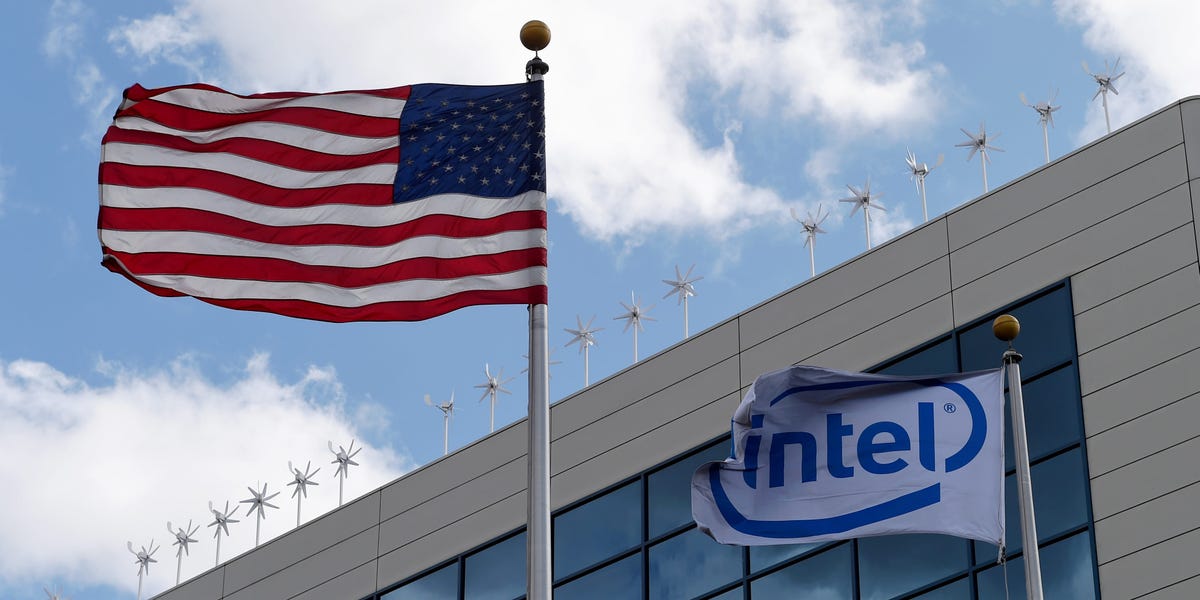
The Shifting Sands of State Intervention: What the Intel Deal Means for Oil & Gas Investors
A recent, rare move by the United States government to acquire a 9.9% stake in Intel, valued at $8.9 billion, has sent ripples through the investment community. While focused on the semiconductor industry, this unprecedented direct equity investment signals a potentially broader shift towards enhanced state involvement in strategically critical sectors. For sophisticated investors in the oil and gas market, this development is not merely an interesting business story; it’s a potent indicator of evolving geopolitical and economic landscapes that could profoundly influence energy policy, market dynamics, and ultimately, portfolio performance. Understanding the direct and indirect risks highlighted by Intel’s SEC filing – from shareholder dilution to potential international business hurdles – offers a crucial lens through which to evaluate the future trajectory of oil and gas investments in an era of increasing government oversight.
Precedent Setting: Direct Government Stakes and Energy Sector Implications
Intel’s disclosure of “risk factors” associated with the government’s equity stake, including shareholder dilution, reduced voting power, and potential limitations on future transactions, mirrors concerns that could readily emerge within the energy sector. The deal, which involves converting government grants into an equity stake, could also restrict Intel’s ability to secure future funding. For oil and gas, a sector perennially intertwined with national security, economic stability, and environmental agendas, such direct government intervention, while currently rare in the US, could set a powerful precedent. Imagine scenarios where governments, seeking to secure domestic energy supplies or accelerate energy transition initiatives, opt for direct equity stakes in producers, refiners, or renewable energy infrastructure developers. This could lead to a re-evaluation of corporate governance, where national interests might explicitly diverge from traditional shareholder value maximization, potentially impacting everything from capital allocation decisions to operational strategies. Companies with significant international exposure, much like Intel’s 76% non-US sales, could also face increased regulatory scrutiny and potential competitive disadvantages abroad if perceived as extensions of national policy rather than purely commercial entities.
Navigating Volatility: Market Signals and Investor Sentiment in a Politicized Era
The backdrop to these evolving dynamics is a commodity market already grappling with significant volatility. As of today, Brent crude trades at $90.38, reflecting a sharp -9.07% decline from its opening, with WTI similarly down -9.41% at $82.59. This recent downturn follows a notable 14-day trend where Brent shed nearly 18.5%, falling from $112.78 on March 30th to $91.87 just yesterday. Such price swings underscore the inherent unpredictability of energy markets, a factor potentially exacerbated by increased government intervention. Our proprietary reader intent data reveals a keen focus on long-term price predictions, with many investors asking “what do you predict the price of oil per barrel will be by end of 2026?” This highlights the market’s desire for clarity amidst geopolitical tensions and evolving energy policies. Similarly, inquiries about specific regional players, such as “How well do you think Repsol will end in April 2026,” indicate that investors are scrutinizing individual company resilience against a complex macro environment. Direct government stakes, even if not immediately in the energy sector, add another layer of uncertainty, as they could signal a willingness to prioritize strategic objectives over pure market forces, influencing long-term supply and demand forecasts.
Upcoming Events and Geopolitical Crossroads for Energy
The coming fortnight is packed with critical events that will further shape the energy landscape, particularly in light of broader government influence. This weekend, the OPEC+ Joint Ministerial Monitoring Committee (JMMC) and Full Ministerial meetings on April 18th and 19th will be closely watched for any adjustments to production quotas, a topic frequently raised by our readers asking “What are OPEC+ current production quotas?” These decisions directly impact global supply and price stability. Following this, the API Weekly Crude Inventory on April 21st and the EIA Weekly Petroleum Status Report on April 22nd will provide crucial insights into domestic supply-demand balances. The Baker Hughes Rig Count on April 24th offers a pulse on upstream activity. The Intel deal, while not directly energy-related, underscores a global trend towards national self-reliance and supply chain security. Should this philosophy permeate energy policy more deeply, governments might seek greater control over domestic production or strategic reserves, potentially influencing the outcomes of these upcoming events. Investors should consider how sovereign interests, catalyzed by precedents like the Intel deal, could increasingly factor into the global energy equation, driving decisions that extend beyond purely economic rationales.
Strategic Considerations for Oil & Gas Investment in a New Era
The Intel precedent serves as a powerful reminder for oil and gas investors to refine their strategic frameworks. The traditional metrics of reserves, production costs, and market demand remain vital, but an added layer of scrutiny on government relations and geopolitical exposure is now paramount. Companies with strong domestic footprints might find themselves either benefiting from government support aimed at national energy security or facing increased regulatory burdens and potential equity dilution through similar “grant-to-equity” schemes. Conversely, international oil companies (IOCs) with diversified global operations could experience heightened friction if their host governments perceive US or other national government equity stakes in strategic sectors as a form of economic nationalism. Investors should prioritize companies demonstrating robust corporate governance, diversified asset portfolios, and a clear strategy for navigating both market volatility and potential government intervention. Understanding a company’s alignment with national energy transition goals or security priorities will become as critical as its balance sheet, as the line between public policy and private enterprise continues to blur.


