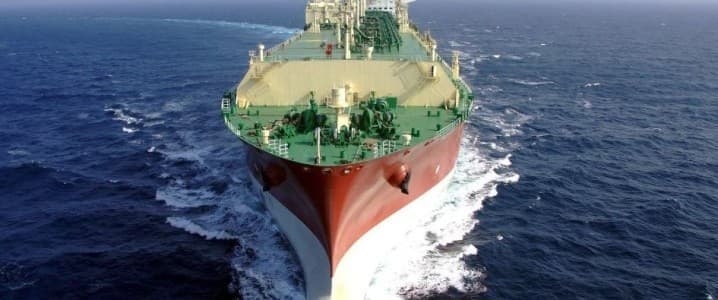
The global liquefied natural gas (LNG) market is facing renewed scrutiny as Pakistan prepares to seek a deferral on significant long-term deliveries from Qatar. This move, driven by a confluence of weak domestic demand and a substantial import schedule, underscores the growing pressures on nations tied to rigid, long-dated energy contracts. Islamabad’s Economic Coordination Committee (ECC) recently authorized its Petroleum Division to renegotiate terms for 177 cargoes slated for delivery between 2025 and 2031, representing a staggering $5.6 billion commitment. For investors, this development signals potential shifts in LNG contract structures, highlights sovereign risk in emerging markets, and prompts a re-evaluation of long-term energy demand projections amidst global economic volatility.
The Burden of Brent-Indexed LNG Amidst Market Volatility
Pakistan’s decision to pursue deferrals is a direct consequence of its inability to absorb contracted LNG volumes, exacerbated by a significant financial burden on its foreign exchange reserves. The existing contracts with Qatar, inked in 2016 and extended in 2021, link LNG pricing to Brent crude at 13.37%. This rate stands notably higher than India’s renegotiated terms of 12.66%, a differential that has previously drawn criticism from Pakistan’s Competition Commission. The perceived disadvantage, combined with a burgeoning domestic supply glut and the expansion of new import terminals, has created an unsustainable situation where the nation risks overwhelming its local distribution infrastructure and undermining fragile fiscal balances.
The timing of these discussions is particularly salient against the backdrop of fluctuating crude prices. As of today, Brent crude trades at $90.38 per barrel, marking a significant 9.07% decline within the day. This recent dip is part of a broader trend, with Brent having fallen by 18.5% from $112.78 on March 30th to $91.87 just yesterday. While Pakistan’s deferral request focuses on *volume* rather than *price* renegotiation initially, the current market snapshot underscores the inherent risks of long-term, crude-indexed contracts. Even with lower Brent prices, the fixed percentage still represents a substantial outlay, and the sheer volume of 177 cargoes between 2025 and 2031 at a $5.6 billion valuation presents an overwhelming financial commitment when domestic demand falters. The ongoing volatility in crude markets only magnifies the financial strain for buyers locked into such agreements.
Geopolitical Implications and Regional Precedents for LNG Contracts
Qatar has long served as Pakistan’s primary LNG supplier, with shipments flowing through Port Qasim. The commencement of deferral talks carries substantial geopolitical weight and could send ripples across regional LNG markets. Other South Asian importers will undoubtedly be observing these negotiations closely. India’s prior success in securing more favorable terms with Qatar set a crucial regional benchmark, demonstrating the potential for buyers to push for contract modifications. Pakistan’s current predicament may embolden other nations to reassess their own exposure to long-dated agreements, particularly as global economic conditions, energy transition ambitions, and supply chain disruptions continue to introduce unforeseen variables.
For LNG producers, the prospect of multi-year deferrals, rather than short-term relief, signals a need to re-evaluate demand assumptions and contract flexibility. The balance of risk in Gulf LNG contracts, traditionally heavily weighted towards suppliers through take-or-pay clauses, could be shifting. This situation highlights the evolving dynamics in buyer-seller relationships and the increasing pressure on producers to accommodate the changing needs of their customers, especially those in emerging economies facing fiscal constraints and domestic energy market shifts.
Investor Focus: Navigating Demand Uncertainty and Contractual Risk
Our proprietary data indicates that investors are keenly focused on the future trajectory of oil prices and the stability of global energy markets. Questions such as “What do you predict the price of oil per barrel will be by end of 2026?” and inquiries about OPEC+’s current production quotas dominate discussions. Pakistan’s LNG deferral request directly addresses these concerns by highlighting the fragility of demand forecasts and the potential for contractual obligations to become significant liabilities. For investors in LNG infrastructure, shipping, or upstream gas production, this event serves as a critical reminder to scrutinize counterparty risk and the resilience of long-term demand commitments.
The market is increasingly demanding greater transparency and flexibility in energy contracts. The risk of oversupply, a concern articulated by Pakistani officials exploring the resale of surplus volumes, is not isolated to Islamabad. As new LNG capacity comes online globally, investors need to assess whether the underlying demand growth can truly absorb these volumes, especially in regions prone to economic instability or rapid shifts in energy policy. The Pakistan situation underscores that even apparently secure long-term contracts can become sources of volatility and financial pressure, prompting a deeper dive into the health of national economies and their ability to honor commitments.
Forward Outlook: Upcoming Events and the Broader Energy Landscape
The coming weeks will offer further insights into the global energy market’s direction, which could indirectly influence the tenor of Pakistan’s negotiations and similar discussions elsewhere. Key events on the horizon include the **OPEC+ Joint Ministerial Monitoring Committee (JMMC) meeting on April 18th**, followed by the **Full OPEC+ Ministerial Meeting on April 19th**. While these meetings primarily focus on crude oil production quotas, their decisions directly impact global crude prices. Given that Pakistan’s LNG contracts are Brent-indexed, any significant shift in OPEC+’s strategy could alter the financial calculus for both buyers and sellers of long-term LNG.
Furthermore, regular data releases such as the **API Weekly Crude Inventory on April 21st and 28th**, and the **EIA Weekly Petroleum Status Reports on April 22nd and 29th**, will provide critical insights into U.S. demand and supply dynamics. Persistent signs of demand weakness or inventory builds could reinforce concerns about oversupply across the energy complex, potentially strengthening the hand of buyers seeking contract deferrals or renegotiations. The Baker Hughes Rig Count reports on April 24th and May 1st will also offer a pulse check on drilling activity, signaling future supply trends. These interconnected market signals will continue to shape investor sentiment and strategic decisions throughout the oil and gas sector, extending beyond just LNG to influence the broader energy investment thesis.


